Gateway/Services/Water damage restoration
Water damage
restoration in St. Louis.
When a pipe bursts, a basement floods or a sewer backs up, arrange safe assessment of the affected materials and actual water source. Contact Gateway about extraction, structural drying, moisture documentation and current dispatch availability across the service area.
Same operators as AirSense Environmental 145+ five-star AirSense reviews BBB accreditation via AirSense IICRC-trained Gateway crew
What’s actually happening
How fast does water damage
spread in a St. Louis home?
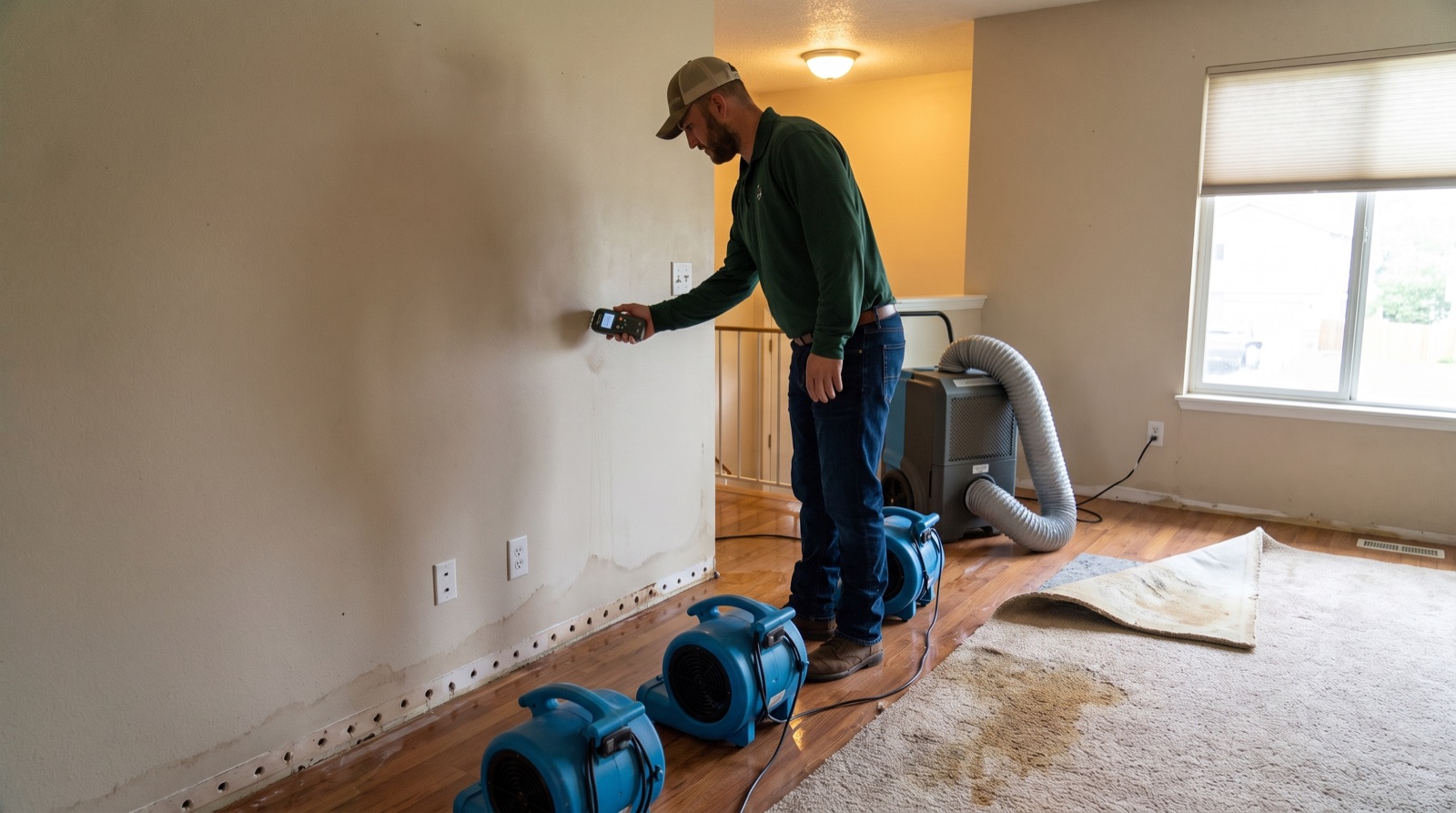
Arrange prompt assessment of wet materials and the water source. Drying and removal decisions depend on actual condition, contamination and the assemblies involved; no fixed day establishes a mandatory tear-out or cost increase.
Assessing water-saturated materials
Assess affected drywall, flooring, insulation and other materials to determine appropriate drying or removal. Early discovery alone does not establish salvageability.
Assessing damp materials for mold concerns
Investigate damp materials and suspected mold based on actual conditions. A fixed timeline does not establish germination, visible damage or the required work.
Visible mold + structural risk
Assess visible mold, damaged finishes and suspected structural problems with appropriately qualified professionals. The actual findings determine remediation, drying and repair needs.
Gateway performs moisture assessment and remediation. Where sampling is indicated, independent inspection and laboratory findings can inform the scope; the insurer separately reviews claim documentation.
What’s included
What does water damage
restoration include?
-
Emergency water extraction
Discuss suitable standing-water extraction equipment and safe access with the restoration team. No fixed reduction in saturation time is established here.
-
Moisture mapping & documentation
Use a suitable moisture assessment to document affected materials. Confirm which observations and readings will be included in the restoration record.
-
Structural drying
Select and monitor drying equipment for the actual conditions. Agree on documentation and appropriate drying targets for the affected materials.
-
Independent sampling when appropriate
An independent inspector or industrial hygienist collects mold samples; an independent laboratory analyses them. Gateway handles moisture assessment and remediation, using the independent findings to inform the scope.
-
Antimicrobial treatment
Where sampling is appropriate, an independent inspector or industrial hygienist collects samples and an independent laboratory analyses them. Gateway performs moisture assessment and remediation; sampling does not prevent mold growth.
-
Selective demolition (only what’s needed)
Determine necessary removal from the actual material condition, contamination concerns and restoration assessment. Moisture or laboratory data alone do not establish every removal decision.
-
Content protection & pack-out
Discuss protection and handling of belongings, including any available pack-out or storage arrangements. Document condition and agree on the proposed scope before disposal or off-site handling.
-
Insurance file delivery
Confirm the estimating format and documentation requested for your loss. Discuss photos, drying logs and equipment records, with direct adjuster communication when authorized. No particular format guarantees acceptance.
We document the loss while we dry it. That means source-of-loss photos, moisture maps, drying logs, equipment records, and an insurance-ready scope your adjuster can review without guessing what happened. The goal is simple: dry the structure correctly and give the carrier the file they need to process the claim.
How a water-damage job runs
What are the steps in water damage restoration?
-
01
Step one: call and water damage crew dispatch
Contact Gateway to describe the water emergency and confirm dispatch availability, an estimated arrival time and appropriate next steps for the reported conditions.
-
02
Step two: on-site water damage response and extraction
Address safety and contamination concerns, document observed conditions and assess affected materials before choosing the extraction plan.
-
03
Water damage drying plan and equipment placement
Discuss a written scope based on the findings, suitable equipment placement and a monitoring schedule for the actual loss.
-
04
Step four: structural drying, monitoring, and handoff
Document drying progress and completion findings, confirm any remaining work and provide the agreed restoration records. Rebuild readiness may also depend on separate repairs or applicable requirements.
Insurance & the claim
How insurance works for water
damage restoration in St. Louis
Ask the insurer which scope format, photos, drying logs and equipment records are needed. Complete documentation supports review, but claim delays may have multiple causes.
Discuss the requested documentation and any further information with the insurer. A particular file format or contractor process does not guarantee a two-week claim resolution.
- Confirm estimating format and pricing for the scope
- Photo + drying-log documentation built into every job
- Equipment counts and run-time tracking
- Direct adjuster communication when you authorize it
Common questions
Water damage restoration
questions St. Louis homeowners ask
Will my homeowners insurance cover this?
Ask your insurer or agent to review the observed water source under the actual policy and endorsements. Coverage, limits and exclusions depend on those terms and the loss circumstances; a brief site visit does not establish payment.
Should I start ripping out wet drywall myself?
Arrange safe assessment before disturbing wet materials, particularly where the water source or contamination is uncertain. Ask the insurer about documentation requirements; removing material before testing does not automatically establish that a claim item is disqualified.
How long does the drying take?
Ask for a drying estimate based on the actual materials, affected area and conditions. Agree on monitoring and request updates as findings develop rather than relying on a universal three-to-five-day window.
Can I save my hardwood floor?
Have the wet floor and underlying assemblies assessed by the restoration team and a qualified flooring specialist where needed. Material construction, condition and installation inform salvage decisions; response time alone does not guarantee recovery.
Do you test for mold automatically, or only if I ask?
An independent inspector or industrial hygienist collects mold samples; an independent laboratory analyses them. Gateway handles moisture assessment and remediation, using the independent findings to inform the scope.
What’s your response time on a Saturday at 2 a.m.?
Contact Gateway to confirm overnight or weekend dispatch availability and the estimated arrival for your address. Staffing, equipment and conditions affect the response; no universal arrival time is promised here.
Can you start water damage cleanup before my adjuster arrives?
Ask the insurer about emergency mitigation instructions and documentation, and confirm work authorization with the restoration team. Arrange safe assessment and document observed conditions where possible. The insurer determines how the actual work and evidence are reviewed under the policy.
Related services
What else we do.
Water-damage cities served
What areas does Gateway cover for water damage restoration?
Choose your city for water damage restoration information. Contact Gateway to confirm the property-specific scope and estimated arrival.
Inner Ring
West County
North County
South County
St. Charles County
City of St. Louis
Illinois Riverbend
Metro East
Belleville Cluster
Emergency water damage restoration in St. Louis
Call Gateway’s emergency line to discuss the loss, crew availability and estimated response.
Related service information
Read about water damage restoration in Clayton, MO and the local property conditions that shape the work.
Read about water damage restoration in Chesterfield, MO and the local property conditions that shape the work.
Read about water damage restoration in St. Louis City, MO and the local property conditions that shape the work.
Read about water damage restoration in Florissant, MO and the local property conditions that shape the work.
Read about water damage restoration in Edwardsville, IL and the local property conditions that shape the work.
Read about water damage restoration in Belleville, IL and the local property conditions that shape the work.
Check our complete Missouri and Illinois service area for additional communities.
Relevant completed work
Chesterfield, MO project
- Loss
- 2:30am supply line failure on the second floor. Water through ceiling into kitchen and dining.
- Response
- 61 min
- Duration
- Three-day equipment cycle
- Result
- Selective drywall demo, hardwood saved with rapid drying, three-day equipment cycle.
Florissant, MO project
- Loss
- Heavy rain event overwhelmed the local sewer system. Multiple homes per block flooded simultaneously.
- Response
- 89 min
- Duration
- All eight jobs completed within 72 hours
- Result
- Dispatched four crews, completed all eight jobs within 72 hours, insurance files cleared inside two weeks.