Gateway/Services/Emergency water extraction
Emergency water
extraction in St. Louis.
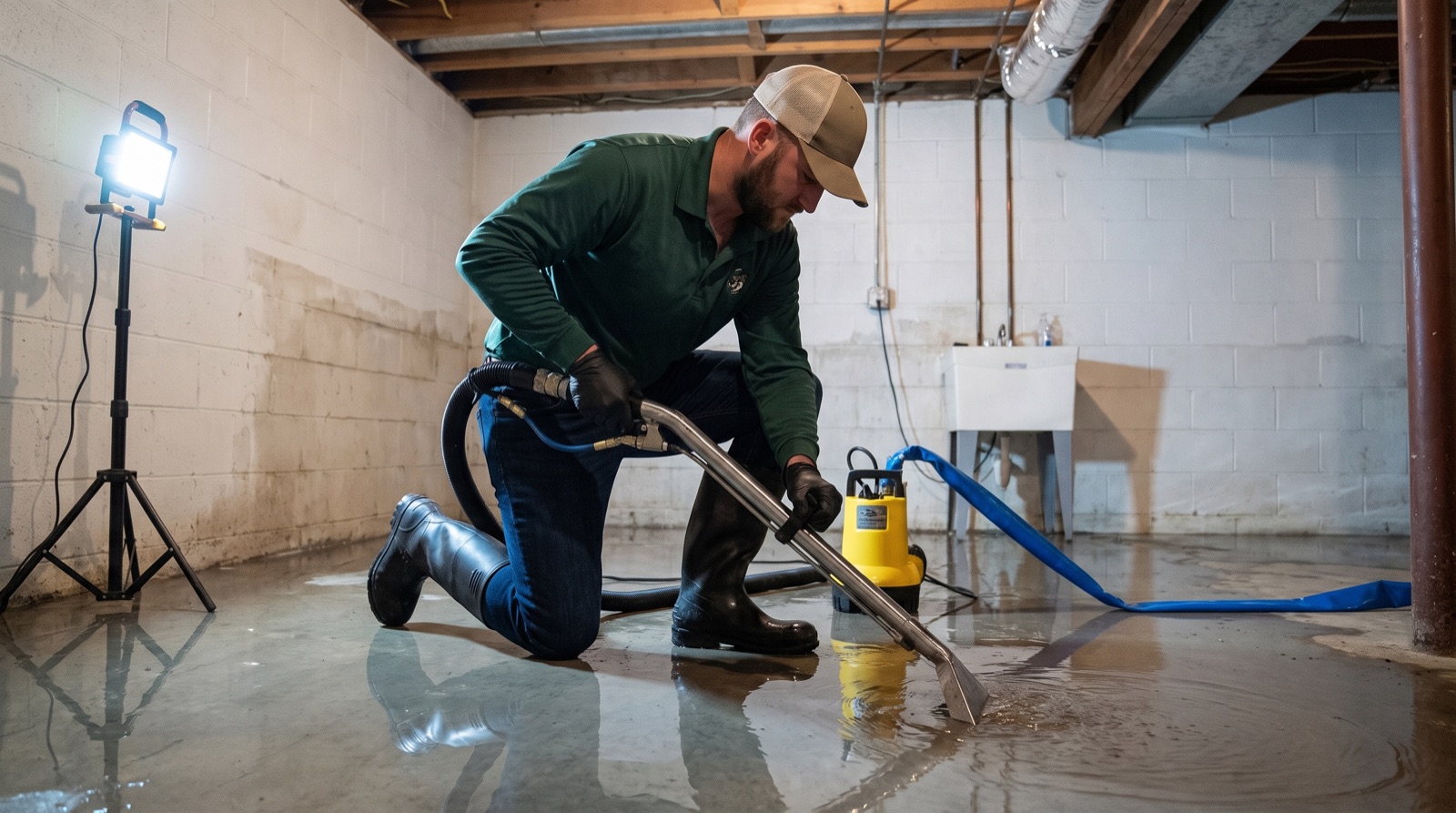
When water is actively standing in your home, every minute it sits costs you something, carpet pad first, then subfloor, drywall, trim, and contents. Gateway Water & Mold provides 24/7 emergency water extraction in St. Louis with truck-mounted vacuum equipment, weighted extraction tools, moisture mapping, structural drying, and insurance-ready documentation from the first visit.
See the full water damage restoration process for drying, monitoring, mold prevention, and rebuild coordination after extraction.
Same operators as AirSense Environmental 145+ five-star AirSense reviews BBB accreditation via AirSense IICRC-trained Gateway crew
For standing water in west St. Louis County, see our local response and drying information for emergency water extraction in Chesterfield, MO, emergency water extraction in Ballwin, MO, and emergency water extraction in Wildwood, MO. Gateway documents extraction and drying for your restoration claim.
The first hour
Why standing water has to
come out within the hour
Water doesn’t sit politely. The longer it’s there, the more aggressively it absorbs into the materials around it, and the more of those materials have to be removed instead of dried. Speed isn’t a marketing claim; it’s the difference between a drying job and a tear-out.
When does carpet pad become unsalvageable?
Pad acts like a sponge. Tack strips and base trim wick. Most contents on the floor are already affected. Extraction now usually saves the carpet itself.
Subfloor begins absorbing standing water
OSB and particle-board subfloor begin swelling and losing structural integrity, permanently. Drywall starts wicking up the wall. Insulation soaks.
When does water damage tear-out become unavoidable?
Drywall now contaminated 12+ inches above the floor. Subfloor permanently changed. Insulation no longer salvageable. Now we’re not drying, we’re rebuilding.
“Speed isn’t optimism. The first hour is the difference between a three-day drying and a three-week rebuild.”
What’s included
What does emergency
water extraction include?
-
How truck-mounted water extraction works
Industrial extraction with thousands of gallons of capacity. Standing water out fast, minutes, not hours. The biggest determinant of how much else we save.
-
Weighted extraction tools
Specialized tools that pull water out of carpet pad and trapped saturation in flooring. Without these, you’re just removing surface water, the absorbed moisture stays.
-
Source containment (when active)
If the source is still flowing, burst pipe, ongoing seepage, sewer backup, we contain and stop it before extraction. No point extracting against an open faucet.
-
Cat 3 contaminated water protocols
For sewer backups and unknown-source water, full PPE, antimicrobial pre-treatment, biohazard disposal of contaminated material. Different procedure, same response time.
-
Immediate drying equipment placement
Air movers and dehumidifiers go down before we leave. Drying starts hour one, not hour twelve. Maximum saturation reversal during the critical window.
-
Moisture-baseline documentation
Pre-extraction moisture readings on every affected surface. The numbers we pull are the start of the insurance file, we capture them while everything is still wet.
-
Content protection + relocation
Soaked items that can be saved go to a dry area on drop cloths. Items that can’t be saved get inventoried and photographed before disposal.
-
Handoff to mitigation crew
Once the immediate emergency is contained and drying is started, the same crew (or a partner crew) continues with the structured mitigation phase. Zero handoff lag.
How an extraction call runs
What are the steps in emergency water extraction?
-
01
Step one: phone triage for emergency water extraction
Live answer. We confirm the water type, area, and whether the source is active. Crew dispatched with the right equipment for what you described.
-
02
Step two: on-site arrival and source control
Drop cloths down. Source contained if still active. Power killed in the affected area. Photos and baseline moisture readings start.
-
03
Step three: extracting the standing water
Truck-mounted vacuum on standing water. Weighted tools on saturated pad and flooring. Water out of the home, not just out of sight.
-
04
Step four: structural drying after extraction
Air movers and dehumidifiers placed. Equipment running. Daily monitoring schedule set with you before we leave.
Insurance & emergency mitigation
Does insurance require
same-day water mitigation?
Almost every homeowners policy with water-damage coverage includes an obligation to mitigate further damage promptly. “Promptly” usually means same day. If you wait, or hire a contractor who waits, the carrier can deny additional damage that resulted from the delay.
Our extraction documentation (timestamps, baseline readings, photos before any work) is built around proving prompt mitigation for the file. That paperwork is often what gets a borderline claim approved.
- Timestamped arrival + start-of-work photos
- Pre-extraction moisture readings on every affected surface
- Equipment placement and run-time tracking from hour one
- Direct adjuster notification when you authorize it
Emergency water extraction and insurance documentation
Emergency water extraction is not just removing standing water. On a real insurance loss, the extraction crew also needs to document why the water was there, what rooms and materials were affected, how much moisture remained after extraction, and what drying equipment was required to stabilize the structure.
Gateway Water & Mold builds that documentation while the mitigation work is happening. We photograph the source and affected areas, record moisture readings, separate clean-water losses from sewer or drain backups, and track equipment placement so the adjuster can see the mitigation timeline instead of guessing from a finished room after the fact.
What we document before drying starts
- Source of loss and whether the water is clean, gray, or contaminated.
- Standing water locations, affected room count, and material types.
- Moisture readings for drywall, flooring, trim, cabinets, and subfloor when accessible.
- Extraction work performed before fans and dehumidifiers are placed.
- Drying plan, equipment count, placement, and monitoring schedule.
If the loss involves a wet basement, start with extraction and then move into basement flooding cleanup or full water damage restoration depending on how far the moisture traveled.
Common questions
Emergency water extraction questions homeowners ask
How fast can you really get here?
We answer the phone live and dispatch the nearest crew immediately. Arrival time varies with location, weather, and what else is happening in the queue, most St. Louis metro addresses see arrival within a couple of hours under normal conditions, outer suburbs (Wentzville, far West County, far Illinois side) typically run longer. During major surge events (multi-block flooding from a single storm), wait times stretch further. We give you a real ETA during the call, not after we don’t show up.
What do I do until you arrive?
Stop the source if you can do it safely (water main shutoff for plumbing, breaker for any room with standing water and outlets). Move people, pets, and important contents out of the affected area. Photograph everything with your phone. Don’t start tearing out drywall, that can disqualify scope from your claim and expose you to contaminated water.
Is the source still active a problem?
We can usually work around an active source while we wait for a plumber, but it slows extraction down. If a plumber is en route, perfect, they handle the source while we extract. If you don’t have one, we have plumbing partners we can dispatch alongside us.
What about sewer backup water?
Sewer water is Category 3 (contaminated). Different protocols, different equipment, different disposal. We’re trained and equipped for it, full PPE, antimicrobial pre-treatment, biohazard disposal of saturated material. Don’t try to clean Cat 3 water yourself.
How loud will the equipment be?
Loud. Multiple air movers (high-velocity fans) and dehumidifiers running 24/7 sounds roughly like a small commercial kitchen. It’s not pleasant, but the noise is the equipment doing exactly what it should be doing. Don’t unplug it overnight “just for sleep”, that adds days.
Will you do the rebuild too, or just the extraction?
Either. We do extraction-only when the homeowner has their own contractor for the rebuild, or we do the full mitigation + reconstruction when you want one team. The two roles are different scopes, happy to explain on the phone.
Do you document moisture readings for insurance?
Yes. We record baseline moisture readings before extraction, document affected materials, photograph the loss, and track drying equipment placement and daily progress. That gives your adjuster a cleaner mitigation file and helps separate emergency extraction from any rebuild scope that follows.
Related services
What else we do.
Emergency extraction cities
Where we run 24/7 extraction.
Truck-mount extractors, on-scene drying. Pick your city to see typical response window from our crew base.
Inner Ring
West County
North County
South County
St. Charles County
City of St. Louis
Illinois Riverbend
Metro East
Belleville Cluster
Water actively in your home?
Stop reading. Call. We’re closer than you think.
Related service information
Read about emergency water extraction in Clayton, MO and the local property conditions that shape the work.
Read about emergency water extraction in Chesterfield, MO and the local property conditions that shape the work.
Read about emergency water extraction in St. Louis City, MO and the local property conditions that shape the work.
Read about emergency water extraction in Florissant, MO and the local property conditions that shape the work.
Read about emergency water extraction in Edwardsville, IL and the local property conditions that shape the work.
Read about emergency water extraction in Belleville, IL and the local property conditions that shape the work.
Check our complete Missouri and Illinois service area for additional communities.