
Gateway/Services/Basement flooding
Basement flooding
in St. Louis.
Basement flooding in St. Louis can involve a sump failure, storm water, foundation seepage, an appliance leak or sewer backup. Contact Gateway to discuss safe assessment, water removal, structural drying and documentation for the actual loss, including contamination concerns and current dispatch availability.
See the full water damage restoration process for extraction, drying, moisture monitoring, mold prevention, and rebuild coordination after a basement flood.
Same operators as AirSense Environmental 145+ five-star AirSense reviews BBB accreditation via AirSense IICRC-trained Gateway crew
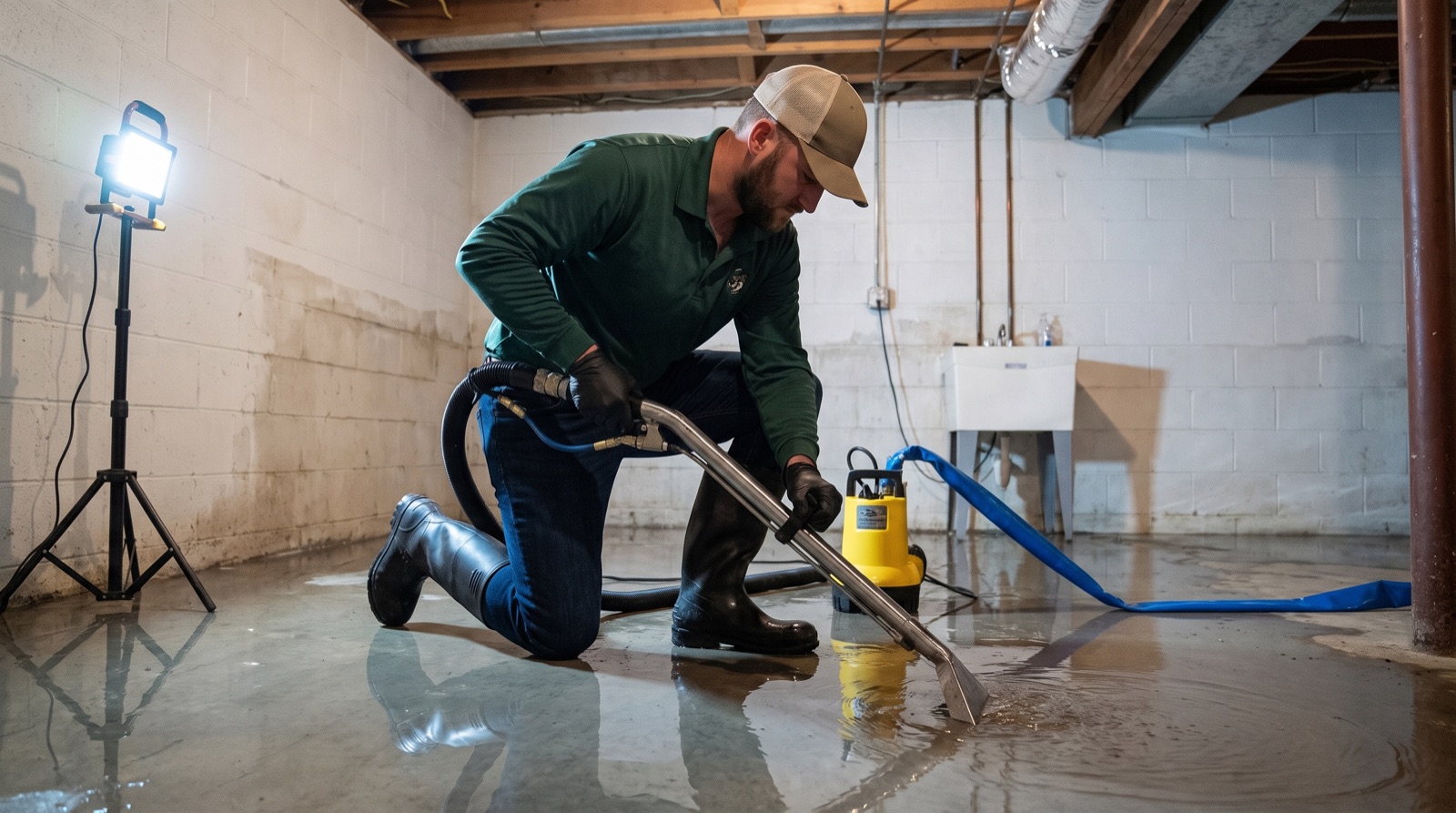
What actually happened
Why did my basement flood?
Basement restoration company for St. Louis flood cleanup.
Basement flood cleanup should address the actual water source, contamination concerns and affected materials. Discuss safe extraction, drying, moisture documentation and any necessary source repair with the restoration team. Cleanup documentation does not guarantee mold prevention or a claim outcome.
Gateway Water & Mold handles basement flood cleanup for sump pump failures, sewer backups, storm-water overwhelm, foundation seepage, appliance leaks, and supply-line breaks across the St. Louis metro. We start with source-of-loss triage, then build the cleanup plan around the water category, affected materials, and what your insurance carrier will need to see.
If water is coming up from the basement floor
Water at a floor drain, crack or slab warrants safe assessment of the actual source and contamination concerns. Discuss necessary source repair and an appropriate extraction and drying plan with qualified professionals; the visible entry point alone does not determine the cause.
What Gateway documents before the rebuild
- Source-of-loss notes: sump, sewer, storm, seepage, appliance, or plumbing leak.
- Moisture readings for walls, framing, flooring, trim, and basement contents when relevant.
- Photos of standing water, affected materials, demo areas, equipment placement, and drying progress.
- Water category and contamination notes, especially when sewer backup or drain water is involved.
- Drying logs and rebuild recommendations for the adjuster, homeowner, or property manager.
If your basement is wet now, contact Gateway to discuss safe assessment before disturbing affected materials. Report the observed water entry and any known source. The restoration assessment informs cleanup and documentation; the insurer determines coverage under the actual policy.
Identifying the water source and contamination conditions informs cleanup and documentation. Insurance coverage and long-term repairs require separate assessment; no source finding alone guarantees coverage or prevention.
Combined sewer backup flooding a St. Louis basement
A suspected sewer backup warrants safe assessment of the actual source and contamination conditions. Report any suspected public-system issue to the responsible utility; a location alone does not establish the failure mechanism.
How a storm event floods a basement
After storm-related basement water entry, assess the actual source, pump operation, drainage and entry points. A season or neighborhood does not establish a common water-table or sump-capacity problem.
How foundation seepage floods a basement
Recurring foundation moisture warrants property-specific assessment and appropriate source-repair advice. Plan drying around actual conditions and any continuing water entry, rather than assuming all older brick basements behave alike.
We assess the observed water source and affected materials before defining the cleanup scope.
What’s included
What does basement
flood cleanup include?
-
Basement flooding source diagnosis
Identify the observed water source and contamination conditions to inform cleanup. Ask the insurer to determine applicable coverage under the actual policy.
-
Cat 3 contaminated-water protocols
For a suspected sewer backup, have the restoration team define suitable protective measures, material handling and disposal for the actual contamination conditions.
-
Truck-mounted vacuum extraction
Select suitable extraction equipment for safe access, contamination and affected materials. Discuss the proposed method and any limits with the restoration team.
-
Selective demolition (basement-specific)
Determine material removal from observed moisture, contamination and assembly conditions. A universal cut height does not define the appropriate demolition scope.
-
Antimicrobial treatment
Discuss whether any antimicrobial treatment is appropriate for the site-specific cleanup plan. Confirm product suitability and application requirements with the responsible professionals; treatment does not replace assessment of the moisture source.
-
Structural drying
Select and monitor drying equipment for the actual materials and conditions. Agree on monitoring and appropriate completion findings, without assuming that every basement has a higher moisture load than upstairs.
-
Content protection & pack-out
Discuss inventory, handling, cleaning, disposal and any available pack-out or storage arrangements for affected belongings. Document condition and obtain necessary authorization before disposal.
-
Sump / backwater-valve assessment
Have an appropriate qualified contractor assess the failed pump or drainage system and discuss suitable repairs or backup measures. Confirm any referral arrangements directly with Gateway; no particular plumbing partnership or prevention result is established here.
How a basement-flood call runs
The four steps of basement flood cleanup
-
01
Step one: diagnosing the basement flood source
Arrange safe assessment of the observed water source and contamination to inform the cleanup plan. The insurer determines coverage under the actual policy.
-
02
Step two: extraction and containment
Address safety and contamination concerns before extraction. Any electrical hazard requires the appropriate qualified professional; confirm the site-specific containment and cleanup plan.
-
03
Basement demolition and structural drying
Base necessary material removal and drying on the assessment. Agree on equipment placement, monitoring and documentation for the actual loss.
-
04
Document the basement flood and hand off the file
Discuss the documented restoration scope, any appropriate source-repair referral and the insurer’s requested information. Confirm remaining work and payment arrangements separately.
Insurance & basement flooding
Does insurance cover basement flooding?
Confirm the policy and endorsements for the actual basement-water source. Sewer backup, sump overflow, seepage and surface flooding can have different terms; no general statement guarantees coverage.
Gateway can document the observed loss and proposed cleanup scope. Ask your insurer or agent about coverage and filing requirements; documentation does not establish the likelihood of approval.
- Source-of-loss documentation built into every job
- Cat 3 protocol documentation for sewer events
- Photos of source point + sump status (if applicable)
- Discuss policy questions with your insurer or agent
Common questions
Common questions about basement flooding
Is sewer backup actually different from a regular flood?
A suspected sewer backup requires assessment of contamination and affected materials. Ask the restoration team to define suitable protective measures, cleaning, removal and disposal for the actual conditions rather than treating the water as harmless.
Do I have sewer-backup coverage on my policy?
Ask your insurer or agent to confirm applicable sewer-backup coverage, endorsements, limits, exclusions and costs. Review the actual policy as well as the declarations; no local coverage prevalence or inexpensive endorsement is established here.
Should I get a sump pump? A backwater valve?
Have a qualified contractor assess the actual source and whether a sump, backup pump, backwater valve or another repair is suitable. Obtain a property-specific quote and discuss limitations; no single measure is guaranteed to prevent a future loss.
How long until the basement is usable again?
Ask for a property-specific estimate for assessment, drying, repairs and any other required work. Insurance review follows a separate process. Request updates as the findings and scope develop rather than relying on a universal completion window.
We rent, should we deal with this or call the landlord?
Notify the landlord promptly and document the damage when safe. Responsibility and insurance depend on the lease, policy and circumstances; Gateway can document the cleanup scope but does not determine legal liability.
What about commercial properties?
Contact Gateway about the proposed cleanup scope for a commercial or multifamily property. Confirm authorization, documentation, access and any applicable occupancy or specialist requirements with the responsible parties.
How fast can mold start after a basement flood?
Arrange prompt assessment and drying of wet basement materials. Evaluate any suspected mold from the actual conditions; elapsed time alone does not establish mold growth or guarantee prevention.
Related services
What else we do.
Basement-flooding cities
Where we handle basement flooding.
Sewage backups, sump-pump failures and foundation seepage need property-specific assessment. Choose your city for service information.
Inner Ring
West County
North County
South County
St. Charles County
City of St. Louis
Illinois Riverbend
Metro East
Belleville Cluster
Basement flooded in St. Louis right now?
Contact Gateway to discuss the observed basement water and current dispatch availability.
Related service information
Read about basement flooding cleanup in Clayton, MO and the local property conditions that shape the work.
Read about basement flooding cleanup in Chesterfield, MO and the local property conditions that shape the work.
Read about basement flooding cleanup in St. Louis City, MO and the local property conditions that shape the work.
Read about basement flooding cleanup in Florissant, MO and the local property conditions that shape the work.
Read about basement flooding cleanup in Edwardsville, IL and the local property conditions that shape the work.
Read about basement flooding cleanup in Belleville, IL and the local property conditions that shape the work.
Check our complete Missouri and Illinois service area for additional communities.
Relevant completed work
Webster Groves, MO project
- Loss
- Combined sewer backup during a heavy rain event. Three feet of contaminated water.
- Response
- 74 min
- Result
- Selective demo, full antimicrobial treatment, structural drying. Insurance file delivered Xactimate-aligned; carrier approved on first review.
Edwardsville, IL project
- Loss
- Sump pump lost power during an extended outage. Basement filled to six inches before homeowner returned.
- Response
- 92 min
- Equipment
- Truck-mounted extraction
- Result
- Truck-mounted extraction, complete drying cycle, sump replacement coordinated with partner plumber. Battery-backup retrofit recommended and installed.