
Gateway/Insurance/American Family/Burst Pipe Claim
American Family
Burst Pipe Claim.
How Gateway handles American Family burst pipe water damage claims in the St. Louis metro. Carrier-specific documentation, scope, and claim-payment questions.
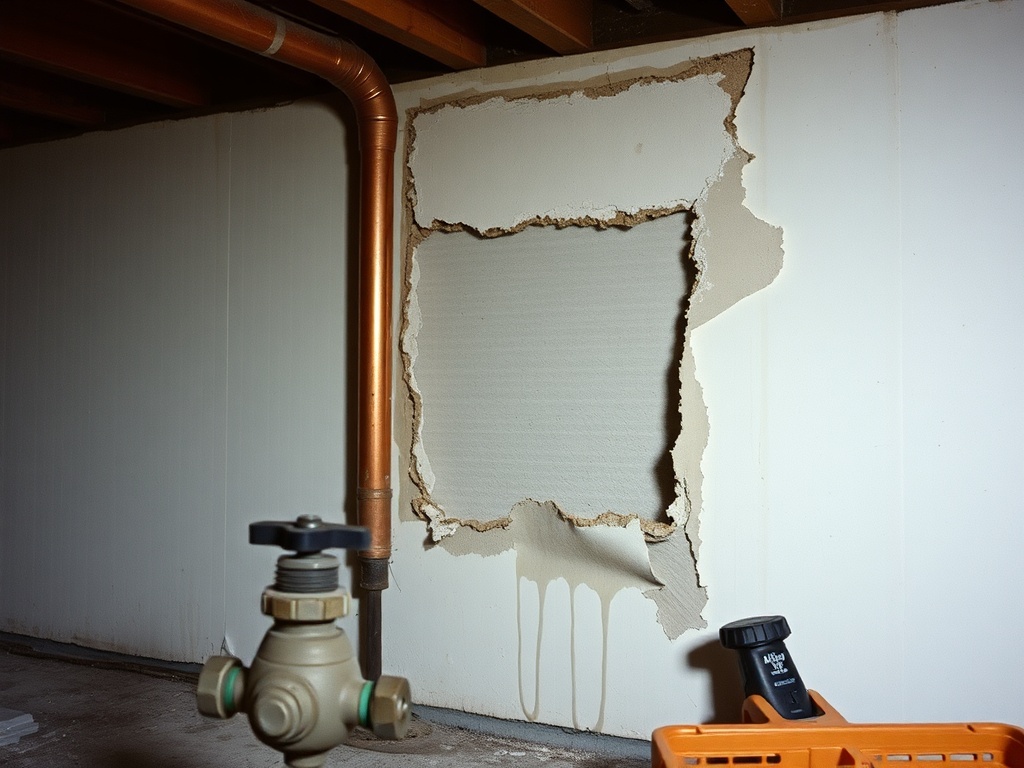
For an American Family pipe-loss claim, document the failure point, pipe material and when damage was discovered. Ask the carrier which policy provisions apply and whether any Hidden Water Damage endorsement is relevant. A sudden break or concealed leak should not be presented as automatically covered.
How American Family handles burst pipe claims
American Family lists the app, online account, telephone and agent as claim-reporting options. Keep the loss photographs, moisture readings, restoration scope and mitigation receipts together. Confirm the assigned adjuster, estimate requirements and payment arrangements for this claim before authorizing Gateway work.
Coverage questions on an American Family burst pipe claim
If American Family questions a pipe-loss claim, request the specific policy language and the reasons for its decision. Include evidence of the failure, discovery timeline, prior repairs and any mold findings. Neither a pinhole leak nor endorsement presence alone establishes the outcome.
What Gateway documents differently on an American Family burst pipe claim
Keep the plumber’s arrival time, failure-point photo, shutoff time and moisture map with the pipe-loss estimate. Identify the affected assembly, such as plaster on lath or drywall. Describe what occurred consistently regardless of which endorsements were purchased, and ask the adjuster to review coverage separately.
What is the American Family Hidden Water Damage endorsement?
Hidden Water Damage is optional coverage for certain concealed leaks. Confirm availability and the actual endorsement on the policy, then ask how its restrictions, deductible and limits apply to the reported loss. Endorsement presence alone is not a coverage determination.
Will American Family pay for mold from my burst pipe?
Ask American Family to identify the mold provisions, exclusions and limits applicable to the pipe loss. Do not assume the water-damage decision guarantees payment for all mold work or that one limit applies to every policy.
How fast does American Family pay on burst pipe claims?
Request a claim-specific payment update from the assigned adjuster, including any missing documents or remaining decisions. Confirm the payment recipients and billing arrangement for Gateway’s work rather than relying on an advertised or industry-average settlement window.
Water damage and mold claim documentation checklist
Use this checklist to organize your conversation with the adjuster. Coverage depends on your specific policy, endorsements and loss circumstances; confirm requirements with your carrier.
- Find your policy number, declarations page and relevant endorsements. Record the carrier contact and claim number once assigned.
- Record when you discovered the damage, the suspected source and the affected rooms. Keep a dated timeline of events and conversations.
- When safe, photograph the damage and affected belongings before cleanup. Keep original files and avoid entering unsafe areas for pictures.
- Keep receipts and records for emergency mitigation, drying equipment, temporary repairs and other related expenses.
- Request the inspection findings, moisture readings, drying logs, itemized scope and invoices from the restoration team.
- Ask the adjuster what additional documentation is required and what decisions need approval. Keep their written responses with your claim records.
Documentation supports review; it does not guarantee coverage or a payment timeline. Gateway can help organize your restoration records through insurance claims assistance. For emergency help, call (314) 947-3419, 24/7.
More American Family resources
Other American Family pages
on Gateway.
American Family burst pipe claim. Call now.
Call Gateway, twenty-four seven, to describe the loss and confirm current crew availability and the next response step.
Policy and process sources (reviewed 2026-09-10): www.amfam.com; www.amfam.com; www.amfam.com. Coverage and claim handling depend on the applicable policy, endorsements and loss circumstances.