State Farm Water and Mold
Claims, Gateway’s Approach.
How Gateway Water and Mold handles State Farm water damage and mold remediation claims in the St. Louis metro. Xactimate-compatible scopes, written documentation, policyholder-choice contractor.
State Farm water damage claim mitigation starts with Gateway’s water damage restoration team: extraction, drying logs, moisture photos, and adjuster-ready documentation stay connected from the first call.
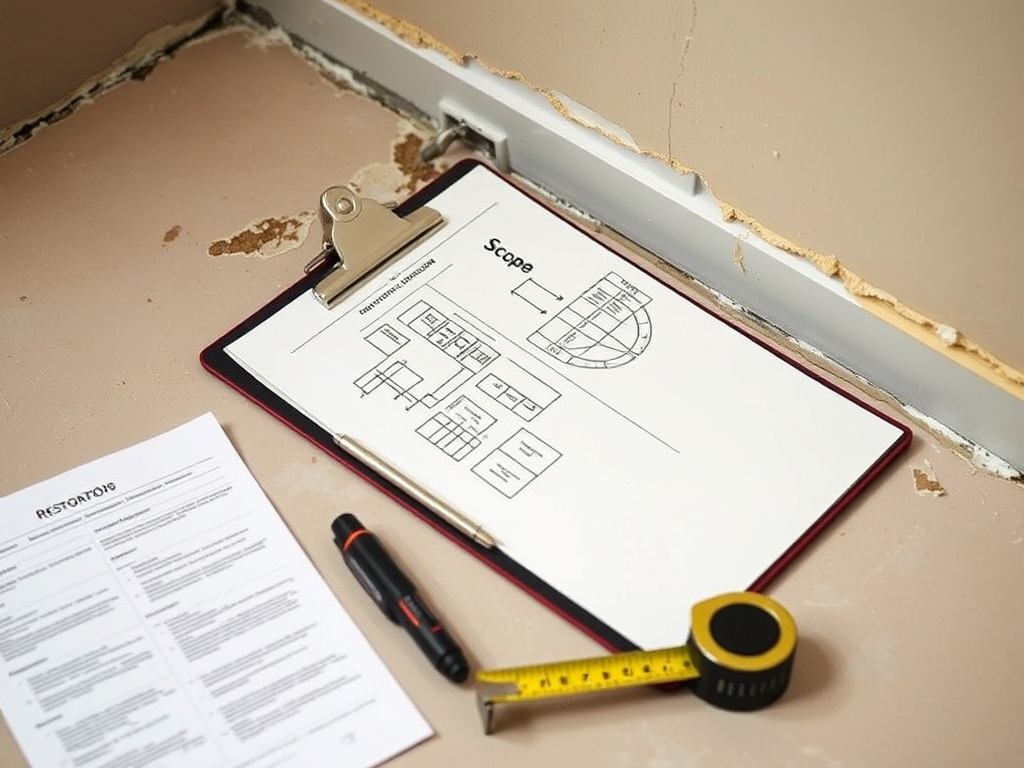
State Farm assigns a claim handler or team after a property claim is filed. Keep their contact details with your restoration records.
For Metro East homeowners, State Farm’s Illinois update announces a minimum 1% wind/hail deductible. Confirm the applicable policy, effective date and deductible calculation with your agent; do not apply this Illinois announcement to Missouri policies.
Water and mold losses involving State Farm policies
State Farm’s public guidance distinguishes abrupt pipe losses from sewer or drain backup, for which it identifies a Back-up of Sewer or Drain endorsement. Check the actual policy before assuming basement water is covered.
For suspected hidden moisture or mold, record what was found and when. Ask State Farm which policy provisions apply to the reported cause; do not infer coverage from the smell, appearance or discovery date alone.
What is the State Farm claim process?
Provide the claim handler with photos, the observed loss timeline and an itemized restoration scope. Ask what further information is needed and whether an inspection is planned.
Confirm payees and timing with the claim handler. State Farm’s Select Service Home Repair program describes direct payment for participating mitigation providers, while its general-contractor process can pay the policyholder and mortgage company. Gateway’s payment arrangement must be confirmed for the particular claim.
Mold coverage with State Farm
Do not assume a standard State Farm mold limit. Review the complete policy and endorsements with the claim handler, including the cause-of-loss provisions, exclusions and any applicable limit.
An independent inspector or industrial hygienist collects mold samples; an independent laboratory analyses them. Keep any independent findings with the observed moisture conditions and remediation scope. Documentation supports review and cannot determine coverage.
Do I have to use State Farm’s preferred contractor?
State Farm says its Select Service Home Repair program is voluntary and policyholders can choose their own contractor. Program benefits depend on participation, eligibility and location; choosing Gateway does not establish a claim-processing timeline.
State Farm water and mold claim questions
Are you a State Farm preferred contractor?
Gateway is an independent restoration contractor. State Farm’s current Select Service Home Repair program is voluntary; ask the claim handler about available program benefits before selecting a contractor.
Will State Farm direct-bill Gateway?
Ask State Farm to confirm whether payment will go to you, a service provider or additional payees for this claim. Agree the invoice arrangements with Gateway before work begins.
How fast does State Farm typically pay on a water claim?
Ask your claim handler when to expect the next update and whether anything is outstanding. Avoid planning around a fixed seven-to-fourteen-business-day payment window.
What should I check if State Farm denies a water claim?
If a claim is denied, State Farm says it provides a written explanation identifying the policy language. Review that explanation against the actual loss records and policy.
Water damage and mold claim documentation checklist
Use this checklist to organize your conversation with the adjuster. Coverage depends on your specific policy, endorsements and loss circumstances; confirm requirements with your carrier.
- Find your policy number, declarations page and relevant endorsements. Record the carrier contact and claim number once assigned.
- Record when you discovered the damage, the suspected source and the affected rooms. Keep a dated timeline of events and conversations.
- When safe, photograph the damage and affected belongings before cleanup. Keep original files and avoid entering unsafe areas for pictures.
- Keep receipts and records for emergency mitigation, drying equipment, temporary repairs and other related expenses.
- Request the inspection findings, moisture readings, drying logs, itemized scope and invoices from the restoration team.
- Ask the adjuster what additional documentation is required and what decisions need approval. Keep their written responses with your claim records.
Documentation supports review; it does not guarantee coverage or a payment timeline. Gateway can help organize your restoration records through insurance claims assistance. For emergency help, call (314) 947-3419, 24/7.
Explore State Farm resources
Every State Farm water
damage and mold page
State Farm claims by service
State Farm claims by cause of loss
State Farm claims by St. Louis city
State Farm water emergency. Live phone, twenty-four seven.
Call Gateway, twenty-four seven, to describe the loss and confirm current crew availability and the next response step.
Policy and process sources (reviewed 2026-09-10): newsroom.statefarm.com; www.statefarm.com; www.statefarm.com; www.statefarm.com. Coverage and claim handling depend on the applicable policy, endorsements and loss circumstances.