Gateway/Water Damage Restoration/Belleville
Water Damage Restoration
in Belleville, MO.
Water damage restoration for Belleville, IL homeowners. IICRC S500 extraction, drying, and monitoring; every job documented to a standard Allstate, State Farm, and American Family can underwrite. We work Old Belleville Historic District, West Main Street, Signal Hill, and the rest of the metro the same way.
On the ground in Belleville
What we see in
Belleville, every week.
Belleville covers the widest housing range of any St. Clair County city: 1850s brick mansions with stone cellars in the Old Belleville Historic District, Queen Anne and Italianate stock in the 62220 older core, Craftsman bungalows in West Main Street, and 1960s through 1990s vinyl ranches in 62221 and 62223. The deep loess soil over clay slumps when saturated, and basement-water issues are widely reported across both old and new neighborhoods. We work Belleville with IICRC S500 dryout, truck-mount extraction, and a written Xactimate scope built for whichever housing era the loss involves. Direct billing on Allstate, State Farm, and American Family keeps the homeowner out of the documentation loop. Illinois American Water handles the water side and the City of Belleville handles sewer, so utility documentation flows through both depending on the loss source, which we capture in the carrier file.
What makes water damage restoration different in Belleville.
Belleville water-damage scope spans 130 years of housing construction in a single city. The 62220 historic core has 1850s brick mansions with stone cellars; 62221 and 62223 have 1960s-1990s vinyl ranches with poured-concrete basements. The protocol differs by zip and by era. Pre-1940 plaster-on-lath in the Old Belleville Historic District hides moisture for weeks, while post-war drywall telegraphs damage within days. We adjust drying strategy by housing age: extended LGR timelines on plaster substrates, standard timelines on drywall. The deep loess soil over clay over limestone is consistent across the city, and the loess slumps when saturated, adding lateral pressure to foundation walls regardless of housing age. Cavity mapping with infrared is universal but the demo decisions differ between Queen Anne plaster and 1980s vinyl ranch construction.
Quick answers for Belleville homeowners.
Our 1880s Old Belleville home has solid brick walls and a stone foundation. Basement seepage is constant. Mold concern?
Yes. Constant seepage in a stone-foundation basement creates persistent mold conditions on organic materials in contact with damp surfaces. Framing, stored items, and any paper-faced insulation are the growth substrates. We test, scope per S520 if elevated, and remediate. The seepage itself is not fully fixable by restoration, it requires exterior drainage and waterproofing work by a foundation contractor. We treat the mold and dry the loss, but the structural fix is separate and ongoing.
Sump pump failed in our 1985 Signal Hill basement during a storm. Standing water across the finished space. What happens next?
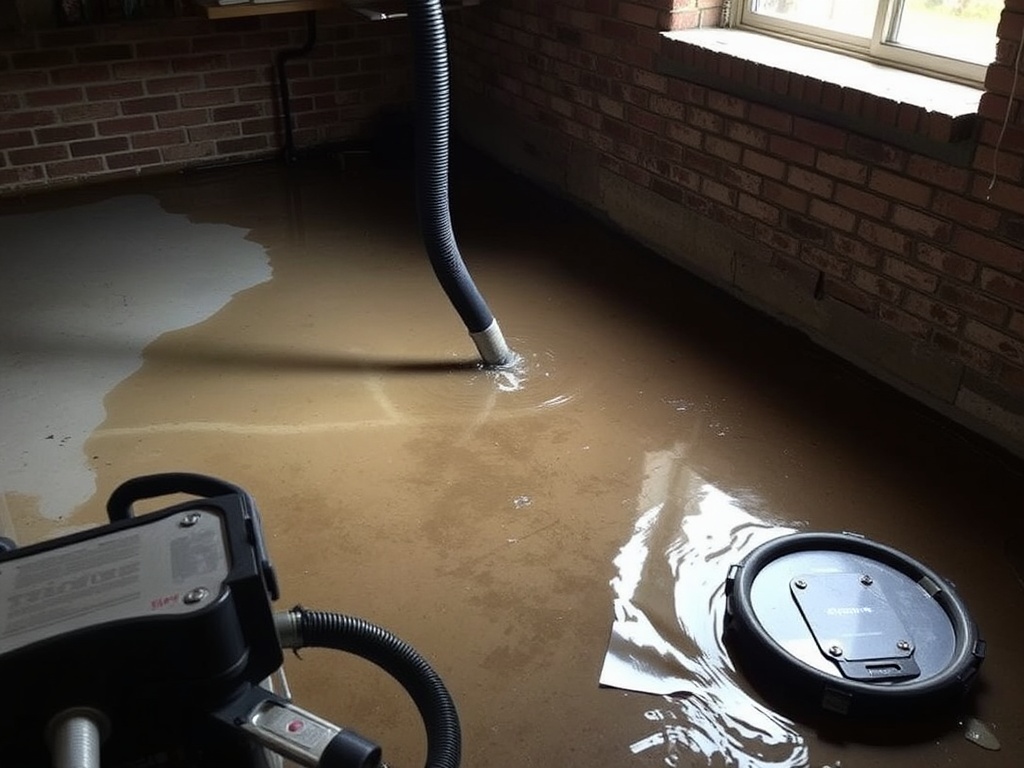
Standard finished basement loss response. Truck-mount extraction first. Pad comes out, carpet usually goes if contamination from drain backflow was involved. We pull baseboards, drill drywall above the waterline for cavity airflow, and set LGR dehumidifiers sized to the space. Daily metering on framing and slab. Drying window is typically four to six days for a moderate finished basement loss. Document the pump failure for any sump pump endorsement claim with your carrier. If no endorsement, out of pocket scope quoted upfront.
Combined sewer backup in our West Main Street home. State Farm is our carrier. What does the claim process look like?
State Farm handles sewer backup under the endorsement if you carry it. We document the entry, water height, and contamination, write Xactimate scope, and submit. State Farm adjusters in our experience are responsive on Illinois claims. Direct-bill once assigned. If you do not carry the rider, the claim is denied and you cover the work out of pocket. We tell you which is which during the initial loss inspection, and we quote out-of-pocket costs clearly before any demolition. No surprises.
“We don’t tell you it’s mold because it looks like mold. We test, we plan, and we tell you what you don’t need to remediate.”
What’s included
What every Belleville
water damage restoration job covers.
Every Gateway water damage restoration job in Belleville runs to the same standard, same equipment, same documentation, same reputation backing every step. The full scope and FAQ live on our main water damage restoration page; the short version is below.
- 24/7 emergency dispatch with same-day on-site response
- IICRC S500-compliant extraction, drying, and monitoring
- Truck-mount and portable units sized for your structure
- Daily moisture readings, written, until structure passes dry standard
- Xactimate-aligned insurance file delivered directly to your carrier
How a Belleville call runs
Six steps. Same every job.
- 01
Source control & moisture map.
We stop the source if accessible, then walk the structure with moisture meters and a thermal camera. The map tells us scope, not guesses.
- 02
Containment, Category 2 or 3.
If it’s gray or black water, we contain before we extract. Plastic sheeting, negative air, and HEPA filtration go up first.
- 03
Truck-mount extraction.
Standing water comes out with truck-mount units. Carpet, pad, and subfloor get extracted to dry-cut moisture levels.
- 04
Air movers and LGR dehumidifiers.
Equipment placed based on cubic-foot calculation, not eyeball. Low-grain refrigerant dehumidifiers handle wet-bulb conditions our market sees.
- 05
Daily moisture readings until dry.
Same time every day. Written log. Equipment moves as readings come down. No structure leaves wet.
- 06
Affected materials removed, S500.
Anything that can’t dry to standard comes out. Documented, photographed, in the file. IICRC S500-compliant.
Other St. Louis cities we cover
Water Damage Restoration across
the metro.
Belleville address. Water emergency.
Live phone, twenty-four seven. We’ll dispatch the nearest crew the moment we hang up.