
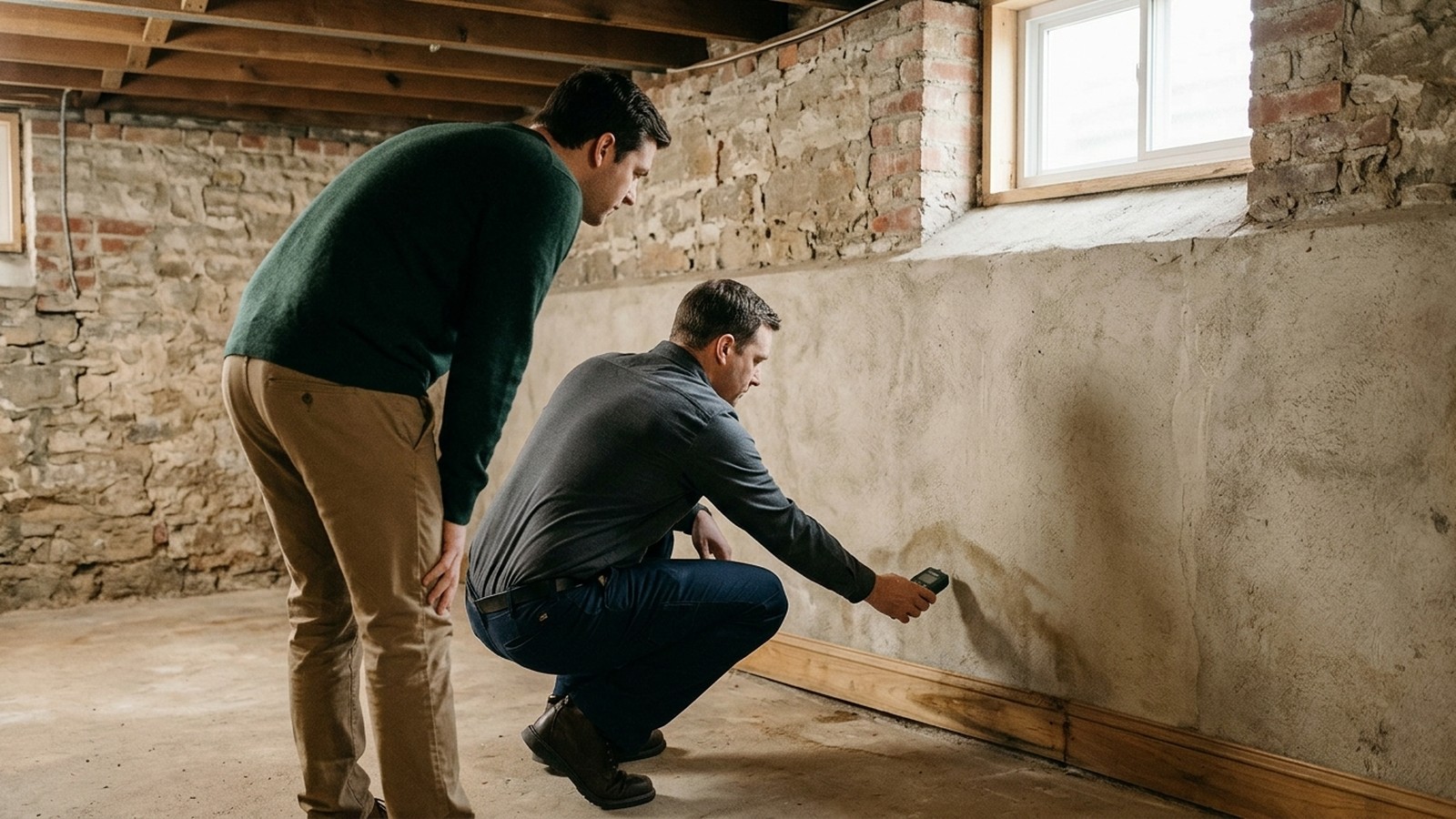
Mold warning signs before buying a home in St. Louis include musty odors, unexplained stains, isolated fresh paint, basement or crawlspace moisture, persistent condensation, a history of roof or plumbing leaks, and damaged porous finishes or HVAC concerns. None of these observations proves that a house has a widespread mold problem. They do show where a buyer and home inspector should look more closely. During your walkthrough, focus on moisture sources, visible patterns, affected materials, and signs that a problem may still be active. A specialist inspection can then help define the concern before you decide what information or action you need during the inspection period.
What are the seven main mold warning signs in a home?
The most useful warning signs connect possible microbial growth to moisture, damaged materials, or unusual conditions. A single sign may have an ordinary explanation, but several related observations in one area deserve closer evaluation.
- Musty odor: Persistent earthy or musty smells, especially in closed rooms, closets, basements, or near mechanical systems.
- Stains or spotting: Discoloration on drywall, ceilings, trim, cabinets, flooring, or stored materials.
- Isolated fresh paint: Recently painted sections that do not match surrounding walls or ceilings.
- Basement or crawlspace moisture: Damp surfaces, water marks, standing water, efflorescence, or deteriorated materials.
- Condensation: Repeated moisture on windows, pipes, ducts, foundation surfaces, or bathroom finishes.
- Roof or plumbing leak history: Patched ceilings, repaired supply lines, damaged cabinets, or disclosures describing prior water events.
- Warped materials or HVAC concerns: Swollen trim, soft drywall, cupped flooring, stained vents, or unusual odors when the system runs.
The EPA’s homeowner mold guide emphasizes that moisture control is central to mold control. That makes the source and extent of moisture more important than the color of a suspicious spot.
How should buyers evaluate musty odors, stains, and fresh paint?
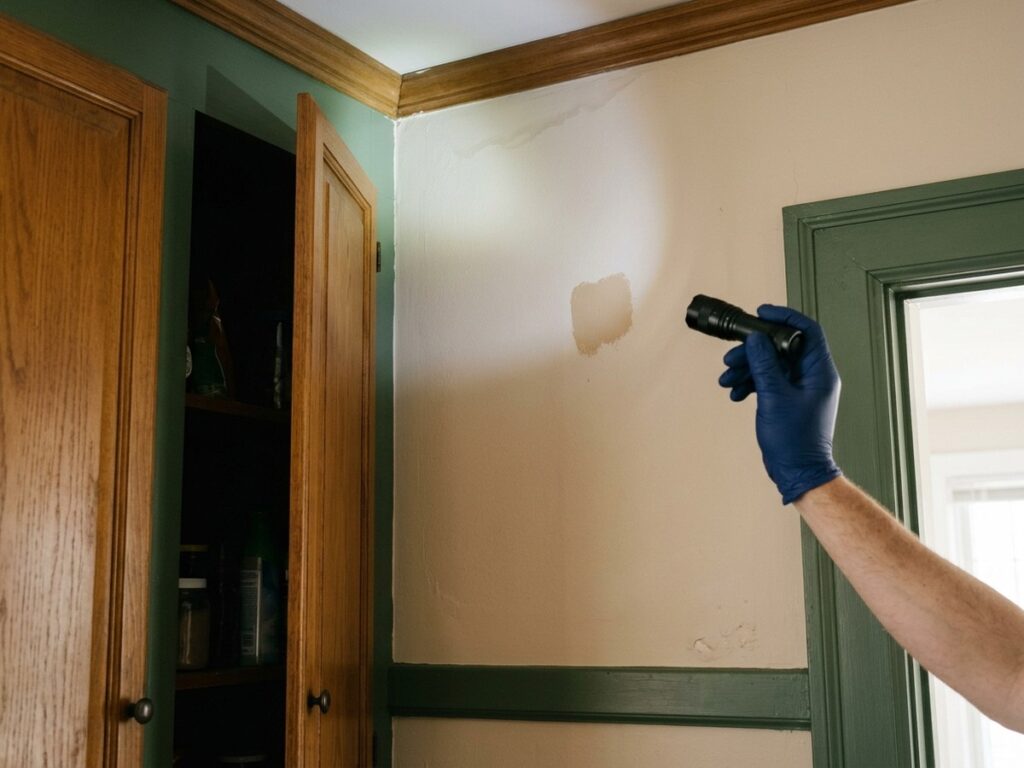
Musty odors, stains, and mismatched paint should be treated as prompts for closer inspection, not as proof of concealment or mold. Their importance depends on where they appear, whether materials are damp or damaged, and whether several clues point to the same moisture source.
Musty or earthy odors
Notice whether an odor is limited to one room, cabinet, closet, stairwell, or part of the basement. A persistent odor without visible growth may indicate that the relevant surface is behind a finish, beneath flooring, inside a wall cavity, or near stored porous materials.
The CDC notes that thorough visual inspection and detection of musty odors can be more reliable than routine air sampling for identifying dampness and mold problems. It also states that there are no health-based indoor air standards for mold against which a sample can be compared (CDC testing and remediation guidance).
Stains and spotting
Look at the shape and location of discoloration. A ceiling ring below a bathroom, staining beneath a window, spotting behind furniture, or damage at the bottom of drywall may help identify a possible source.
Not every dark mark is mold. Dirt, soot, rust, old adhesive, and previous water staining can look similar during a quick walkthrough. Professional judgment may be needed when the material, moisture pattern, and visible condition do not provide a clear answer.
Fresh or mismatched paint
Fresh paint can be part of ordinary maintenance or preparation for sale. A small repainted area surrounded by older finishes deserves attention when it also has bubbling, texture differences, staining at the edges, softness, or a nearby odor.
Ask what prompted the repair and whether the underlying moisture source was identified. The goal is to understand the condition, not to assume why the work was performed.
Where should buyers look for moisture, material damage, and HVAC concerns?
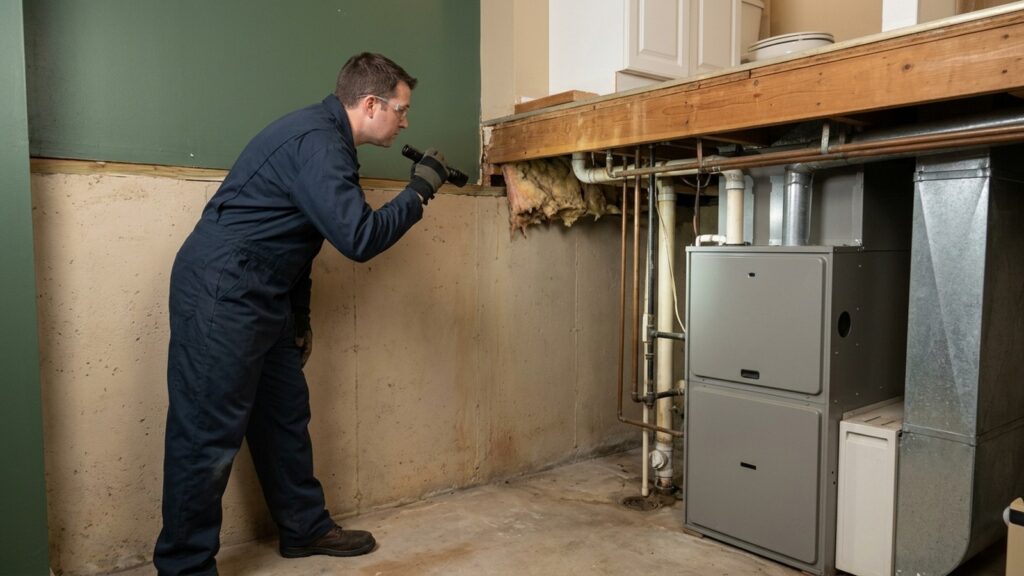
Basements, crawlspaces, plumbing areas, roof transitions, and HVAC components deserve careful attention because they bring building materials close to common moisture pathways. Buyers should look for connected evidence rather than relying on one isolated mark.
Basements and crawlspaces
Check accessible foundation walls, sill areas, floor edges, support posts, stored contents, and the underside of the subfloor where visible. Water marks, dampness, deteriorated insulation, peeling coatings, and damaged cardboard or wood can help show where moisture has been present.
In St. Louis metro homes, lower levels vary widely in age, construction, finish level, drainage conditions, and repair history. A finished basement can also hide foundation surfaces, so odors, swollen baseboards, staining, and changes in flooring deserve documentation.
Roof and plumbing history
Review visible ceilings below rooflines, bathrooms, kitchens, laundry areas, and plumbing chases. Patched drywall or replaced cabinetry may reflect a completed repair, but buyers should still ask what leaked, when it occurred, and whether affected materials were dried or removed.
A past leak does not automatically mean there is a current mold problem. Active moisture, recurring staining, soft materials, or a continuing odor makes the history more relevant.
Warped finishes and HVAC clues
Porous finishes can change after absorbing moisture. Watch for swollen trim, separating laminate, cupped wood flooring, soft drywall, loose wallpaper, sagging ceiling materials, or carpet staining near exterior walls.
HVAC observations may include stained supply registers, wet insulation near equipment, condensate problems, or an odor that becomes noticeable when the system operates. These signs do not establish that the HVAC system is contaminated, but they can justify a more focused evaluation.
What can a pre-purchase mold inspection establish?
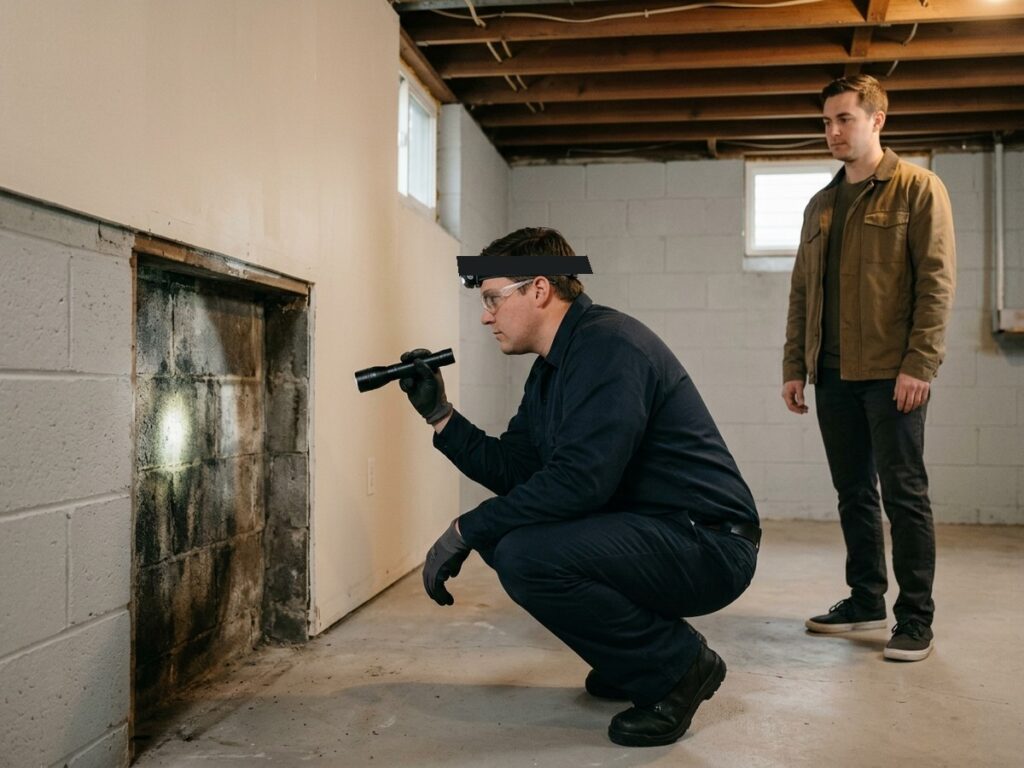
A pre-purchase mold inspection can document visible conditions, identify likely moisture sources, measure accessible materials where appropriate, and define areas that need further investigation. It cannot guarantee that every concealed cavity is free of mold or predict how a property will perform after purchase.
A specialist may examine reported leak areas, accessible basements or crawlspaces, suspect finishes, and the relationship between moisture and visible damage. The resulting documentation should distinguish observed facts from professional interpretations and recommendations.
Routine sampling is generally unnecessary when visible mold is present, according to the EPA’s mold and moisture guidance. The EPA also states that no federal limits have been established for mold or mold spores, so a sample does not produce a universal pass-or-fail result.
As a matter of professional judgment, testing is most useful when it answers a defined question. Examples include clarifying an uncertain visible condition, evaluating a specific area that cannot be resolved through inspection alone, or supporting a clearly stated scope. Gateway’s general mold inspection service is structured around identifying the concern rather than collecting samples without a purpose.
How should buyers use mold findings during the inspection period?
Buyers should use mold findings to clarify the location, source, extent, and recommended response before making property decisions. The inspection report, purchase agreement, and advice from the buyer’s real estate or legal professionals should guide any contractual action.
A practical review should separate four issues:
- Observed condition: What staining, odor, moisture, or material damage was documented?
- Likely source: Is there evidence of a roof leak, plumbing failure, condensation, foundation moisture, or another pathway?
- Affected materials: Are drywall, insulation, flooring, wood, or contents involved?
- Recommended scope: Is additional access, repair, drying, removal, cleaning, or verification appropriate?
This is where Gateway’s plan-driven restoration approach provides useful context. Mold work should not focus only on wiping or treating a visible surface. The plan should account for the moisture source, affected materials, access limitations, containment needs, and the difference between investigation and actual mold remediation.
Keep photographs, reports, disclosures, and repair information together. If a recommendation is unclear, ask what evidence supports it and what specific condition the proposed work is intended to address.
What do St. Louis homebuyers commonly ask about mold inspections?
Homebuyers commonly want to know whether testing is required, whether one suspicious area affects the whole house, and who should inspect the concern. The answers depend on the visible conditions and the question the inspection needs to resolve.
Is mold testing always necessary before buying a home?
No. When visible mold is present, routine sampling may add little to the decision because the moisture source and affected materials still need attention.
Does a musty basement mean the entire house has mold?
No. A musty odor identifies an area that deserves investigation, but it does not establish the condition or extent of mold elsewhere in the home.
Can a standard home inspection evaluate mold?
A home inspector may document visible moisture, staining, odors, and damaged materials within the inspection’s scope. A mold specialist can provide a more focused evaluation when those observations require further investigation.
Does cleaning a visible spot solve the problem?
Cleaning the surface may not resolve an underlying leak, condensation issue, or affected porous material. The moisture source and the condition beneath or around the visible area should be considered.
When should you schedule a pre-purchase mold inspection?
Schedule a focused evaluation when your walkthrough, home inspection, or property disclosures identify musty odors, visible growth, recurring stains, unexplained repairs, moisture, or damaged finishes. Gateway Water & Mold’s pre-purchase mold inspection service for St. Louis metro homes can document accessible conditions, investigate defined concerns, and help you understand what the findings do and do not establish during your inspection period.