
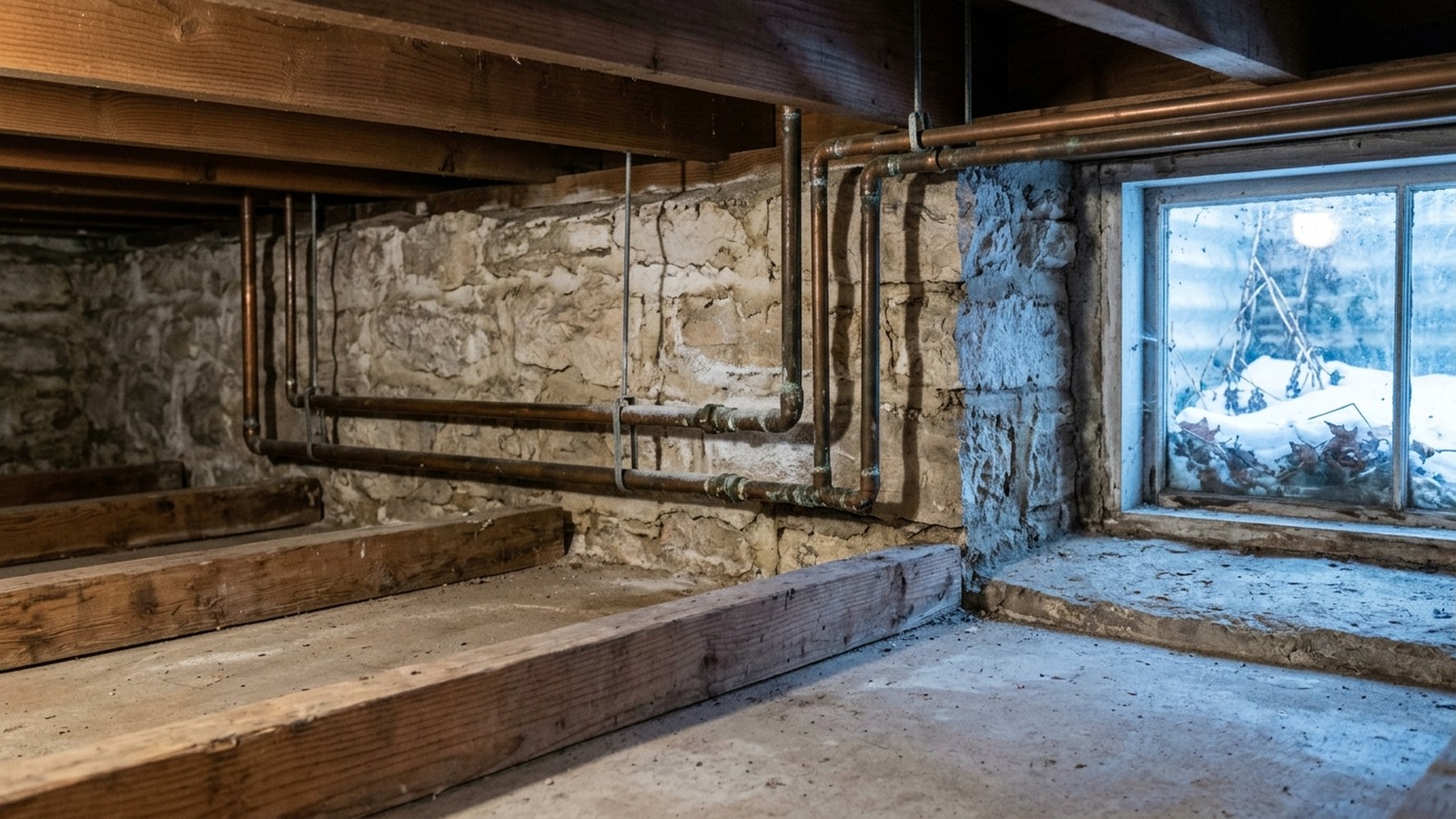
St. Louis winters do not settle; they cycle. Freeze, thaw, freeze again — that rotation is what stresses pipes, roofs, and foundations here. This checklist covers the checks that matter for metro-area homes going into winter 2026. No checklist guarantees prevention of water damage or mold; the actual condition of your home determines the work. If fall maintenance slipped, the fall 2026 water damage prevention checklist still covers roof, gutter, and sump prep.
1. How do I keep pipes from freezing in a St. Louis home?
Copper supply lines freeze where they meet cold air: exterior walls, crawl-space vents, cabinets on outside walls, and lines routed near basement windows. Sustained outdoor temperatures below about 20°F are the usual trigger, though wind exposure matters as much as the thermometer reading. Most burst pipes fail during the thaw, not the freeze — ice blocks the line, pressure builds behind the blockage, and the pipe splits at the weakest joint once water starts moving again.
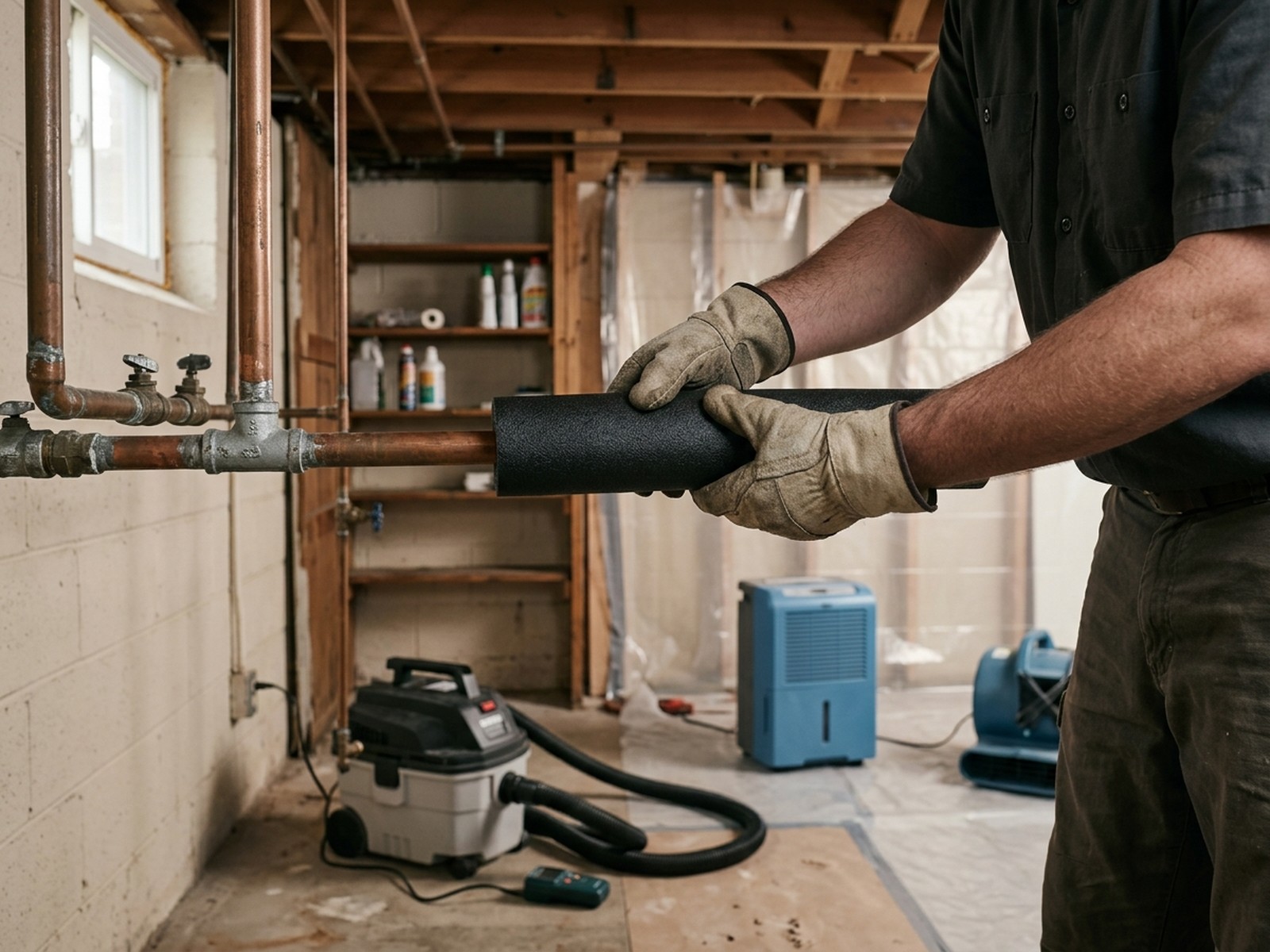
Seal open crawl-space vents before the first hard freeze and open cabinet doors on extreme nights. Foam pipe sleeves are cheap and buy time, but they do not stop a sustained freeze; UL-listed heat tape on a GFCI circuit is the reliable fix for lines that run through cold space. Let one faucet drip slowly during the coldest nights and keep the thermostat set the same day and night — dropping it overnight is a common way frozen pipes start. If you suspect a line has already frozen (no flow, bulging pipe, a section that is cold to the touch), shut the fixture valve and thaw slowly with a hair dryer, never an open flame.
2. How do I winterize outdoor faucets and hose bibs?
Disconnect every hose before the first freeze. Close the interior shut-off valve, open the bib outside to drain the line, and leave the bib open. A frost-free bib that was never drained will split just like any other pipe — the fixture name is not a plumbing guarantee.
Insulated covers help only after the line is drained; putting a cover over a bib that still holds water traps the freeze against the fixture. Do not skip the irrigation system: sprinkler backflow preventers in unheated spaces are among the most commonly missed freeze failures in the metro. Have the lines blown out or drained before the season settles in, and store above-ground hydrants and valves indoors. If an interior shut-off valve is stiff or will not close, have a plumber resolve it now — forcing a seized valve can shear the stem and turn a winterizing chore into an emergency.
3. How do ice dams form, and how do I prevent roof water intrusion?
Ice dams form when a warm attic melts snow from the underside of your roof. The water runs down to the cold eave and refreezes, building a ridge that traps the next round of melt — which then works its way under shingles and into the roof deck. Stained ceiling drywall along an eave or an upper-floor exterior wall after a thaw is often ice-dam water, not a hole in the roof at the spot you see. Icicles hanging thick at the gutter line are the visible symptom of the same heat-loss problem.
Prevention starts inside the attic, not on top of the roof: adequate insulation depth and clear soffit-to-ridge ventilation keep the roof deck cold and the snow melting evenly. Chipping ice off with a shovel damages shingles and rarely beats the next freeze. Keep gutters clear going into winter so meltwater drains instead of pooling and refreezing. For heavy snowfall, a roof rake used from ground level reduces the load at the eaves safely. If meltwater has already stained a ceiling, drying the assembly quickly matters more than removing the ice itself — wet attic insulation and sheathing are slow, expensive problems once they refreeze repeatedly.
4. How do I keep my basement dry through winter snowmelt?
Frozen ground sheds water sideways. When a thaw follows a hard freeze, saturated surface water runs toward the foundation instead of away from it. After each major melt, walk the grade around the house: soil should slope away from the wall, and downspout extensions must stay clear of ice and debris so discharge lands several feet out, not against the footing.
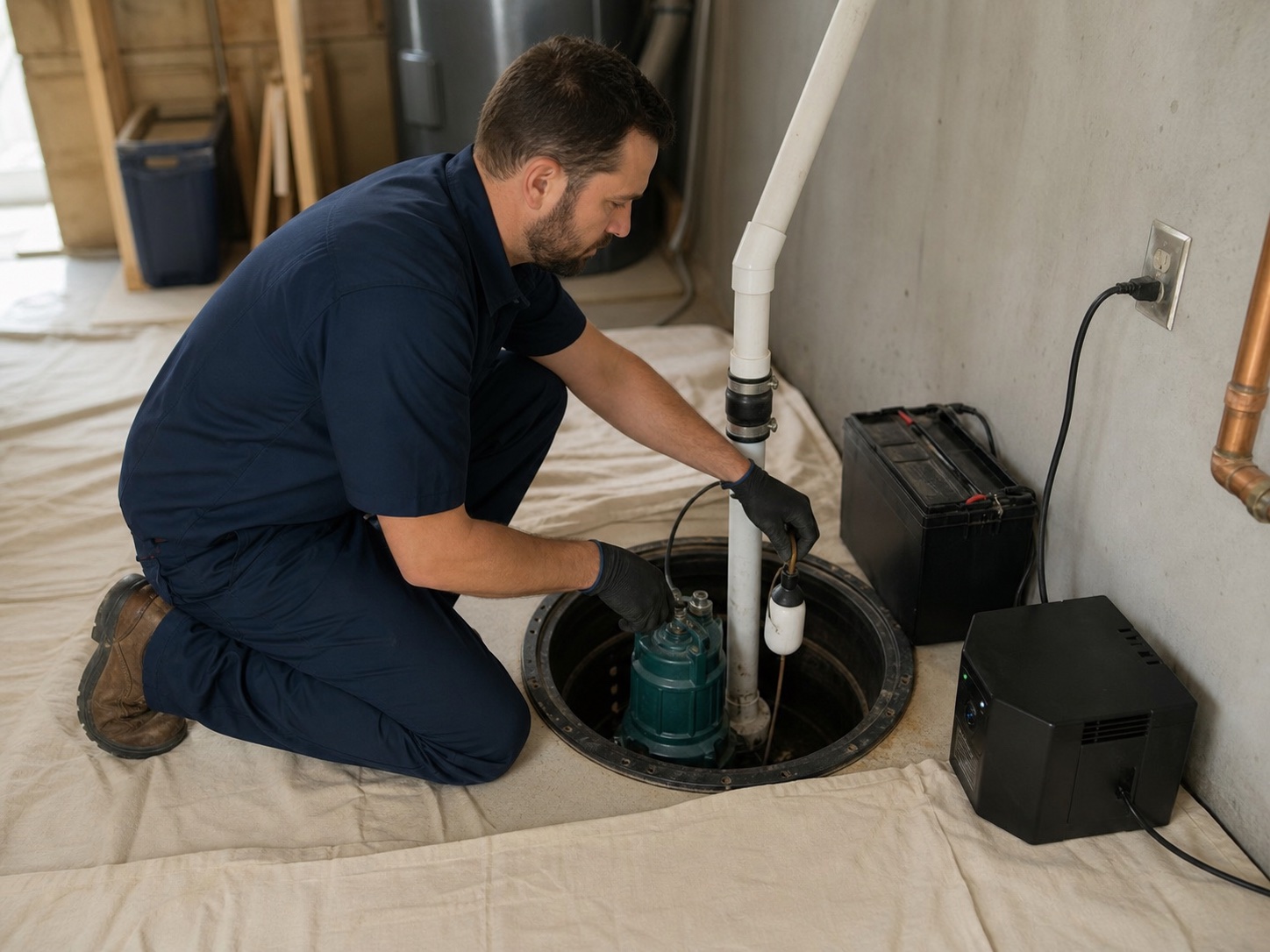
Test your sump pump monthly through winter by pouring a bucket of water into the pit and confirming the float switch, pump start, and visible discharge at the outlet. The classic winter failure is not the pump itself — it is the discharge line freezing shut, which cycles the same water back into the pit until it overflows. Keep the outlet clear and check it after storms. If the pump is more than seven or eight years old, a battery backup is worth installing before the storm that takes the power out at 2am. Standing water that refreezes against a slab and baseboards causes damage long after the thaw, so a wet basement in winter is never a wait-and-see situation; basement flooding service starts with extraction and drying logs, not a shop vac and a fan.
Watch humidity too. Warm indoor air condensing on cold basement walls and windows can push moisture high enough to grow mold with no leak involved at all. Keep indoor humidity in the 30-50% range and have a persistent musty smell assessed — mold remediation begins with finding the moisture source, not tearing out walls.
5. What should I check before a winter storm or extreme cold warning?
Give yourself 72 hours while the forecast is still on the table. Locate the water main shut-off — usually where the line enters the basement or in the box at the property line — and test that it actually turns; a seized valve is useless at 2am during a break. Check the furnace filter and replace it before the heating season peaks, and confirm carbon monoxide detectors work if you will run a generator or space heaters. Keep sump and generator batteries clean and charged. Clear snow and ice from the meter box and emergency access paths so responders and technicians can reach them.
Space heaters need two feet of clearance from anything that can burn, and a kitchen oven is not a space heater. If you rent a temp-cube heater for a freeze event, have a professional confirm how to vent it safely. Finally, photograph anything in your home with a prior water history before the storm — dated pre-storm photos make a later insurance claim materially easier to document.
6. How do I protect a vacant or second home during winter?
If nobody occupies the house during cold months, the safe configuration is simple: shut the water at the main, drain the lines, open the lowest faucet to hold the system empty, and keep heat at 55°F or above with a fan circulating air into cabinet areas. A vacant house with heat but live plumbing is still a house with a clock on it.
If you keep the plumbing live, someone should physically check the house daily during hard freezes — a remote freeze alarm is not a substitute for eyes and a shut-off key. Set point-leak sensors at the water heater, under every kitchen and bath sink, and in the laundry area; they are inexpensive, and they beep well before the ceiling below stains. During holiday travel, hold the mail, put lights on timers, and give a neighbor the shut-off location as well as your phone number. Theft and freeze damage both follow unoccupied houses, and a sump failure you cannot see is a sump failure you cannot stop.
7. How do I find a hidden water leak before it bursts?
Read the water meter with every fixture off and watch the low-flow indicator. Any movement means a leak — a quarter-turn in an hour is slow and usually points to a toilet flapper or a supply line. The other signs are subtle: an unexplained bill increase, a warm spot on a concrete floor, a stain spreading at a baseboard, a musty smell in one room, or the sound of dripping inside a wall when the house is quiet.
Appliance connections are the most common hidden source: washing machine and dishwasher supply hoses, and the refrigerator ice-maker line behind the unit. Inspect them every couple of months and replace rubber hoses with braided line on schedule, not after failure. Ice-maker supply lines routed through a cold exterior wall or cabinet freeze and split regularly — check that line first when the fridge stops making ice in January. If your water heater is over 10 years old, look underneath it; tanks usually weep at a seam before they let go, and a drain pan with a sensor underneath converts a 3am flood into a beeping noise.
8. What should I do first if a pipe bursts or my basement floods?
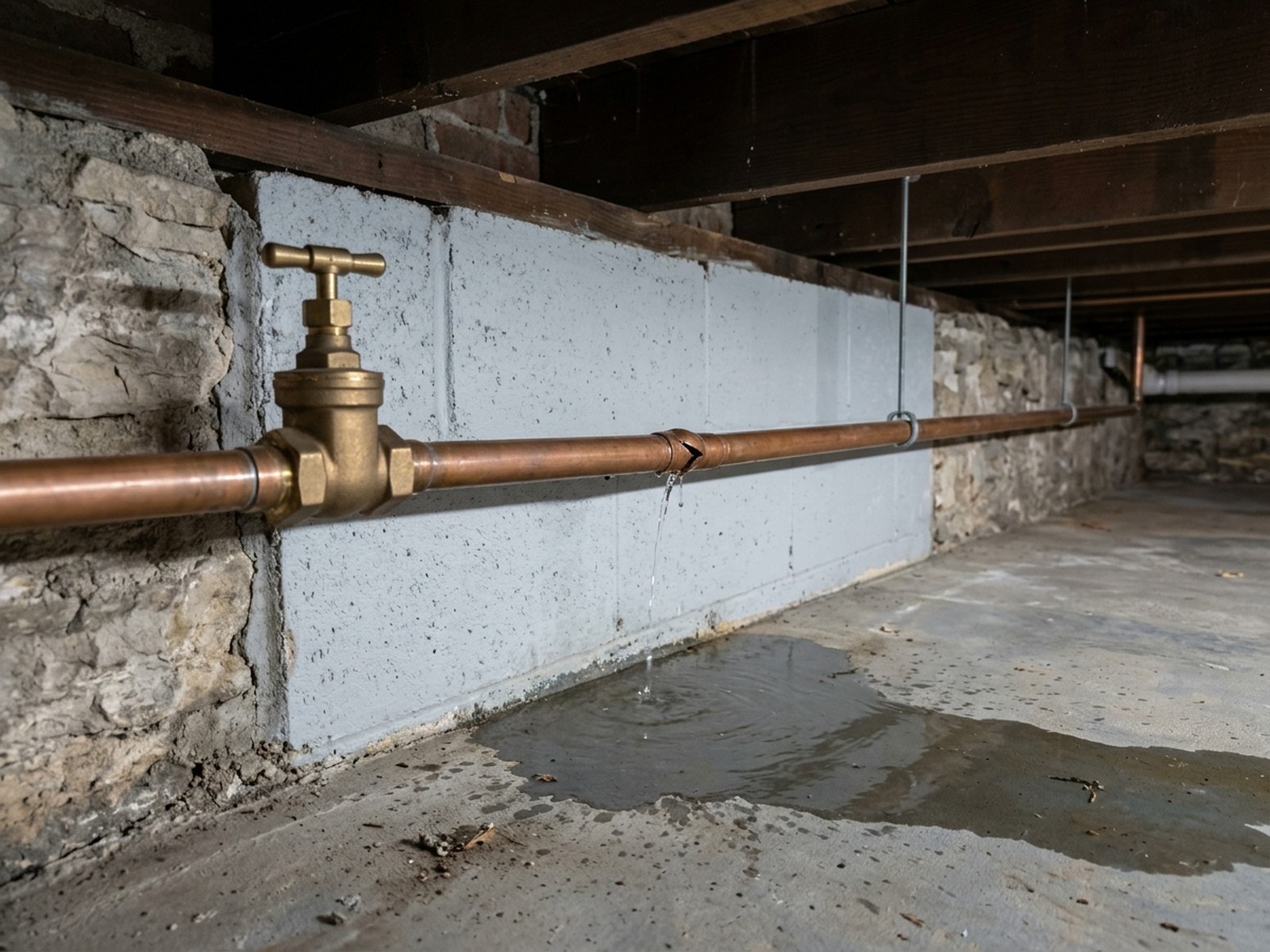
Shut the water at the main first — nothing else on the list matters while water is moving. Cut power to affected areas only if you can reach the panel without standing in water; otherwise call the utility. Buckets and towels slow the spread; a wet vacuum is only safe in a dry, powered area. Never use a household vacuum on standing water.
In winter, timing matters more than usual: water standing in a basement will refreeze into slabs, baseboards, and wall cavities, turning a clean extraction job into structural drying or demolition. Call emergency water extraction before you start cleaning up, and document everything first — photograph water lines on walls, damaged contents, and the source before moving anything. The hour-by-hour sequence of what water does to a home is in our water damage timeline guide. If the water came up from a sewer or floor drain, treat it as contaminated (Category 3): do not wade in it, do not run fans across it, and call professionals.
Winter water damage prevention: frequently asked questions
At what temperature do pipes freeze in a St. Louis home?
Below about 20°F sustained is the common rule, but poorly insulated crawl spaces, exterior-wall cabinets, and vents-exposed basements fail first regardless of the forecast. Wind exposure matters as much as the thermometer.
Does dripping faucets really prevent frozen pipes?
It helps. The drip relieves pressure that builds behind a blockage, and that pressure — not the ice itself — is what splits the pipe. One slow drip from the fixture farthest from the main, with cabinet doors open, is enough on the coldest nights.
Should I knock ice dams off my roof?
Chipping ice damages shingles and rarely beats the next freeze. Address the heat loss from the attic — insulation and ventilation — and use a roof rake from ground level after heavy snow. Raking from a ladder in winter is how injuries happen.
Do I need to winterize hose bibs that I never use?
Yes. Water sitting inside the line and fixture freezes whether or not the bib gets used. Close the interior valve, open the bib to drain it, and leave it open through winter.
How often should I test my sump pump in winter?
Once a month, plus before forecast storms. Test the float, the pump start, and the discharge outlet. Frozen discharge lines are the most common winter-day failure and the easiest to prevent.
Does homeowners insurance cover frozen pipe damage?
Typically, sudden accidental discharge from a burst line is covered; gradual seepage or damage traced to a lack of heat may not be. Policy language and maintenance expectations vary, so review your policy and work through our insurance claim help before you need it.
How quickly does mold grow after a winter leak?
On wet, cellulose-rich material in a heated house, mold can begin within 24-48 hours. Ceiling drywall that stayed damp after a freeze-break is one of the most common winter calls we get.
Should I shut off the water before traveling for the holidays?
Yes — at the main, with heat left at 55°F or higher. If nobody can check the house daily during hard freezes, drain the lines as well and open the lowest faucet.
Need help with winter water damage in the St. Louis metro?
Gateway Water & Mold responds 24/7 across the St. Louis metro for water damage restoration, emergency water extraction, basement flooding, mold remediation, and insurance claim assistance. Call (314) 207-9807 any time, or document what you have with the free claim checklist. Confirm the proposed scope and any inspection or estimate charge before booking.
Sources (reviewed 2026-11-07): www.cdc.gov; www.epa.gov.