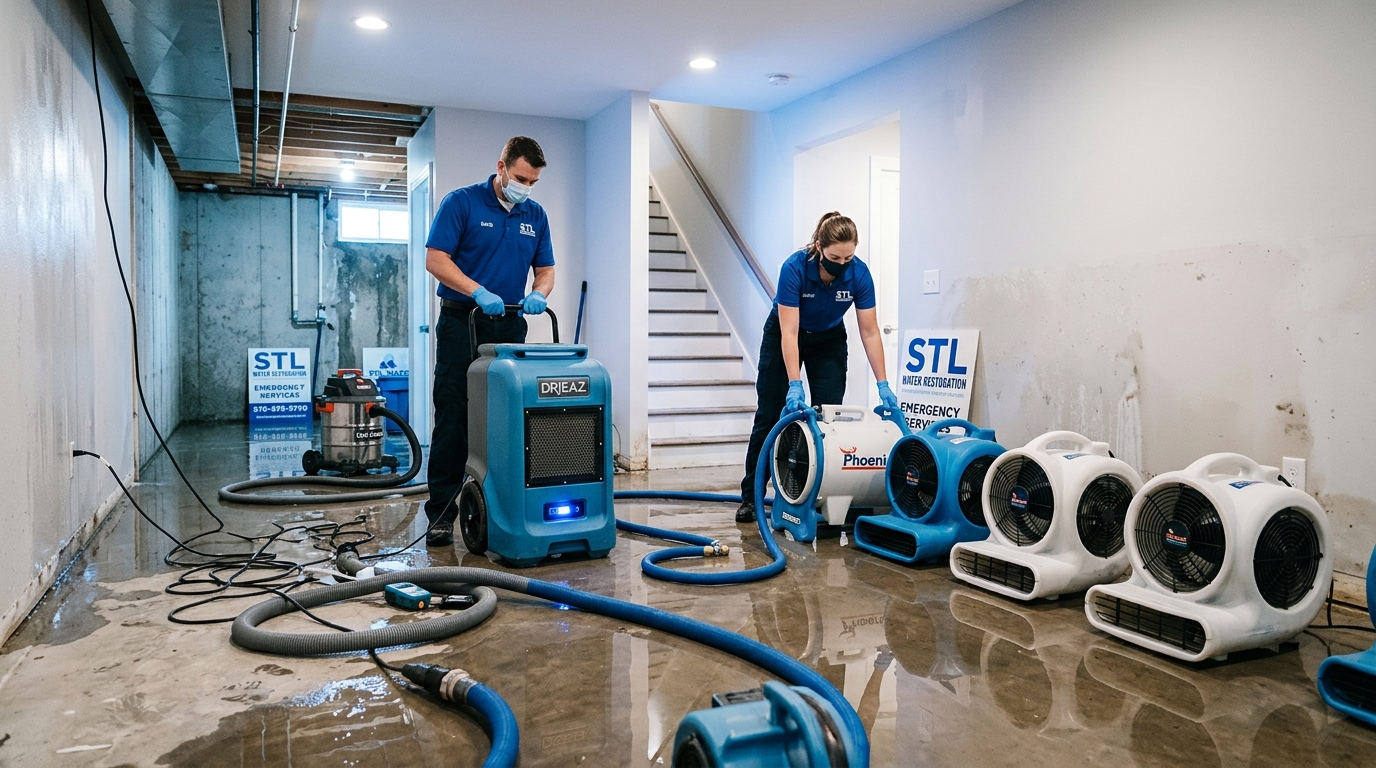
Restoration pricing depends on the actual water loss and scope. This guide explains questions to ask about costs, insurance documentation and how to choose the right restoration company; obtain current written estimates for the property. Related information: water damage restoration services.
How much does water damage restoration cost in St. Louis?
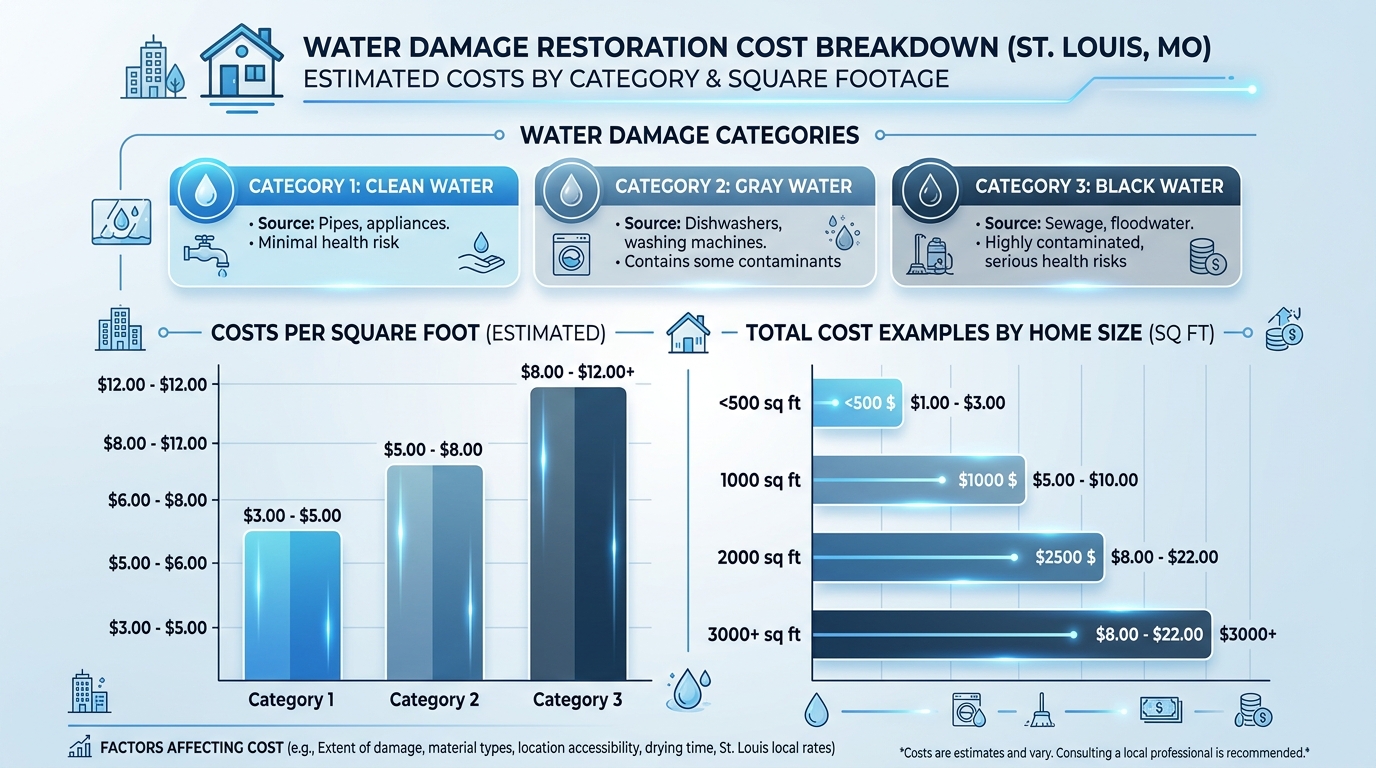
Request a written estimate for the actual affected area, materials, contamination concerns, access and required work. No verified local average or universal residential price range is established here.
Typical St. Louis Pricing Breakdown:Ask for applicable labor rates, minimum charges, equipment costs and payment terms. Basement work should be estimated from actual access, affected materials and contamination conditions rather than an assumed regional rate. Related information: Basement water damage.
What factors affect water damage restoration pricing?
Several key factors influence the final cost of water damage restoration in the St. Louis area:
1. Water Category Classification
Contamination can change the required cleanup methods, protective measures and scope. Obtain a written estimate based on the actual loss rather than applying a fixed cost uplift.
2. Size and Scope of Damage
Ask how the affected area and required work contribute to the estimate; square footage alone does not establish price.
3. Materials and Finishes Affected
4. Drying Time Required
Confirm equipment rates and the monitoring and billing arrangements.
Is water damage covered by insurance in Missouri?
Ask your insurer or agent to assess the actual water source under the policy and endorsements. The following source descriptions are questions for policy review, not a list of guaranteed covered losses.
Consult current official flood-risk information for your property and discuss flood insurance options with your insurer or agent. No unverified state claim ranking establishes your coverage needs.
St. Louis Insurance Tips
How do St. Louis water damage costs compare to national averages?
Restoration prices vary by loss, materials, access and scope. Compare written estimates for equivalent work; an unsupported regional discount percentage does not establish the price of a particular job.
Regional Cost Comparison (2025):Price comparison: obtain current itemized estimates for equivalent work.
St. Louis: compare quotes for the actual materials, access and scope.
National comparisons do not establish a local property-specific price.
Chicago quotes require their own current, equivalent scope.
Kansas City quotes require their own current, equivalent scope.
Memphis quotes require their own current, equivalent scope.
Why St. Louis Costs Are Lower:Assess the actual building materials and condition, including any suspect hazardous materials before disturbance. Neighborhood and age alone do not establish the scope or presence of a hazardous material.
What services are included in water damage restoration?
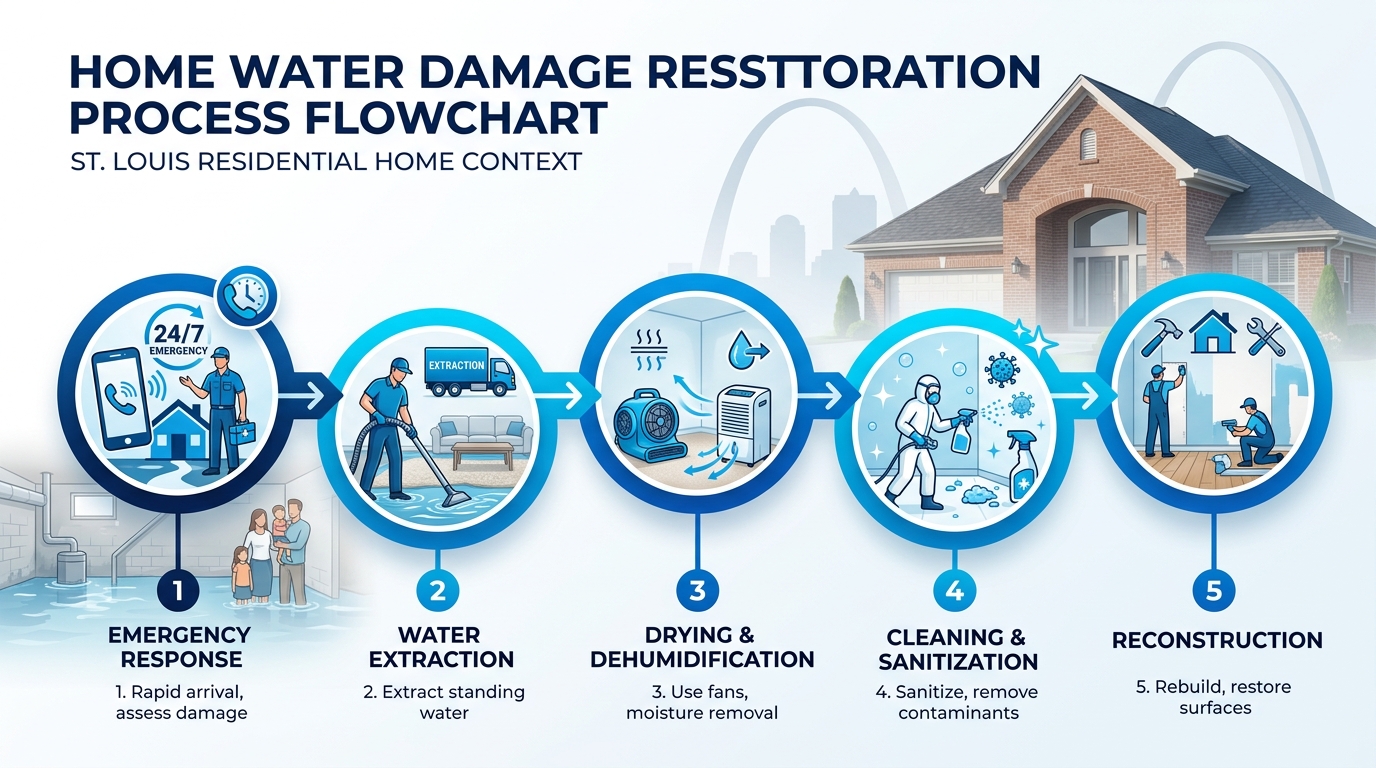
Discuss which of the following services are needed, available and included in the actual restoration estimate.
Emergency response: confirm current availability
Water Extraction and Removal
Structural Drying and Dehumidification
Cleaning and Sanitization
Content Restoration
Reconstruction and Repairs
How long does water damage restoration take?
The water damage restoration timeline varies based on damage severity and affected materials:
Typical Timeline:Request a project-specific schedule and updates; no universal residential completion window is established here.
Factors that extend timelines:Can I save money with DIY water damage cleanup?
Before attempting cleanup, consider the actual source, contamination, electrical and structural hazards and affected materials. Seek appropriate professional assessment when conditions are uncertain; cost alone does not establish whether DIY work is suitable.
DIY Risks:A suitable moisture assessment can help identify affected materials beyond visible surface water. Ask for the findings and a property-specific scope; no fixed mold-remediation surcharge is established here. Related information: mold remediation.
How do I choose a water damage restoration company in St. Louis?
Compare contractor qualifications, scope, documentation and payment terms. Selection does not guarantee the quality of a particular outcome or insurer processing.
Qualifications to verify for the actual work
What to Ask Potential Companies
1. “Are you available 24/7 for emergencies?”
2. “Do you work directly with insurance companies?”
3. “What certifications do your technicians hold?”
4. “Can you provide references from recent St. Louis jobs?”
5. “Do you offer a warranty on your work?”
6. “What is your typical response time?”
Red Flags to Avoid
St. Louis-Specific Considerations
Frequently Asked Questions
How much does it cost to dry out a flooded basement in St. Louis?Request a basement-drying estimate based on the affected materials, water source, access and required work. Confirm any pump repair separately; no standard starting price applies to every loss.
Does homeowners insurance cover water damage restoration?Ask your insurer or agent to explain the applicable policy, endorsements, limits, exclusions and any cost of additional coverage. No generic Missouri coverage summary establishes payment or endorsement pricing.
What is the difference between Category 1, 2, and 3 water damage?The actual water source and contamination conditions inform the cleanup plan. Ask the restoration team to explain the assessment, protective measures and material handling rather than assigning a category solely from the appliance or entry point.
How much does mold remediation add to water damage costs?Mold remediation scope and pricing depend on the affected materials, extent and moisture source. Color or species alone does not establish a more extensive treatment or a fixed additional cost.
Are emergency water damage services more expensive?Confirm any after-hours charge and current dispatch availability. Arrange appropriate assessment. No fixed surcharge or cost saving from a particular response time is guaranteed.
What certifications should a St. Louis restoration company have?Verify qualifications, applicable licensing and insurance for the specific work with the responsible providers and authorities. A blanket statewide licensing or lead-certification rule is not established here.
How quickly should water damage be addressed to prevent mold?Arrange prompt moisture assessment and drying. Actual conditions determine mold concerns and remediation needs; a fixed elapsed time does not establish colonization or guarantee prevention.
Can water damage restoration costs be negotiated?Some aspects of restoration are negotiable, particularly reconstruction and non-emergency services. However, emergency extraction and drying are time-sensitive and less flexible. Get multiple estimates, but don’t delay emergency response. Ask about payment plans or financing options for larger projects.
Contact Gateway about water damage assessment, extraction, drying and current dispatch availability. Discuss documentation and payment arrangements for your loss, and any required mold remediation services or sewage cleanup. Related information: Contact Gateway Water & Mold; emergency water damage response.
Contact Gateway to discuss availability and an estimate for the observed loss.