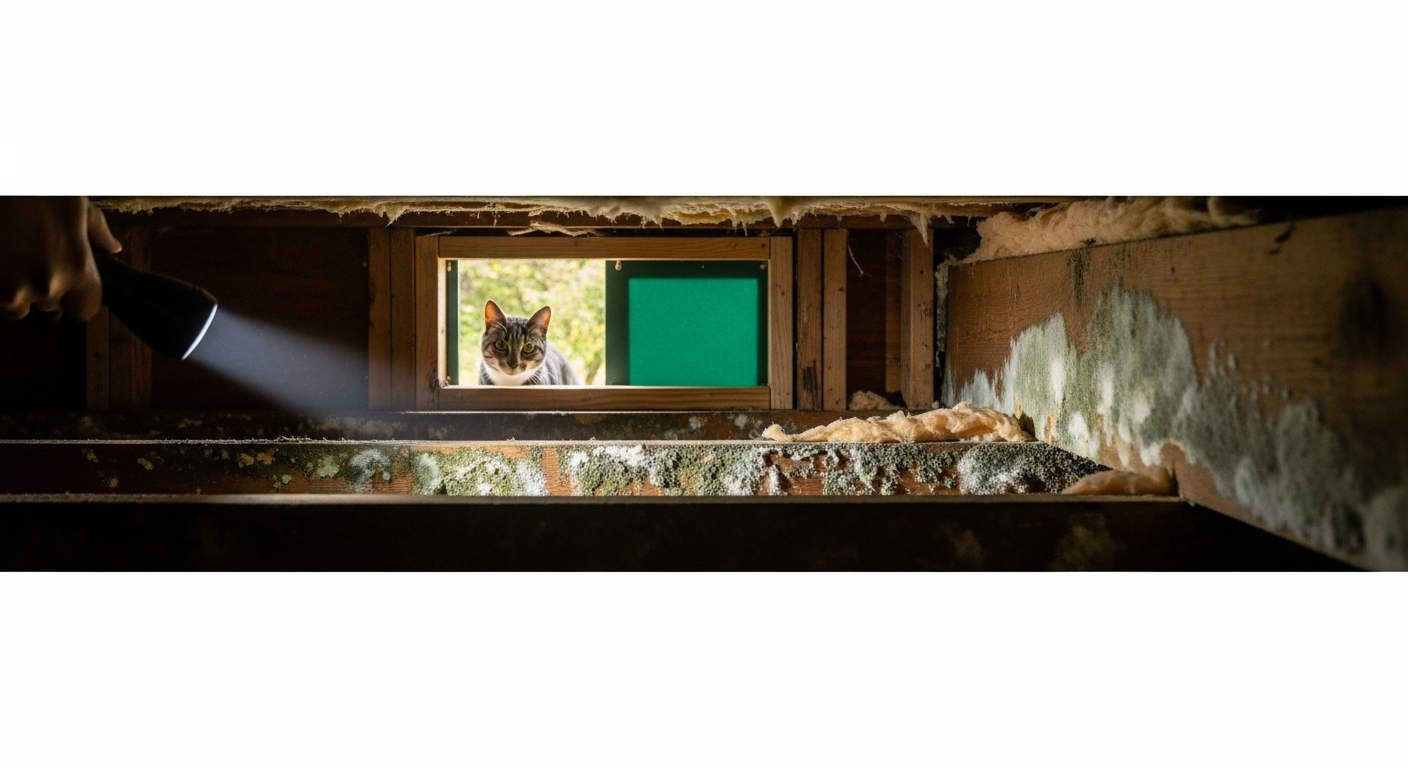
Musty odors or visible moisture in a Marine crawl space warrant assessment. Gateway provides moisture assessment and mold remediation; the actual conditions determine the scope, rather than construction year or an assumed local case history.
What to Do About Hidden Crawl Space Mold in Marine
- Notice musty odors from a safe accessible area; do not enter a hazardous crawl space to investigate.
- Look for visible staining or growth only where access is safe. Appearance alone does not establish species or the extent of mold.
- Monitor relative humidity where safe. EPA recommends keeping indoor humidity below 60 percent, ideally 30–50 percent; humidity alone does not diagnose or exclude mold.
- Have vapor barriers inspected for gaps and damage where access is safe.
- Document visible leaks and drainage concerns from a safe location; concealed or unsafe areas need appropriate assessment.
- Arrange moisture and visual assessment for a persistent unexplained odor. Air sampling is not automatically needed and does not reliably locate every concealed source.
Investigating Crawl-Space Moisture
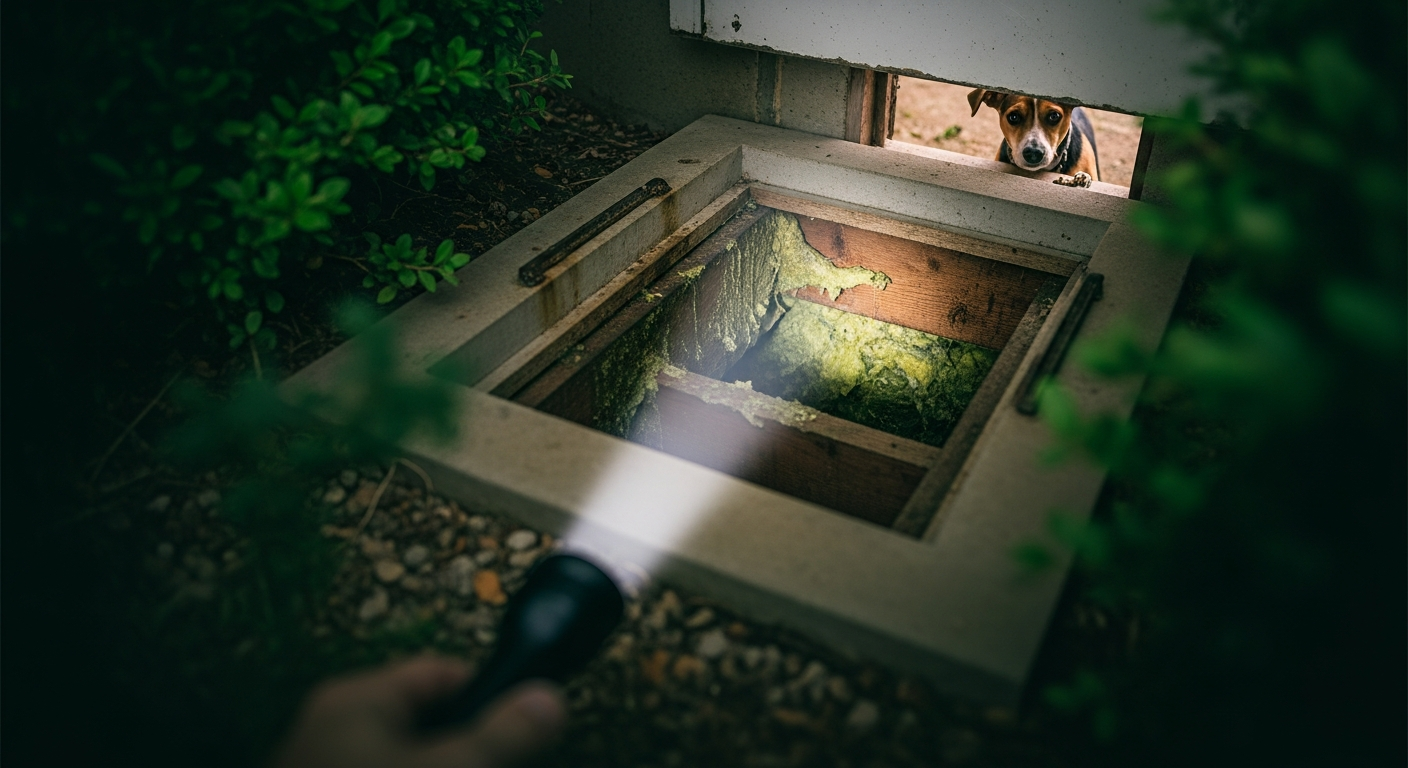
Inspect the Marine property for moisture sources and damp materials. Regional climate and assumed soil type do not establish conditions inside its crawl space.
For professional water damage restoration and mold remediation services in Marine, contact Gateway Water & Mold. Our local team provides Marine water damage response. Their insurance claims assistance expertise helps homeowners navigate claims after severe weather like the patterns covered in the summer storm guide.
Humid air can condense on cooler crawl-space surfaces. Investigate drainage, leaks and actual indoor conditions before selecting ventilation or encapsulation work.
Check whether water is entering through the foundation or collecting below the home. Rainfall averages alone do not establish the source or duration of crawl-space moisture. Regional context is available in the Illinois climate narrative.
Hidden Crawl Space Mold Marine IL: Local Risk Factors
Inspect the home’s actual drainage, vapor control and plumbing conditions. Construction era or subdivision does not establish the highest mold concentration or the absence of moisture-control features.
Consider drainage and groundwater conditions at the property when investigating moisture. Regional creek or soil assumptions do not establish the cause or duration of saturation at a particular home.
Gateway’s moisture assessment examines the actual affected materials. A fixed humidity difference from neighboring communities is not established by the available job records.
Newer homes can also develop moisture problems. Inspect the installed measures and actual conditions rather than assigning performance or installation faults by development age.
Summer Mold Prevention Illinois Warning Signs
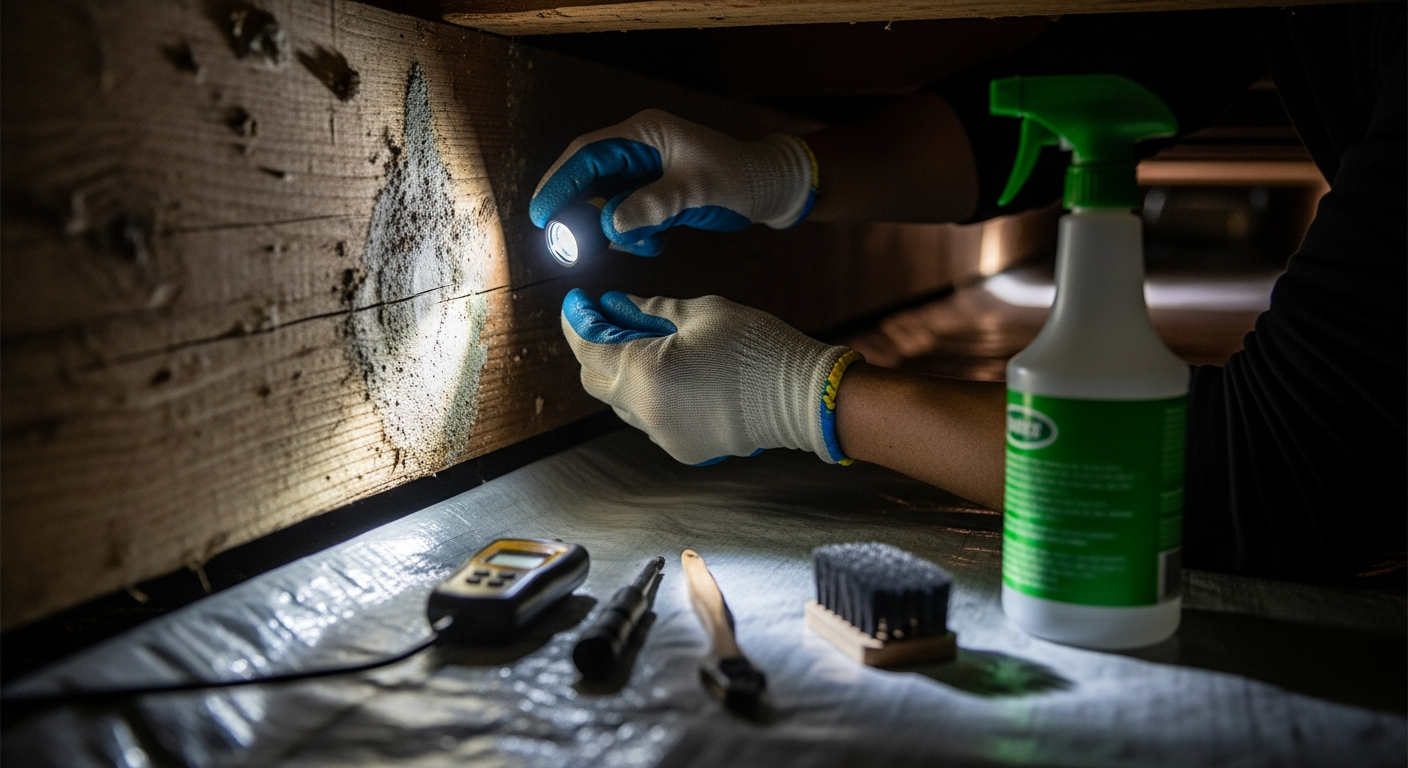
Persistent musty odors warrant investigation. Their timing or location alone does not establish contamination movement between a crawl space and living areas.
Staining, suspected growth and damaged insulation warrant assessment of materials and moisture. Appearance alone does not establish a local pattern or the point where growth began.
Gateway Water & Mold’s Marine Crawl Space Assessment
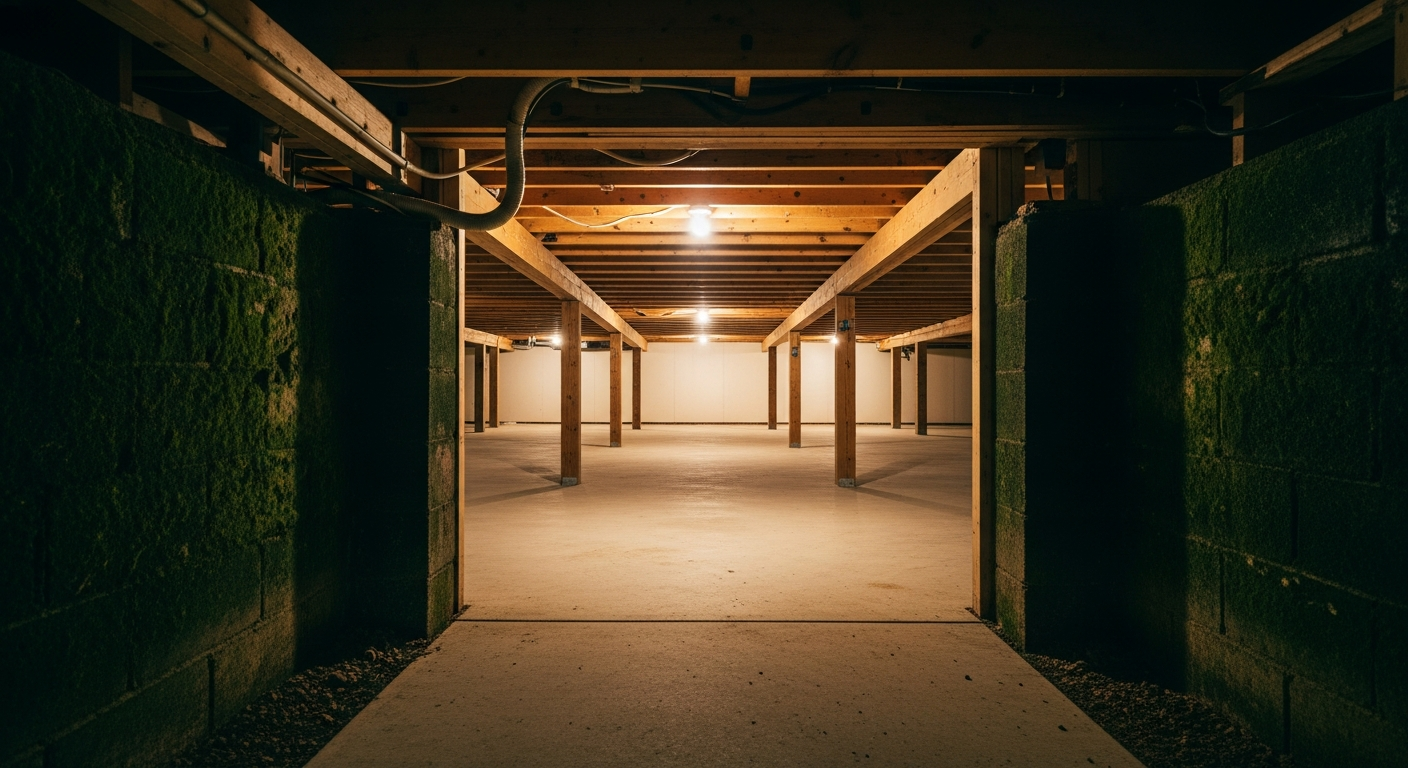
Gateway performs moisture assessment and remediation. Where sampling is appropriate, an independent inspector or industrial hygienist collects samples and an independent laboratory analyses them. Measurements inform investigation but do not guarantee identification of every entry point.
For suspected crawl-space mold, assess the moisture source, affected materials and appropriate containment before work. Medical symptoms require qualified healthcare advice; no unverified Marine project, laboratory result or remediation duration is presented here. Ask Gateway about remediation for visible mold.
Moisture-control and remediation measures should follow the assessed conditions. Gateway’s water damage restoration work addresses affected materials; independent assessment may be appropriate and no air-test result guarantees a universally safe condition.
Professional Solutions vs. DIY Approaches
A professional assessment can help define the moisture and remediation scope. Gateway provides mold remediation; equipment and containment do not guarantee identification or elimination of every concealed problem.
Avoid disturbing suspected mold in a confined or unsafe crawl space. Appropriate protection and work methods depend on the scope; emergency water extraction may be needed for standing water. Documentation supports insurance review but does not establish coverage. Gateway provides insurance claim documentation support.
Address the moisture source as part of remediation planning. Gateway provides water damage restoration and cleanup after basement flooding; no method guarantees permanent prevention of moisture or regrowth.
Frequently Asked Questions
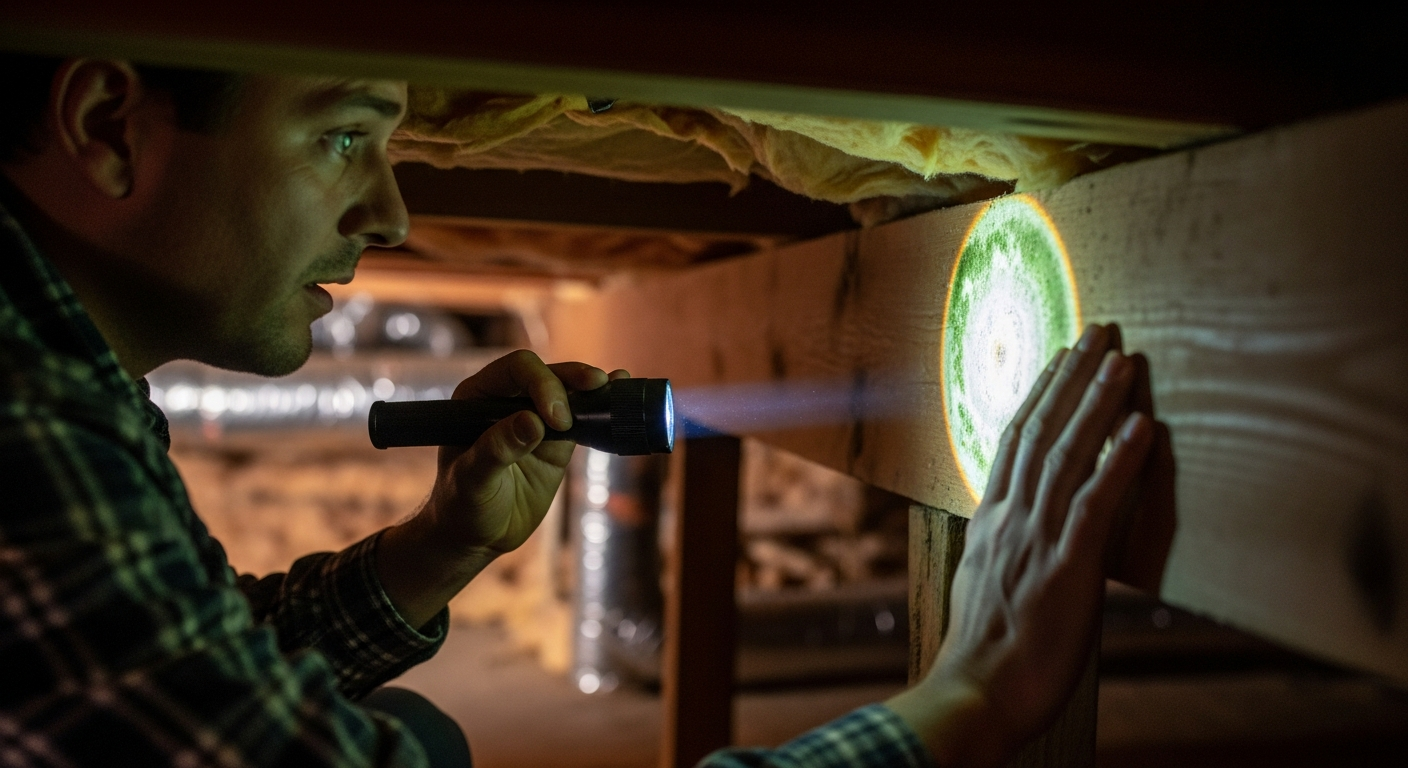
How quickly does mold grow in Marine crawl spaces during summer?
Persistent crawl-space moisture warrants assessment and drying. The timing and extent of growth vary; an unverified local testing history cannot predict the result for a particular home.
Does crawl space encapsulation work in Madison County’s clay soil conditions?
Have a qualified specialist assess suitable crawl-space moisture controls and applicable requirements. Drainage, vapor control and ventilation choices depend on the actual assembly; no particular Gateway encapsulation history or universal soil condition is established here.
Can crawl space mold affect indoor air quality in the rest of my Marine home?
Air can move between crawl spaces and living areas through openings and building systems. Assess the actual pathways and conditions; a fixed air-share percentage or presumed local sampling result is not established.
Sources (reviewed 2026-09-10): www.epa.gov.
Sources (reviewed 2026-09-10): www.cdc.gov; www.epa.gov.