Gateway/Water Damage Restoration/Wildwood
Water Damage Restoration
in Wildwood, MO.
Water damage restoration for Wildwood, MO homeowners. IICRC S500 extraction, drying, and monitoring; every job documented to a standard Allstate, State Farm, and American Family can underwrite. We work Wildhorse, Cherry Hills, Old Pond Plantation, and the rest of the metro the same way.
Wildwood data points
Three things we
know about Wildwood.
- Housing eraEastern portion (63040, 63011): 1980s-1990s subdivisions on city water/sewer. Western portion (63038, 63025): newer custom homes on acreage, many on private well + septic
- Soil + drainageLoess over clay over Mississippian limestone
- Water + sewerMissouri American Water serves eastern Wildwood; western rural properties on private wells / Metropolitan St. Louis Sewer District (MSD) serves eastern Wildwood; western rural properties on private septic / aerobic systems
Water Damage Restoration in Wildwood.
Wildwood water-damage scope splits hard between the eastern subdivisions on city utilities and the western rural sections on private well and septic. Eastern Wildwood in 63040 and 63011 follows the standard subdivision pattern: 1980s-1990s brick-and-stone veneer construction with full basements, often walk-out given the rolling topography. Common interior loss causes are supply-line and appliance failures. Western Wildwood in 63038 and 63025 is newer custom construction on acreage, much of it on private well water with the iron and manganese staining that comes with that, and septic systems that can complicate any basement loss. Our S500 protocol adapts to the area: cavity moisture mapping is universal, but the demo and rebuild decisions differ between subdivision drywall and custom-finish western construction.
Context.
Wildwood splits between the 1980s and 1990s subdivisions in the eastern portion (63040 and 63011) on city water and sewer, and the western portion (63038 and 63025) of newer custom homes on acreage with private well and septic systems. Brick and stone veneer, frame construction, full basements with very high walk-out rates because of the rolling topography. Interior loss in finished walk-out basements is a common call pattern in Wildhorse, Cherry Hills, and Old Pond Plantation. We work Wildwood with truck-mount extraction, IICRC S500 dryout, and a written Xactimate scope. The eastern and western portions require different utility documentation depending on water and sewer source. Direct billing on Allstate, State Farm, and American Family keeps the homeowner out of the documentation loop, and the scope captures the actual finished walk-out basement footprint and the karst-related considerations on western properties when relevant.
We are on the west side of Wildwood with well water and a septic system. Does that change how you handle a basement leak?
Yes. Well water often has higher iron and manganese content that stains surfaces and complicates cleanup, especially on light-colored finishes. Septic systems mean that a backup into the house is Category 3 from the start, no question, with full S500 protocol. We do not service the septic or well systems, but we coordinate with your septic contractor for source repair. Rural Wildwood properties also often have longer response distances. We treat well or septic-related losses as their own protocol distinct from city-served homes.
Our well pressure tank ruptured in the basement utility room. Iron-stained water spread across the floor. Standard cleanup?
Volume-wise yes, but iron staining changes the finish work. The water itself is Category 1 if from the pressurized side, Category 2 if it sat or contacted soil. We extract, dry, and clean. Iron stains on porous surfaces like concrete and grout often need acid-based cleaners to remove fully. Stained drywall or carpet usually does not recover, so replacement is the realistic outcome for those materials. We document the staining for your carrier because the cleaning effort is part of the scope.
“We don’t tell you it’s mold because it looks like mold. We test, we plan, and we tell you what you don’t need to remediate.”
What’s included
What every Wildwood
water damage restoration job covers.
Every Gateway water damage restoration job in Wildwood runs to the same standard, same equipment, same documentation, same reputation backing every step. The full scope and FAQ live on our main water damage restoration page; the short version is below.
- 24/7 emergency dispatch with same-day on-site response
- IICRC S500-compliant extraction, drying, and monitoring
- Truck-mount and portable units sized for your structure
- Daily moisture readings, written, until structure passes dry standard
- Xactimate-aligned insurance file delivered directly to your carrier
How a Wildwood call runs
Six steps. Same every job.
- 01
Source control & moisture map.
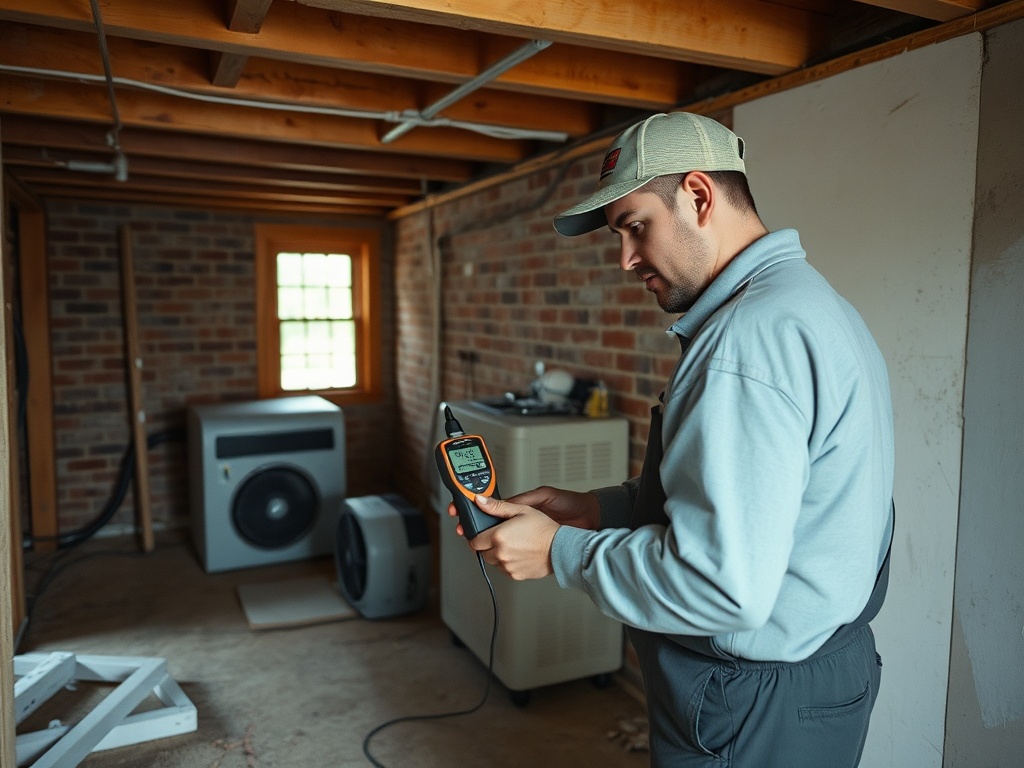
We stop the source if accessible, then walk the structure with moisture meters and a thermal camera. The map tells us scope, not guesses.
- 02
Containment, Category 2 or 3.
If it’s gray or black water, we contain before we extract. Plastic sheeting, negative air, and HEPA filtration go up first.
- 03
Truck-mount extraction.
Standing water comes out with truck-mount units. Carpet, pad, and subfloor get extracted to dry-cut moisture levels.
- 04
Air movers and LGR dehumidifiers.
Equipment placed based on cubic-foot calculation, not eyeball. Low-grain refrigerant dehumidifiers handle wet-bulb conditions our market sees.
- 05
Daily moisture readings until dry.
Same time every day. Written log. Equipment moves as readings come down. No structure leaves wet.
- 06
Affected materials removed, S500.
Anything that can’t dry to standard comes out. Documented, photographed, in the file. IICRC S500-compliant.
Other St. Louis cities we cover
Water Damage Restoration across
the metro.
Wildwood address. Water emergency.
Live phone, twenty-four seven. We’ll dispatch the nearest crew the moment we hang up.