
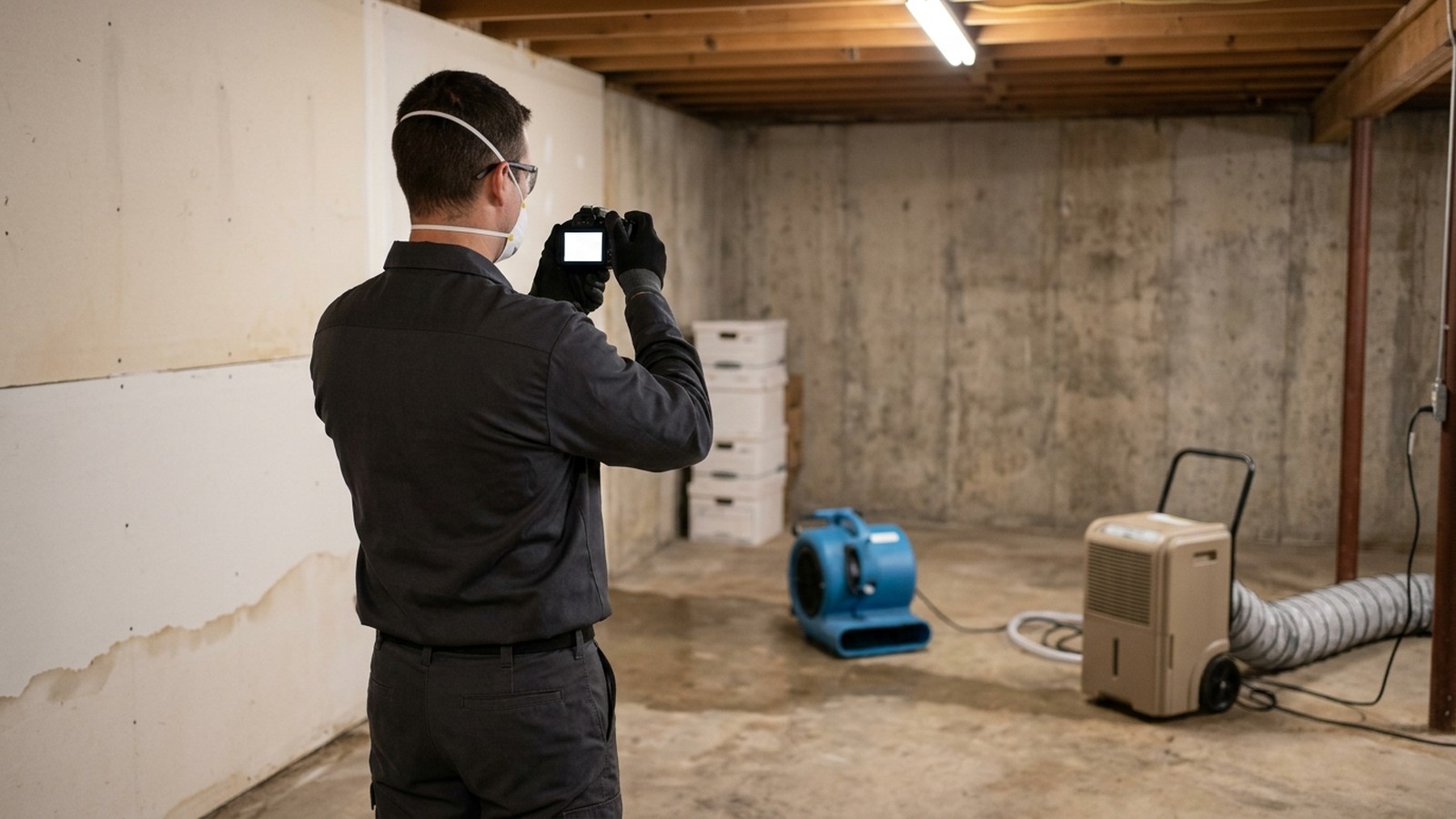
Mold is generally not covered on its own, but mold that results from a covered water loss often is, which means the question is almost never “is mold covered” and almost always “what did the water do, and how fast did it happen.” Your policy language and your carrier decide your claim; nothing below is a coverage determination.
This guide explains the distinction that most water and mold claims turn on, what a standard policy typically treats differently, why flooding is a separate product entirely, and what to document in the first hours so the record supports whatever your carrier decides.
Is mold covered by homeowners insurance?
Not as a standalone problem, because standard policies are built around sudden and accidental events rather than deterioration. The Insurance Information Institute puts mold in the same category as rot and insect infestation: a home maintenance issue, and one that standard policies are not designed to cover.
The exception is the part that matters to most people who search this question. When mold is the direct result of a peril the policy does cover (a pipe that burst, an appliance supply line that let go, a storm that opened the roof), the mold cleanup can fall inside that covered loss. The III’s guidance is to contact your insurance professional if you believe your mold problem was caused by a covered peril.
Two practical consequences follow:
- The cause of the water decides the claim, not the mold. Establishing what happened and when is the work.
- Delay weakens the case. A claim that starts as sudden accidental discharge and sits untreated for weeks starts to look like a maintenance failure, because the growth is now attributable to the response rather than the event.
What water damage does a standard policy typically cover?
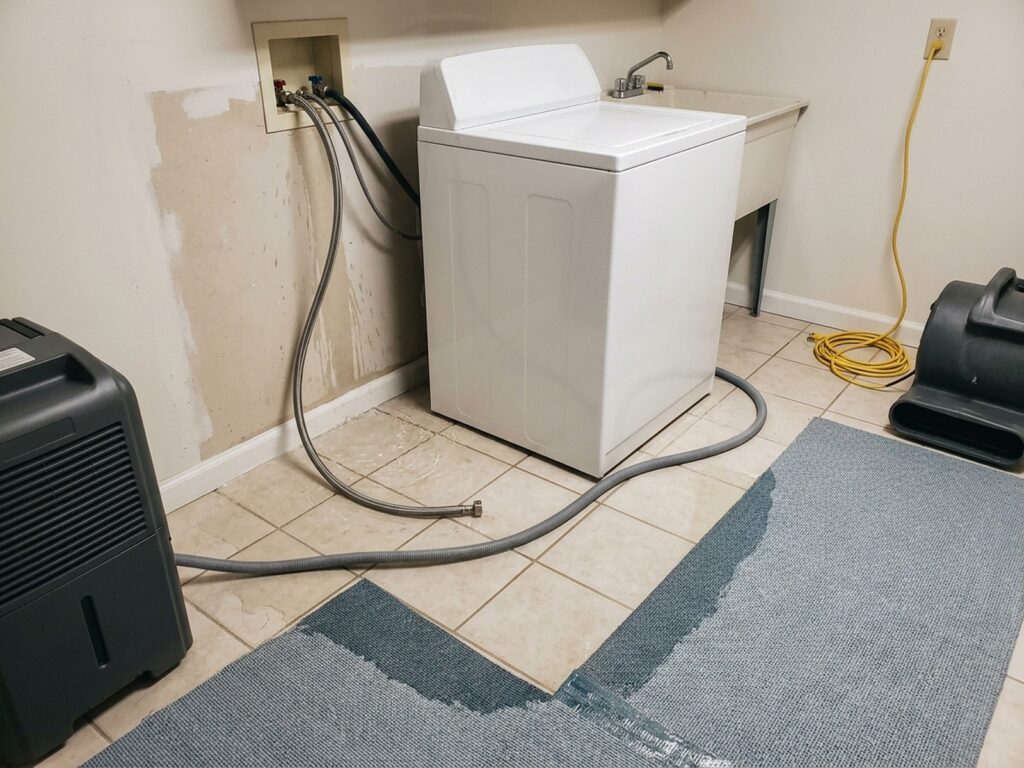
Sudden and accidental discharge from a plumbing or appliance system is the classic covered case; gradual seepage is the classic excluded one. The Insurance Information Institute describes the standard HO-3 as covering accidental discharge of water from a plumbing system, while water seepage is excluded under the HO-3 and treated as a maintenance issue.
| Scenario | How it is usually characterized | Where mold cleanup usually lands |
|---|---|---|
| Supply line to a washing machine bursts | Sudden and accidental discharge | Typically inside the covered loss |
| Water heater tank corrodes through and empties | Sudden discharge, though the corrosion may be examined | Usually follows the water decision |
| Pipe freezes and splits | Commonly addressed under water damage and freezing | Usually follows the water decision |
| Shower pan has leaked slowly for two years | Long-term seepage | Typically excluded as maintenance |
| Below-grade wall weeps in every heavy rain | Seepage / groundwater | Typically excluded |
| River, flash flood or surface water enters the home | Flood: not a homeowners peril at all | Requires a separate flood policy |
| Municipal sewer or drain backs up | Commonly excluded unless a backup endorsement was purchased | Follows the endorsement |
| Storm opens the roof and rain enters | Commonly covered as wind-driven damage | Usually follows the water decision |
Read that table as the shape of the question rather than the answer to yours. Endorsements, deductibles, separate mold sublimits and state-specific policy forms all change outcomes, and the III itself notes that the disasters covered vary by policy in its overview of which disasters are covered by homeowners insurance.
Why is flooding not covered by homeowners insurance?
Because flood is written as a separate product, and in most of the country that product comes through the National Flood Insurance Program. The III’s position is unambiguous: flood damage is not covered by a standard homeowners policy, which is why people in flood-prone areas are advised to purchase flood insurance separately.
This distinction catches St. Louis metro homeowners regularly, because a basement can fill from two completely different directions:
- Water from above and inside (a burst pipe, a failed appliance, rain entering through a storm-damaged roof) is generally the homeowners policy’s territory.
- Water from outside and below (rising surface water, an overwhelmed storm system, a river out of its banks) is flood territory.
Basements have their own rules under an NFIP policy, and they are narrower than most people assume. FEMA’s NFIP publishes a dedicated fact sheet on what flood insurance covers in a basement, and its guidance on real estate and basement flooding explains that a sump pump backing up is treated differently depending on whether area flooding caused it. If a claim is in play, start the NFIP claim process through your flood carrier rather than assuming it flows through your homeowners claim.
What should you do in the first hours to protect a possible claim?
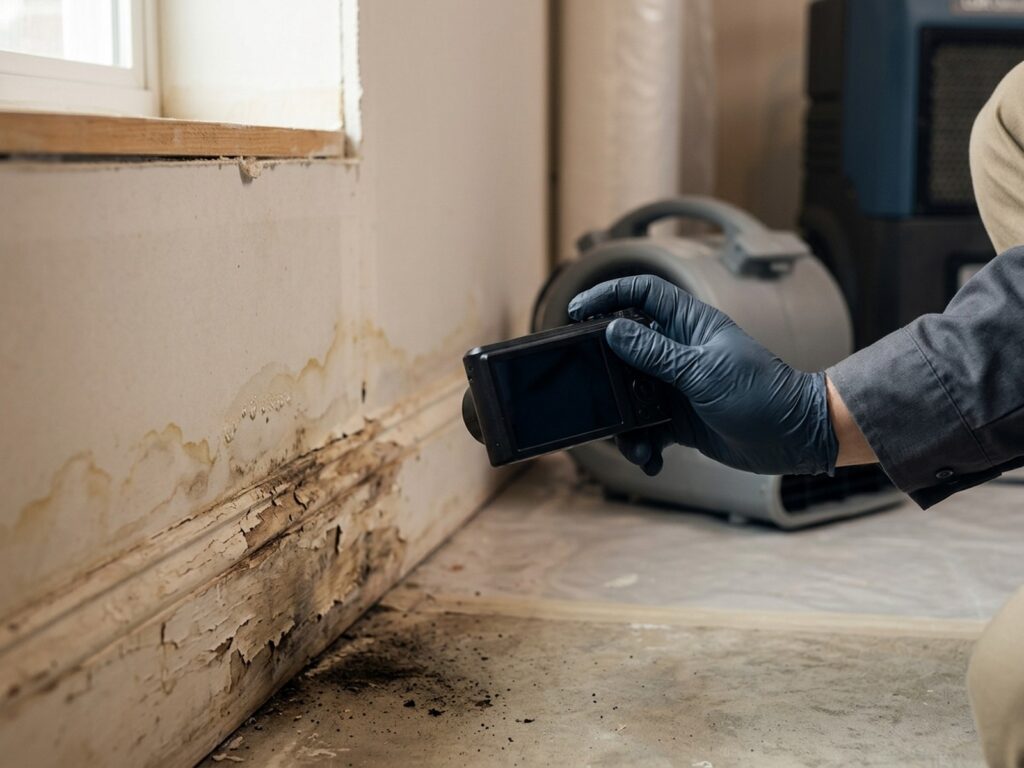
Stop the water, document everything before it changes, and mitigate promptly, because “did the policyholder act to prevent further damage” is a question that gets asked on nearly every water file.
- Stop the source. Shut off the fixture, the appliance valve, or the main.
- Photograph and record video before you move anything. Wide shots of each room, the water line on the wall, the source, the contents, and close-ups of damaged materials.
- Write down the timeline. When you discovered it, what the weather was doing, what was running, when you shut it off, who you called.
- Keep the damaged materials where it is safe to do so, or photograph them thoroughly before disposal.
- Mitigate. Delay is the single most common reason a water claim deteriorates into a mold argument, and EPA guidance is to clean and dry any damp or wet building materials and furnishings within 24–48 hours to prevent mold growth.
- Keep every receipt for emergency measures, temporary accommodation and materials.
- Notify your carrier or agent promptly, and ask directly what your policy requires of you before demolition begins.
That last point is worth repeating: several policies require notice before non-emergency demolition. Our guide on what to document before filing a water damage insurance claim covers the record in more detail.
Why do mold claims get denied after a water loss?
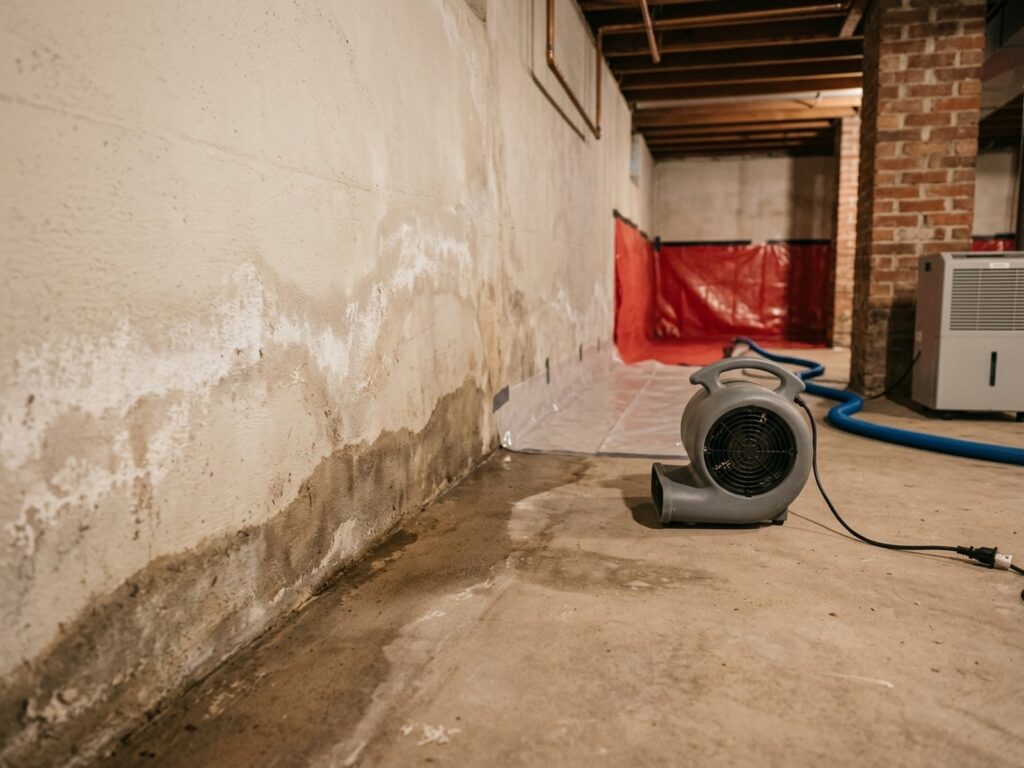
Usually because the file cannot establish that the water event was sudden, or because the response gap is long enough to attribute the growth to the delay rather than the event. Four patterns account for most of it:
- No documented start. Nobody can say when the water began, so the carrier reads it as long-term.
- Evidence of a pre-existing condition. Old staining, prior repairs and previously wet material all suggest the leak was not new.
- The mitigation gap. Weeks between the loss and the response.
- A mold sublimit. Some policies cover mold remediation only up to a capped amount even when the underlying water loss is covered.
None of those are things a restoration contractor decides. What a contractor can do is produce the documentation (dated conditions, moisture readings, affected-material mapping, photographs) that lets the carrier evaluate the claim on evidence instead of inference. Our page on insurance claims assistance covers what we provide and what we do not: Gateway documents the loss and performs the restoration, and Gateway is not your insurer, adjuster or agent.
If your claim is already in motion and stalling, our insurance claim process guide walks through the sequence and where files commonly get stuck.
Frequently asked questions
Does homeowners insurance cover mold remediation?
Generally only when the mold results from a covered peril. Mold on its own is usually treated as a maintenance issue, and III describes it alongside rot and insect infestation as something standard policies are not designed to cover.
Does homeowners insurance cover basement flooding?
It depends entirely on where the water came from. A burst pipe in a basement is a plumbing event; rising surface water entering a basement is a flood, and flood damage is excluded from standard homeowners policies and handled by a separate flood policy.
Is a slow leak covered by insurance?
Usually not. Seepage and gradual leaks are excluded under the standard HO-3 as maintenance issues, which is why finding and fixing slow leaks early matters financially as well as structurally.
Does insurance cover a sewer backup?
Only if a sewer or water backup endorsement was added to the policy. A standard homeowners policy commonly excludes backups, and NFIP flood coverage applies to sump pump backup only where area flooding caused it.
Will filing a water damage claim raise my premium?
That is a carrier and underwriting question, not a restoration question, and it varies by insurer, claim history and state. Ask your agent before filing if it is a concern.
Do I need a public adjuster?
That is your decision and it is worth asking your carrier and your agent about first. Gateway does not adjust claims, negotiate coverage or advise on claim strategy. We document the loss and perform the restoration.
Get the loss documented properly
Whatever your policy turns out to say, the evidence gathered in the first day is what the file is built on, and it cannot be recreated after demolition. Gateway Water & Mold documents water and mold losses and provides insurance claims assistance across the St. Louis metro in Missouri and Illinois, alongside mold remediation where it is needed.
Call (314) 207-9807, and take your coverage questions to your carrier or agent. They are the only ones who can answer them.