
In this guide
How long does a water
damage insurance claim take?
Chapter 01
Before reporting the loss
Should I call my insurance carrier first?
If you decide to file a claim, notify your insurer promptly. Take safe steps to limit further damage and document conditions when safe. You do not need to wait for a restoration contractor to arrive before contacting the insurer.
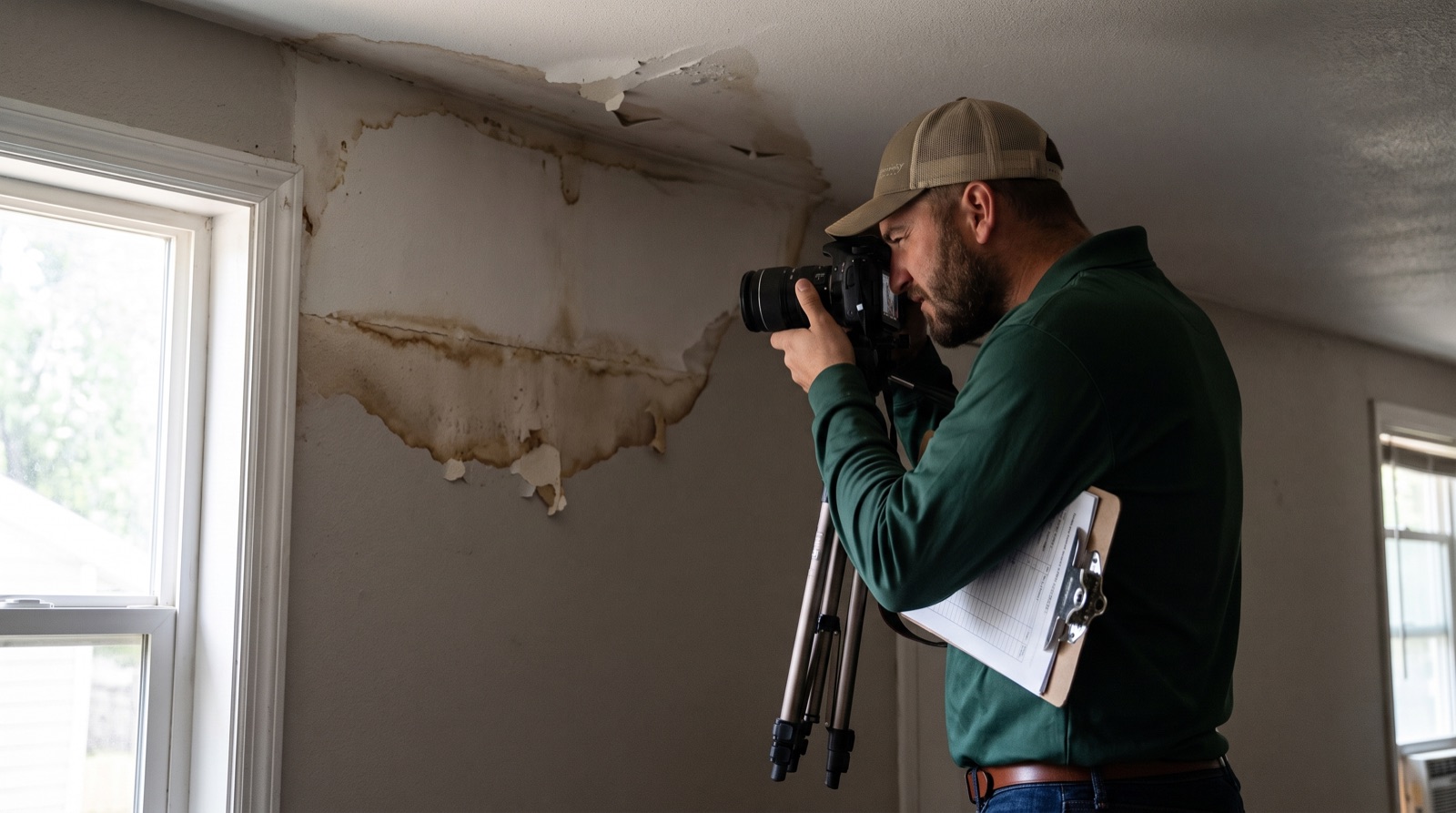
Keep available photographs and records, and ask the insurer what further documentation it needs.
- Photograph visible damage when safe, without delaying necessary safety measures.
- Find your policy declarations page and check coverage limits + deductible
- Note any sewer-backup or mold riders specifically
- Save receipts for any temporary mitigation (towels, fans you bought, hotel costs)
Chapter 02
Filing the claim
What do you need to file a water damage insurance claim?
Contact your insurer or agent with your policy number and an accurate description of what happened. Provide available photographs and records, including uncertainty about the cause or timing; ask what additional information is required.
Save the claim number and assigned contact details. Ask the insurer what happens next, whether an inspection is needed and when to expect an update.
Chapter 03
The insurer’s damage review
Preparing for the insurer’s damage review
The insurer may review photographs, estimates and other records or arrange an inspection. If a meeting is scheduled, ask whether your contractor can attend to explain the documented damage and proposed work.
Clear records can help explain the proposed work; the insurer still reviews coverage and costs under the policy.
Chapter 04
Mitigation file review
Why do insurance claims stall?
Keep the restoration estimate, available moisture observations, equipment-use records, photographs and any relevant specialist reports together. Ask the insurer which documents and estimate format it requires.
An estimate format does not guarantee automatic reconciliation or approval. Respond to the insurer’s requests for additional records and ask about the next review step.
- Itemized estimate in the format requested by the insurer
- Available moisture observations and drying records
- Equipment counts + run hours
- Cause-of-loss documentation
- Lab results (mold, asbestos) where applicable
Chapter 05
Supplemental documentation
Filing a supplement when the original scope fell short
Sometimes the work uncovers damage that wasn’t visible at the start, hidden mold, deeper saturation, or something that comes out only when other materials are removed. That’s a supplemental: an additional scope item filed with documentation supporting it.
If additional damage or work is identified, submit the supporting records and ask how the insurer reviews an updated estimate. Review time varies; no overall two-to-three-week settlement period is promised.
Chapter 06
Payment and reconstruction arrangements
How does insurance claim money get paid out?
Confirm the payment method, payees, deductible and any mortgage-company involvement with the insurer. Restoration and rebuilding arrangements should be agreed for the actual claim; payment approval does not necessarily close every part of the work.
Discuss the proposed reconstruction scope and contractor arrangements before authorizing that work. Confirm who will perform it and which costs the insurer has approved.
- Ask the insurer for the expected payment date and any outstanding requirements
- Confirm any separate rebuild estimate and approval requirements
- Ask which completion documents and releases are required; keep copies
- Keep digital copies of everything, useful at sale time
Related reading
Related insurance claim guides
Stuck mid-claim? Get insurance claim help in St. Louis
We can step in. Live phone, twenty-four seven.
Help with your property
If you need help applying this guidance at your property, see our insurance claims assistance.
Sources (reviewed 2026-09-10): content.naic.org.