Mold removal vs remediation is a difference of scope: removal is the physical cleaning or disposal of mold-affected materials, while remediation is the broader process of controlling contamination, addressing moisture, cleaning or removing materials, and checking the completed work. Removal is often one task within a remediation plan rather than a complete solution by itself. For homes and businesses in the St. Louis metro area, including communities in Missouri and Illinois, the practical goal is to return affected spaces to an appropriate condition and reduce the chance of recurring growth. That requires attention to both visible mold and the water or humidity condition that allowed it to develop.
What Is the Difference Between Mold Removal and Mold Remediation?
Mold removal focuses on taking mold growth off surfaces or removing materials that cannot be adequately cleaned. Mold remediation includes that work but also considers the source, affected area, containment, cleaning methods, moisture correction, drying, and completion criteria.
| Mold removal | Mold remediation |
|---|---|
| Describes a specific cleaning or material-removal task | Describes a coordinated process with a defined scope |
| May involve cleaning a surface or discarding damaged material | May include containment, removal, cleaning, drying, and checks |
| Does not automatically address why mold developed | Connects mold work to the underlying moisture condition |
| Can be part of a larger project | Provides the framework for managing the entire affected area |
The terminology matters because simply removing a stained section of drywall does not resolve a leaking pipe, foundation seepage, roof opening, condensation problem, or other moisture source. A useful contractor proposal should explain both what will be removed or cleaned and how the broader moisture-related conditions fit into the plan.
Why Is Complete Mold Spore Elimination Not a Realistic Goal?
Complete elimination of every mold spore from an indoor environment is not a realistic remediation objective. Mold spores occur naturally in indoor and outdoor air, so the practical focus is controlling moisture and addressing active growth rather than promising a completely spore-free building.
The EPA’s homeowner mold guide explains that it is impossible to eliminate all mold and mold spores indoors. According to that official guidance, indoor mold growth is controlled by controlling moisture.
This distinction helps property owners evaluate marketing claims. “Total mold elimination” and “removing all spores” are not the same as a clear remediation scope. Professional judgment should instead focus on identifiable affected materials, appropriate work controls, correction of moisture conditions, and reasonable completion checks.
What Does a Mold Remediation Process Include?
A mold remediation process typically includes assessment, a defined scope, work-area controls, material removal or cleaning, moisture management, and completion checks. The exact combination depends on the location, materials, moisture conditions, and extent of visible or suspected impact.
Assessment and Scope Development
The assessment stage identifies visible conditions, possible moisture sources, affected materials, and access limitations. When the extent or source is uncertain, a dedicated mold inspection can help separate investigative work from the physical remediation scope.
A written scope should identify the areas and materials included in the project. It should also clarify what is excluded, what conditions could require a change in scope, and how the contractor intends to evaluate the work at completion.
Containment and Work-Area Controls
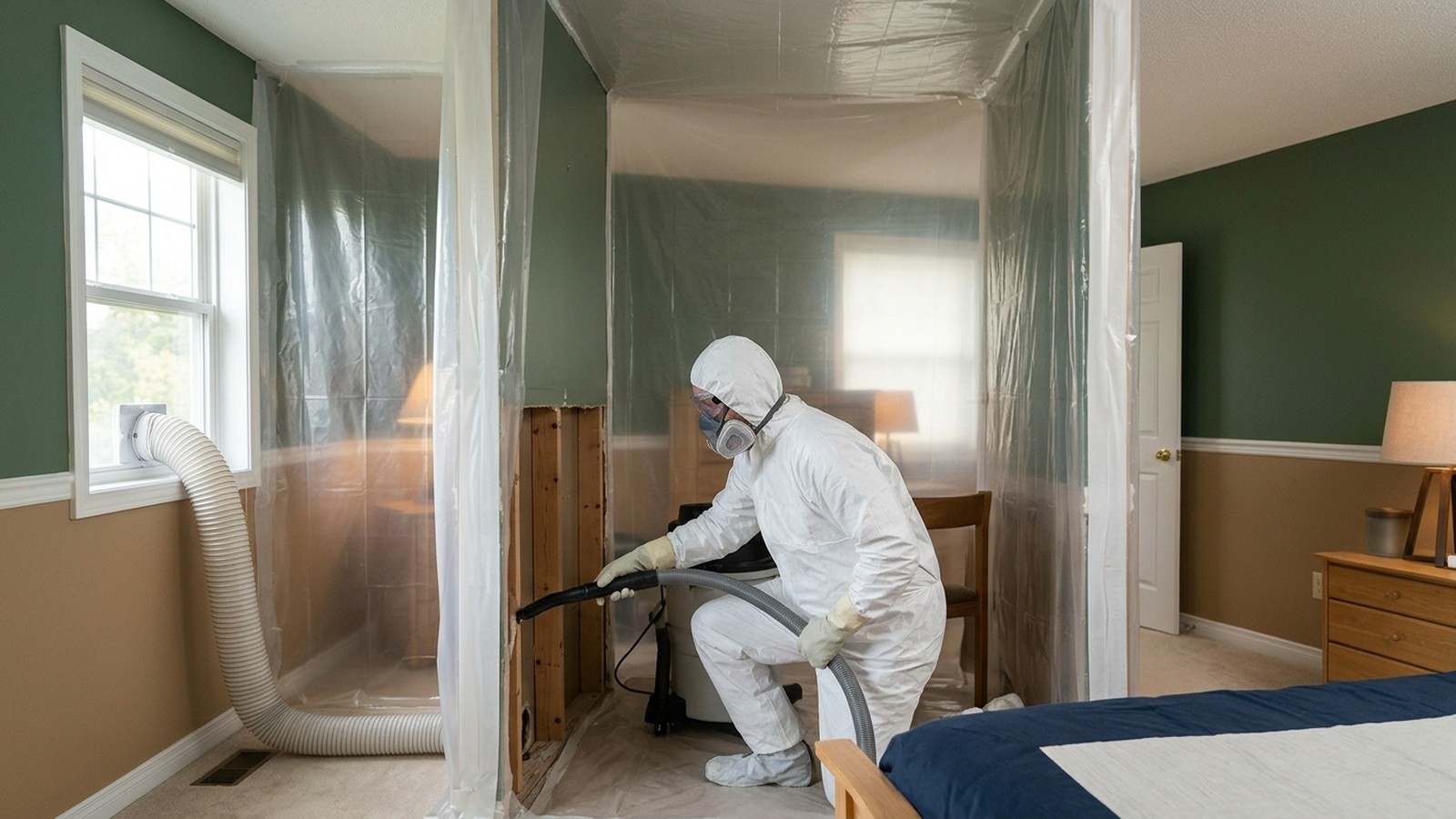
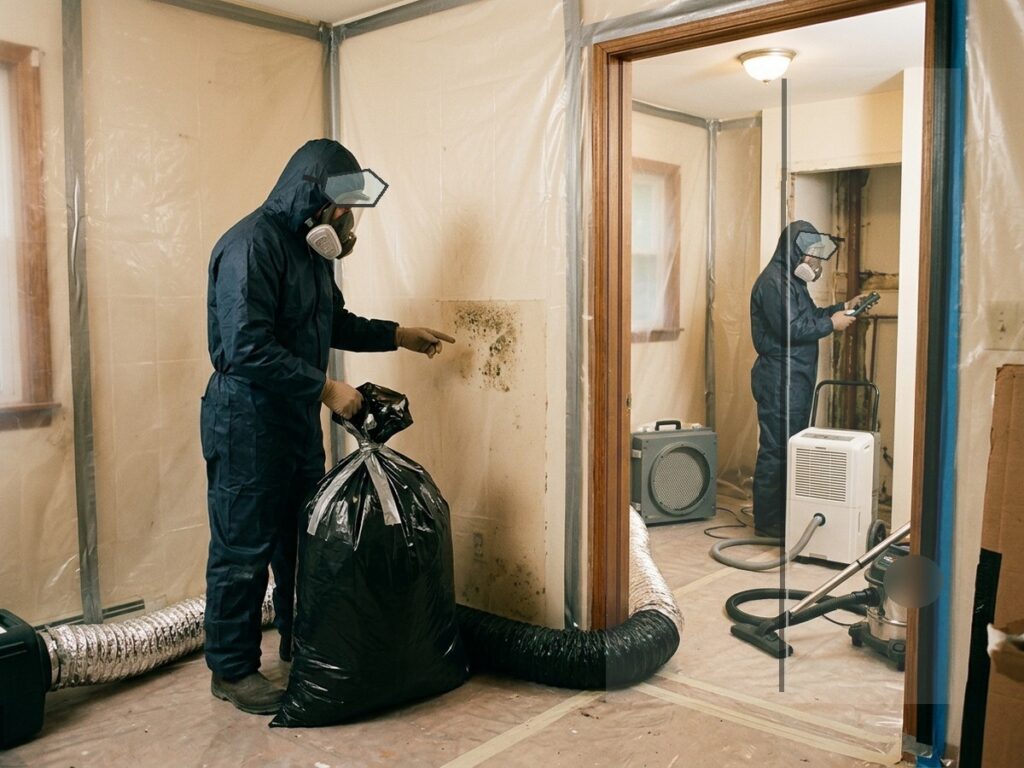
Containment is intended to limit the movement of dust and mold-containing debris from the work area into cleaner portions of the building. The EPA’s mold containment guidance states that the primary containment objectives are minimizing exposure and preventing contamination from spreading to unaffected areas.
Containment decisions require professional judgment because every building layout is different. Doorways, shared mechanical systems, occupied areas, access routes, and the amount of material disturbance can all affect the work plan.
Material Removal and Cleaning
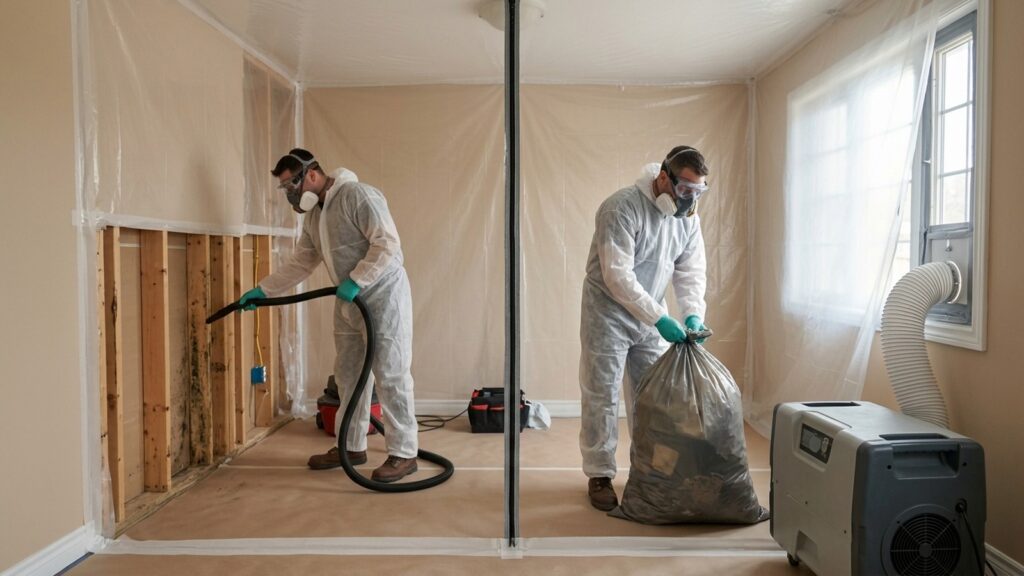
Some hard or nonporous surfaces may be cleaned, while certain porous materials may need to be discarded when mold has penetrated them or they cannot be cleaned adequately. The EPA’s remediation guidance describes methods that include wet vacuuming, damp wiping, HEPA vacuuming, and removing damaged materials in sealed bags.
The selected method should match the material and the condition encountered. Covering visible growth with paint or another coating is not a substitute for cleaning or removing affected material and dealing with moisture.
Drying and Completion Checks
Remediation should be connected to drying and moisture correction. Completion checks may consider whether the moisture problem has been addressed, the planned materials were cleaned or removed, visible debris has been cleared, and the work area matches the agreed scope.
EPA guidance indicates that remediation should not be considered complete until the moisture or water problem has been fixed and visible mold and moldy odors are no longer present. Additional evaluation may be appropriate when the project scope, property conditions, or parties involved call for it.
Why Does Moisture Correction Matter During Mold Remediation?
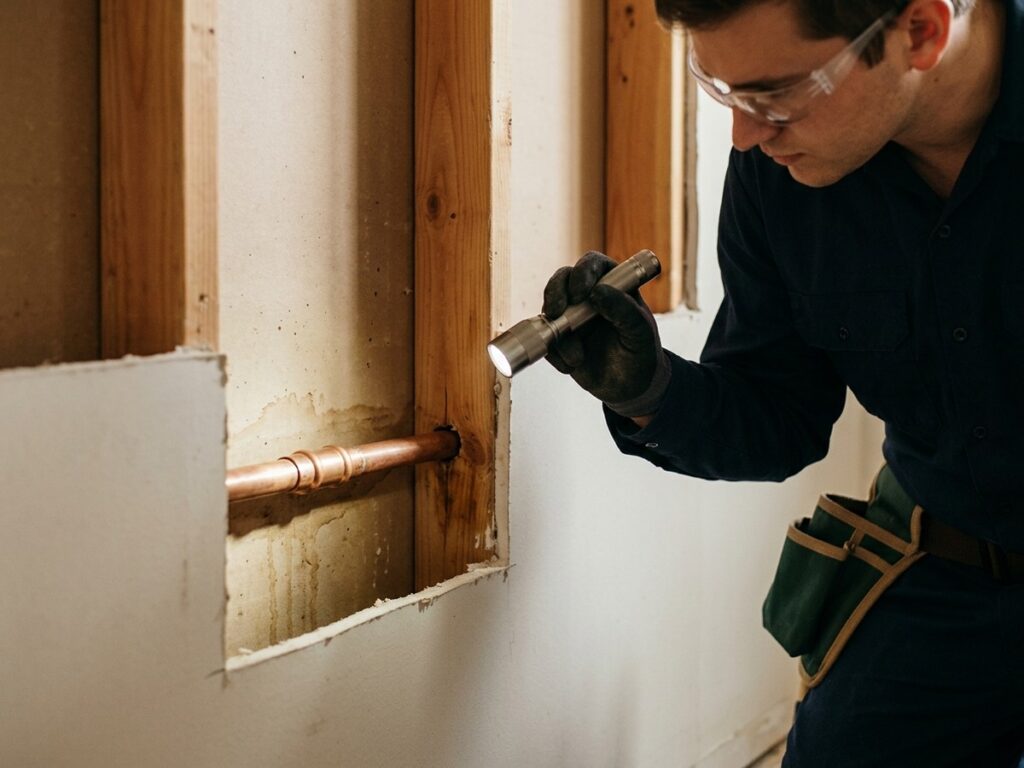
Moisture correction matters because mold can return when damp conditions continue after affected materials are cleaned or removed. Remediation without attention to the water source may improve the visible area without resolving the condition that supported growth.
Possible moisture contributors include plumbing leaks, appliance failures, roof or exterior water entry, foundation seepage, condensation, and materials left wet after a water-loss event. Identifying a likely source does not always mean the remediation contractor performs every repair. Plumbing, roofing, exterior drainage, or building repairs may require separate qualified trades.
Drying also needs to account for materials that are not visibly wet. Cabinets, wall cavities, flooring assemblies, insulation, and trim can conceal moisture, so the scope should explain which accessible areas will be evaluated and how drying decisions will be made.
How Should You Compare Mold Removal Companies in St. Louis?
A mold contractor should be compared by the clarity of its assessment, scope, work controls, moisture plan, and completion criteria rather than by promises of total mold elimination. Property owners should also look for direct explanations of what the contractor will clean, remove, contain, dry, document, and exclude.
Useful questions include:
- What areas and materials are included in the scope?
- What visible conditions or moisture readings informed the plan?
- How will the work area be separated from unaffected spaces?
- Which materials are expected to be cleaned, and which may be removed?
- How will dust and debris be managed?
- Who is responsible for correcting the underlying leak or water source?
- What drying or moisture checks are included?
- What conditions could require the scope to change?
- How will the contractor determine that the planned work is complete?
- Will project documentation describe the work actually performed?
Gateway Water & Mold approaches restoration as a defined series of decisions rather than a single treatment. Its plan-driven restoration process connects evaluation, scope development, controlled work, and completion review so property owners can understand what is being addressed.
What Should Property Owners Know About Mold Removal and Remediation?
These common questions help clarify what mold-related work can and cannot accomplish. Project-specific decisions should be based on the building conditions and a clearly explained scope.
Is mold removal always part of remediation?
Physical removal or cleaning is commonly part of remediation when visible mold-affected materials are present. The exact method depends on whether the material can be cleaned adequately or needs to be discarded.
Can mold remediation fix a leak?
Remediation addresses mold-affected areas, but the contractor performing that work may not be the party responsible for repairing the leak. The scope should clearly assign responsibility for plumbing, roofing, drainage, or other source repairs.
Does every mold concern require demolition?
No. Some surfaces may be suitable for cleaning, while porous or damaged materials may require removal. The decision should reflect the material, extent of impact, accessibility, and moisture condition rather than a one-size-fits-all rule.
Is testing always required before mold remediation?
Testing is not automatically necessary for every visible mold condition. An inspection or sampling plan may be useful when the source or extent is unclear, documentation is needed, or the project has specific completion requirements.
Do You Need Mold Remediation in the St. Louis Metro Area?
Gateway Water & Mold serves Missouri and Illinois property owners with assessment-based, plan-driven mold work. Learn how the company approaches containment, cleaning, material removal, drying, and project review through its St. Louis mold remediation service.