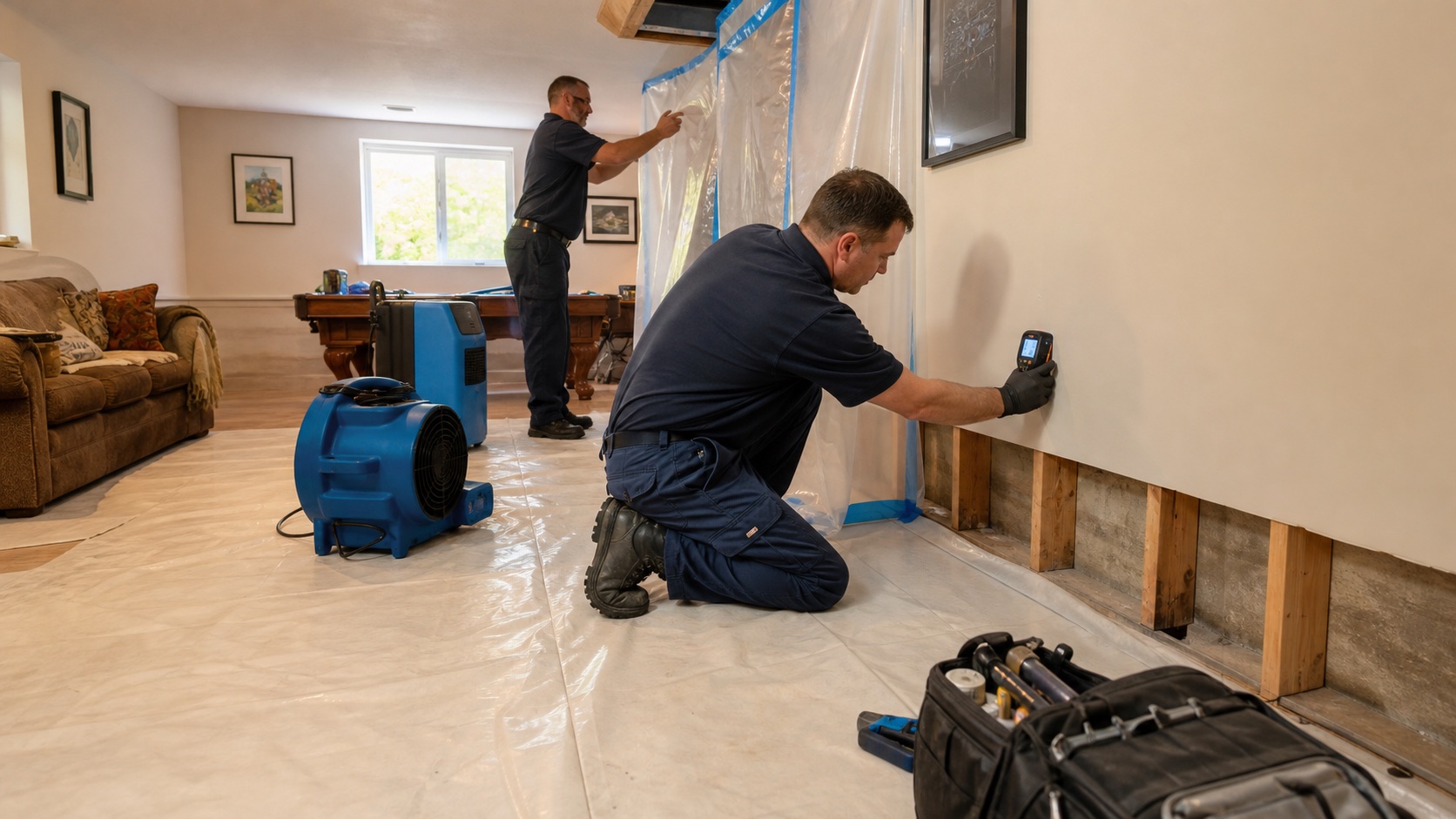
Wet drywall after water damage in Belleville does not automatically require tearing out every wall. The decision depends on the water source, exposure time, whether insulation is wet, whether the cavity can be dried, and what moisture readings show. The goal is controlled removal of what cannot stay, not demolition based on a water stain.
Can wet drywall dry without being removed?
Sometimes. Recent clean water that reaches an accessible section of uninsulated drywall may be dried in place when the material remains structurally sound and the wall cavity can receive controlled airflow. Saturated gypsum, damaged paper facing, wet insulation, contamination, or a wall that stayed wet too long can change that answer.
A moisture meter helps define the affected boundary. It does not make the removal decision by itself. The source, material condition, and sanitation requirements belong in the same assessment.
How do wet plaster and drywall dry differently after water damage?
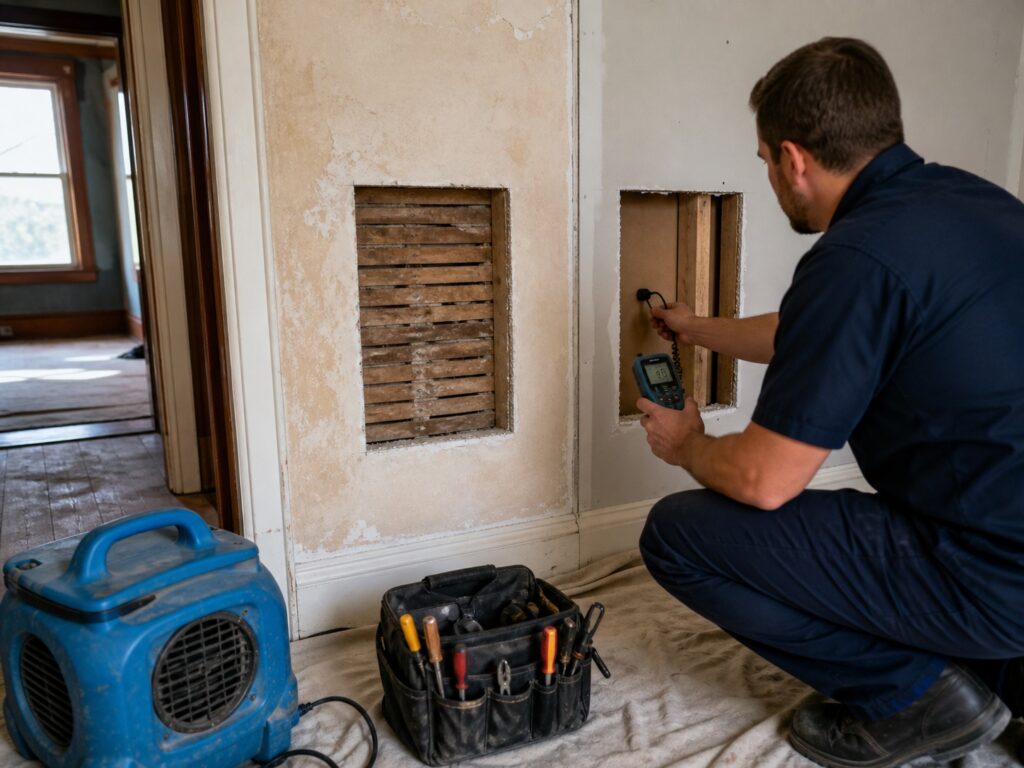
Belleville homes include both older plaster-and-lath assemblies and later drywall renovations. Plaster can hide moisture in lath, framing, or insulation while the room surface appears intact. Drywall may show swelling and soft edges sooner, but water can still travel beyond the visible stain.
Gateway’s Belleville water damage restoration team checks the actual assembly, including baseboards, sill plates, wall cavities, and ceiling framing where the loss traveled from above.
What conditions usually support drywall removal?
- The drywall contacted sewage or other contaminated water.
- The gypsum is soft, crumbling, swollen, or separating from its paper.
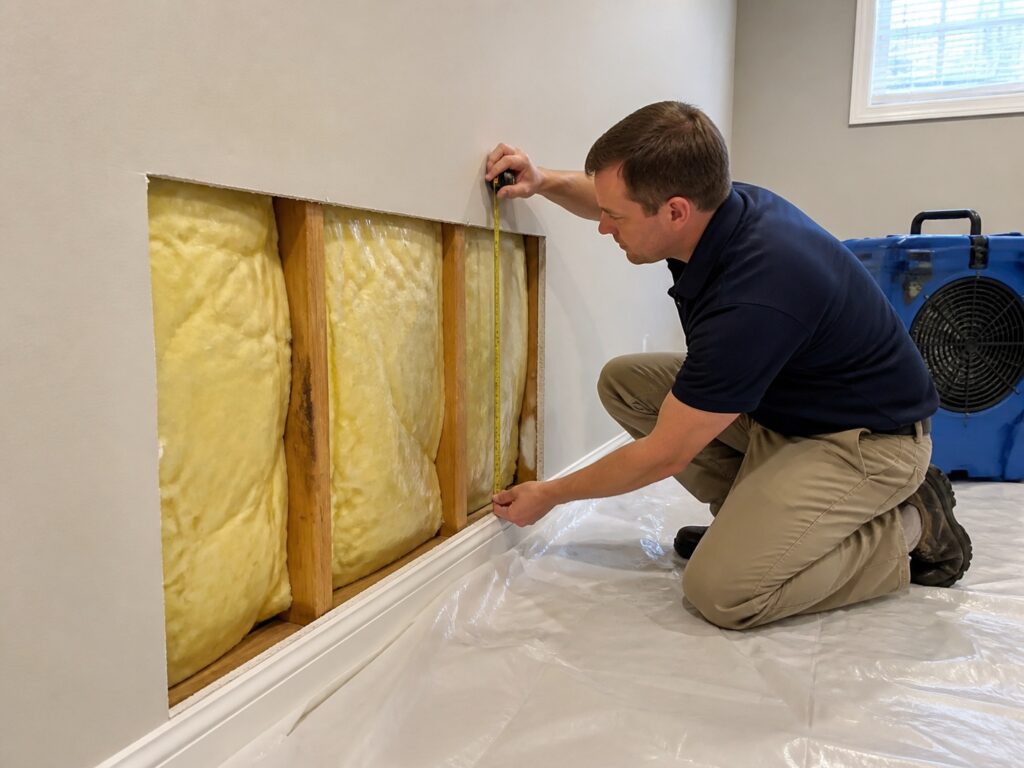
- Wet insulation blocks the cavity from drying.
- The wall remained wet and mold growth is confirmed or strongly supported by inspection.
- Cabinets, tile, or other finishes prevent access to a trapped wet area.
Removal should extend to a documented boundary that supports cleaning and drying. It should not expand simply because a contractor prefers a larger reconstruction job.
What should happen before a water-damaged wall is opened?
Photograph the room and water path, record moisture readings, establish the water category, protect unaffected areas, and identify electrical or plumbing hazards inside the wall. If hidden mold or contaminated material is possible, plan containment before disturbing the assembly.
Keep removed-material photos and measurements for the insurance file. Gateway writes the scope from the readings so the removal record matches the drying and reconstruction record.
How do you know water-damaged drywall and framing are dry?

Compare readings with unaffected material of the same type and location. Check framing and cavities, not only the cut drywall edge. The target is a documented dry standard, not a surface that feels dry after a fan ran overnight.
The EPA recommends drying wet materials within 24 to 48 hours when possible. When that window was missed, inspect for hidden damage before insulation and drywall close the cavity again.
When does wet drywall become a mold-remediation job?
It becomes a mold-remediation scope when growth is confirmed and the work requires containment, controlled removal, cleaning, and verification beyond ordinary water-damage demolition. A musty smell or dark mark alone should not decide the size of the project.
Gateway’s Belleville mold remediation service tests before tearing out when the answer is uncertain. We also tell you what can stay.
Does insurance require you to remove wet drywall?
The carrier does not make a wall dry, and coverage language does not replace a technical decision. Your restoration scope should document why removal is necessary, while the carrier decides how the policy responds. Photograph readings, cuts, insulation, and framing so the file shows that the work followed the affected boundary.
Who can assess wet drywall in Belleville?
A restoration contractor should be able to show the readings, explain the water category, identify the wall assembly, and document why each material is staying or leaving. If the explanation is only “it looks wet,” ask for the moisture map.
For wet drywall, plaster, or basement finishes in Belleville, call Gateway at (314) 947-3419. Our Belleville water and mold team will inspect the full water path and write the scope before controlled removal begins.