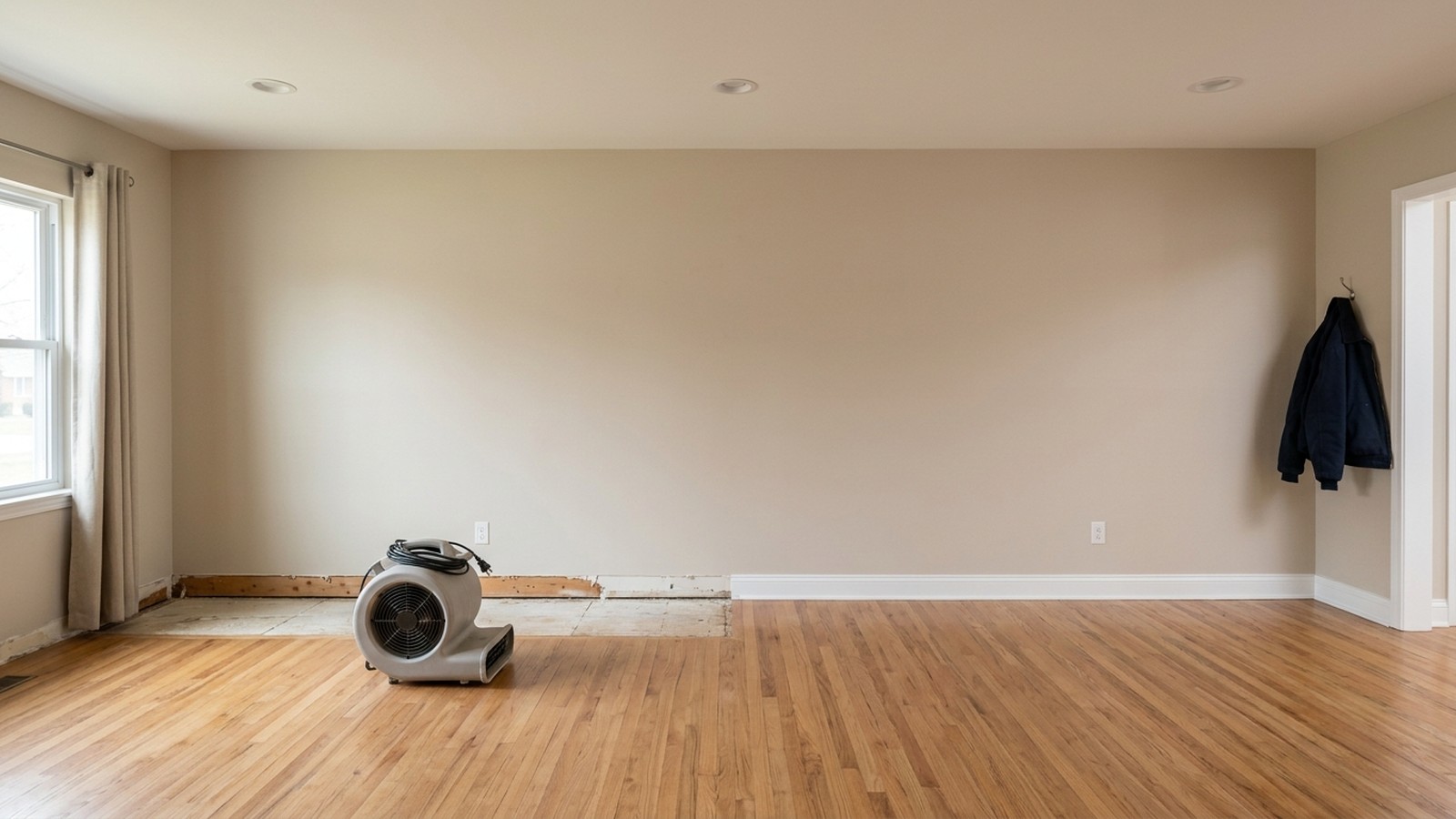
Water mitigation vs restoration begins with mitigation because active water and moisture must be controlled before damaged areas can be reliably repaired. Mitigation focuses on limiting spread, removing standing water, managing moisture, and drying affected materials. Restoration addresses the work needed to return the property to a functional, finished condition, which may include cleaning, replacing materials, and reconstruction. In a St. Louis metro home, the two phases should be coordinated rather than treated as unrelated projects, especially when water has moved behind finishes or affected several rooms. The exact scope depends on the water source, the materials involved, the extent of moisture movement, and what can be appropriately cleaned and dried.
What Is the Difference Between Water Mitigation and Restoration?
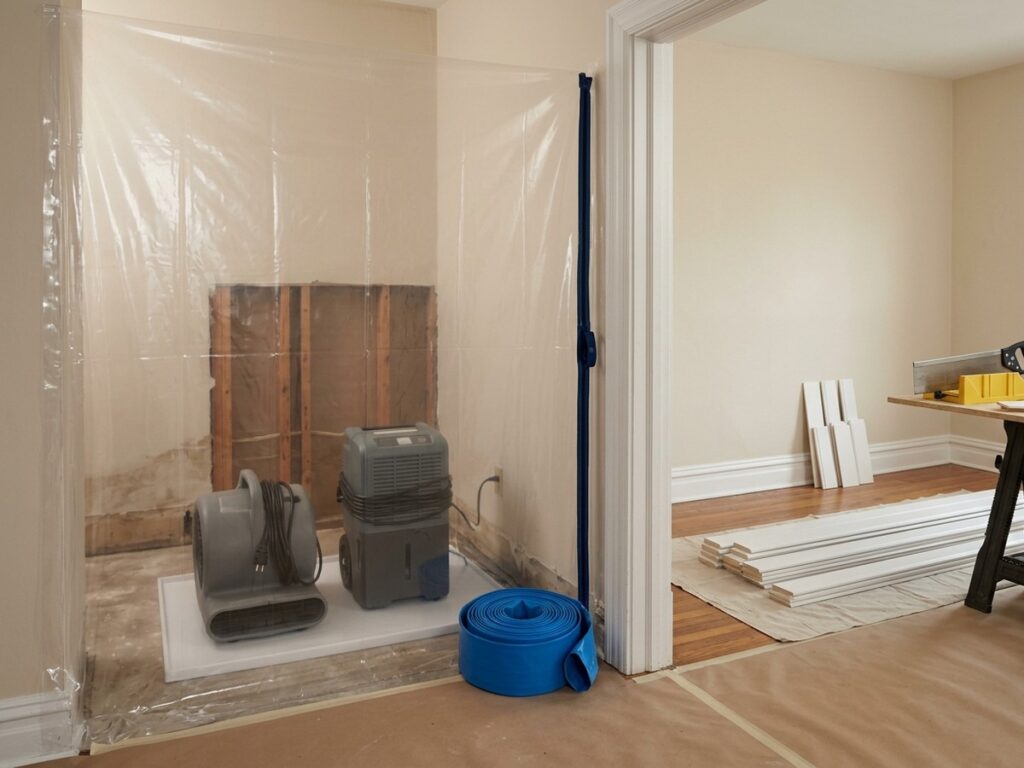
Water mitigation controls immediate water and moisture conditions so the damage does not continue spreading. Water restoration repairs or replaces affected parts of the property after conditions have been stabilized. The terms describe connected phases, but they do not describe the same work.
Mitigation commonly involves:
- Identifying affected rooms and materials
- Addressing the water source when it is within the restoration contractor’s scope
- Extracting standing water
- Removing materials that cannot remain in place
- Setting up drying and dehumidification equipment
- Monitoring moisture conditions
- Cleaning affected surfaces when appropriate
Restoration may include:
- Replacing drywall, insulation, trim, or flooring
- Preparing cleaned and dried areas for repairs
- Rebuilding damaged assemblies
- Painting and completing finish work
- Coordinating repair decisions with the documented mitigation scope
The EPA’s official homeowner guidance emphasizes that moisture control is central to managing water-related mold concerns. It also notes that the water or moisture source must be addressed, while the specific methods used in a building depend on the conditions found there. The EPA’s mold and moisture guide explains this moisture-control principle.
Does Water Mitigation or Restoration Come First?
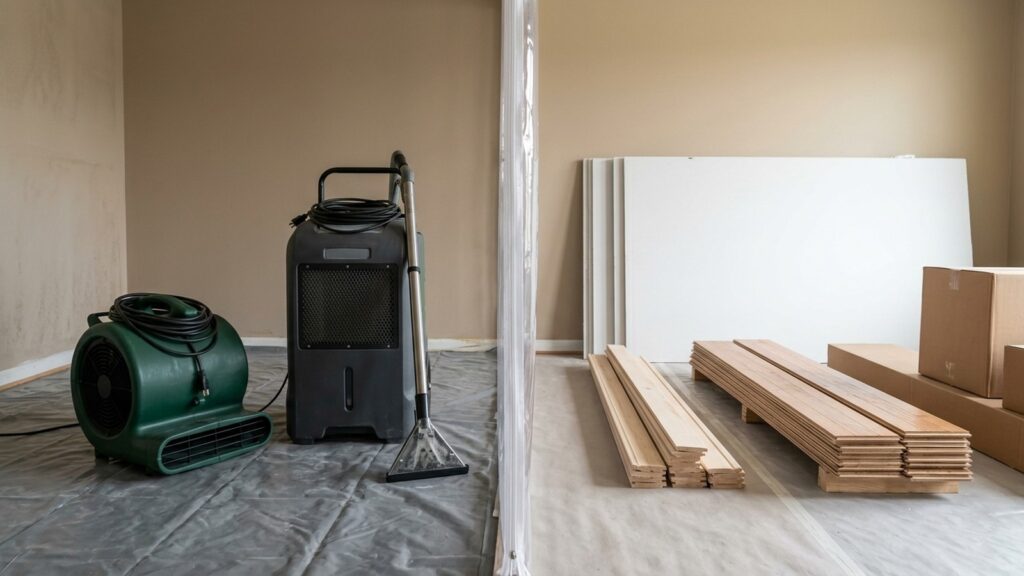
Water mitigation comes before repair and reconstruction. A contractor needs to understand where water traveled, remove accessible standing water, and evaluate drying progress before closing walls or installing new finishes. Some limited repair planning can occur during mitigation, but physical rebuilding should be based on verified site conditions.
A typical sequence looks like this:
- Inspect the affected area. The team identifies visible damage, checks for moisture beyond the obvious wet area, and considers how water may have moved through connected materials.
- Control the source. The leak, overflow, appliance issue, or other source is stopped or referred to the appropriate trade.
- Extract accessible water. Removing standing water reduces the amount that must be handled through evaporation and dehumidification.
- Define removal needs. Damaged materials are evaluated to determine what can remain for drying and what should be removed.
- Dry and monitor. Air movement, dehumidification, and moisture checks support an informed drying process.
- Confirm the repair scope. The condition of exposed and retained materials helps determine what restoration work is appropriate.
- Complete restoration. Repairs begin once the affected area is ready for reconstruction.
Prompt action matters, but no responsible company should promise that every material can be saved. Material type, exposure, accessibility, condition, and the nature of the water event all influence the decision.
What Work Is Included in Mitigation Versus Restoration?
Mitigation and restoration have different immediate goals, tools, and deliverables. The boundary between them may vary by project, especially when selective demolition is necessary to reach wet materials. The table below shows the practical distinction homeowners are likely to see.
| Project element | Water mitigation | Water restoration |
|---|---|---|
| Primary purpose | Limit further water and moisture damage | Return the affected area to a functional, finished condition |
| Starting point | Begins while water or elevated moisture is present | Begins after the area is ready for repair |
| Typical work | Inspection, extraction, controlled removal, drying, dehumidification, monitoring, and cleaning | Material replacement, reconstruction, painting, flooring, trim, and finish work |
| Material focus | Determine what can remain, what requires drying, and what needs removal | Replace or repair materials identified in the approved scope |
| Documentation focus | Record affected areas, readings, equipment use, and removal decisions | Connect repairs to the documented damage and completed mitigation |
| Completion focus | Stable, appropriately dried conditions for the defined scope | Completed repairs for the agreed restoration scope |
Mitigation is not simply water removal. Extraction addresses accessible liquid water, while drying addresses moisture retained in materials and the surrounding environment. Gateway’s emergency water extraction service is therefore part of a broader mitigation process rather than a substitute for assessment, drying, and monitoring.
How Are Materials and Repair Decisions Evaluated?
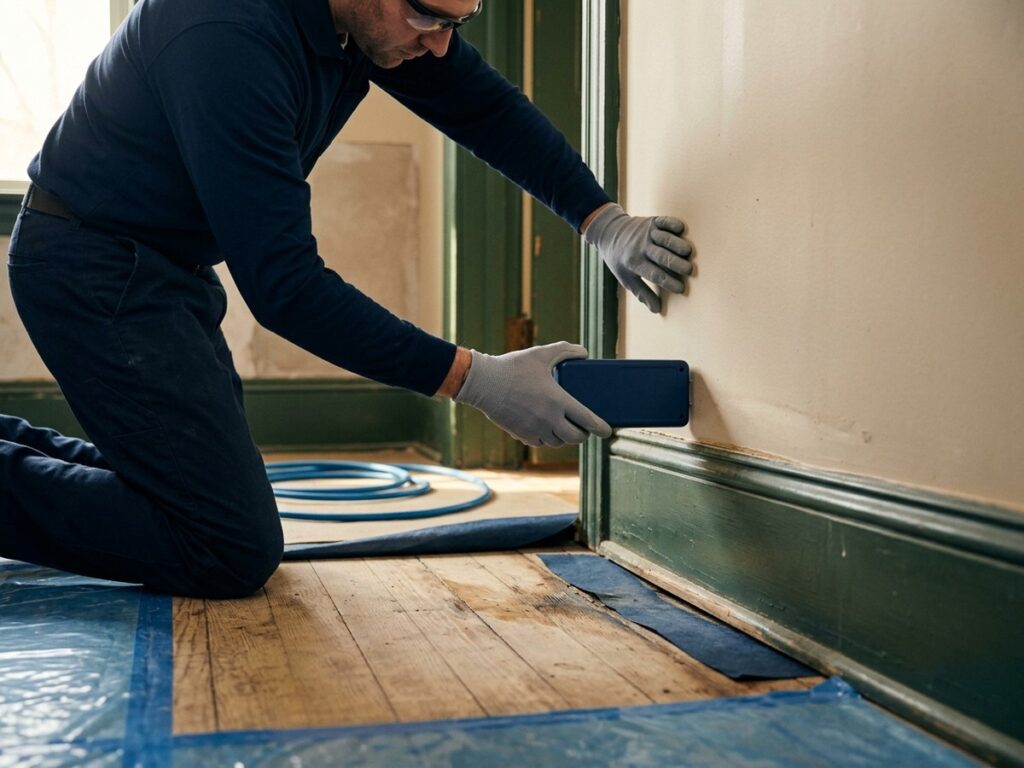
Material decisions should be based on what happened to the material, not only how it looks from the room. A surface can appear dry while moisture remains in padding, wall cavities, subflooring, insulation, or other connected components. Professional judgment is used to interpret readings, accessibility, visible deterioration, and how materials respond during drying.
Important factors include:
- Whether the water source has been controlled
- How far water traveled from the visible loss area
- Whether a material is porous, semi-porous, or relatively nonporous
- The condition of the material before and after exposure
- Whether the material can be accessed for cleaning and drying
- Whether retaining it would conceal unresolved moisture
- Whether the material responds as expected during the drying process
EPA remediation guidance distinguishes among material types and recognizes that porous materials can be more difficult to clean because moisture and contamination may enter spaces within the material. The guidance provides general principles, while the actual keep-or-remove decision remains specific to the affected building and conditions. EPA Chapter 4 discusses cleanup methods for different water-damaged materials.
No single rule applies to every piece of drywall, flooring, cabinetry, or insulation. Careful evaluation helps avoid unnecessary removal while also avoiding repairs over materials that are not suitable to remain.
Why Do Documentation and One Restoration Plan Matter?
Documentation connects what was found during mitigation with what needs to happen during restoration. A unified plan reduces uncertainty about affected areas, removed materials, drying decisions, and the resulting repair scope. It also gives the property owner and project team a shared record of the work.
A useful mitigation record may include:
- Photos of affected rooms and materials
- Notes about the reported source and visible water movement
- Moisture readings tied to specific locations
- Equipment placement and monitoring records
- Materials removed to access or address damage
- Conditions observed as drying progresses
- Recommendations that shape the repair scope
This record is not a guarantee of insurance coverage or a substitute for an insurer’s review. Its practical purpose is to support clear communication and explain why particular mitigation and restoration steps were recommended.
Gateway uses a plan-driven approach that treats extraction, drying, material evaluation, and repairs as parts of the same property recovery process. The company’s water-damage response process explains how assessment and planning guide the work rather than relying on a one-size-fits-all checklist.
What Do Homeowners Ask About Mitigation and Restoration?
Homeowners commonly want to know where extraction ends, when repairs can begin, and whether wet materials must be removed. The answers depend on the conditions in the property, but the distinctions below provide a practical starting point.
Is water extraction the same as water mitigation?
No. Extraction removes accessible standing water, while mitigation also includes assessment, moisture management, drying, monitoring, selective removal, and cleaning when appropriate.
Can restoration begin while drying equipment is running?
Planning can occur during drying, but repairs should not conceal areas that still require access, monitoring, or moisture reduction. The project team should base repair timing on documented site conditions rather than appearance alone.
Does every wet material need to be removed?
No. Some materials may be suitable for drying and cleaning, while others may require removal because of their composition, condition, accessibility, or response to the water event. Salvage cannot be guaranteed before the affected materials are evaluated.
Does mitigation prevent every mold problem?
Mitigation reduces moisture conditions that support mold growth, but it cannot guarantee that mold will not be present or develop. EPA guidance identifies moisture control as the key principle, and suspected mold conditions should be evaluated within the actual project scope.
How Can Gateway Help With Water Mitigation and Restoration?
Gateway Water & Mold serves Missouri and Illinois property owners across the St. Louis metro with coordinated water mitigation and repair planning. Learn how Gateway approaches assessment, drying, material decisions, and reconstruction through its water damage restoration service.