Gateway/Blog

Staunton, IL Homes: Detecting Hidden Ceiling Water Damage from Attic AC Leaks This Summer

Staunton, IL Homes: Detecting Hidden Ceiling Water Damage from Attic AC Leaks This Summer

Staunton homeowners are discovering water-stained ceiling tiles and musty odors weeks after their air conditioning systems seemed to run normally through Illinois’ humid summer months. Jake Lusby from Gateway Water & Mold has traced dozens of these mysterious ceiling stains back to condensation overflow in attic-mounted AC units, where leaked water travels through insulation and ceiling joists before appearing as damage in living spaces below. The company’s moisture mapping technology regularly uncovers hidden water damage extending far beyond the visible stains in homes throughout Staunton, Troy, and Highland.

What to Do About Hidden AC Leak Damage in Staunton

  • Turn off your AC unit at the breaker if you spot any ceiling discoloration or feel soft drywall
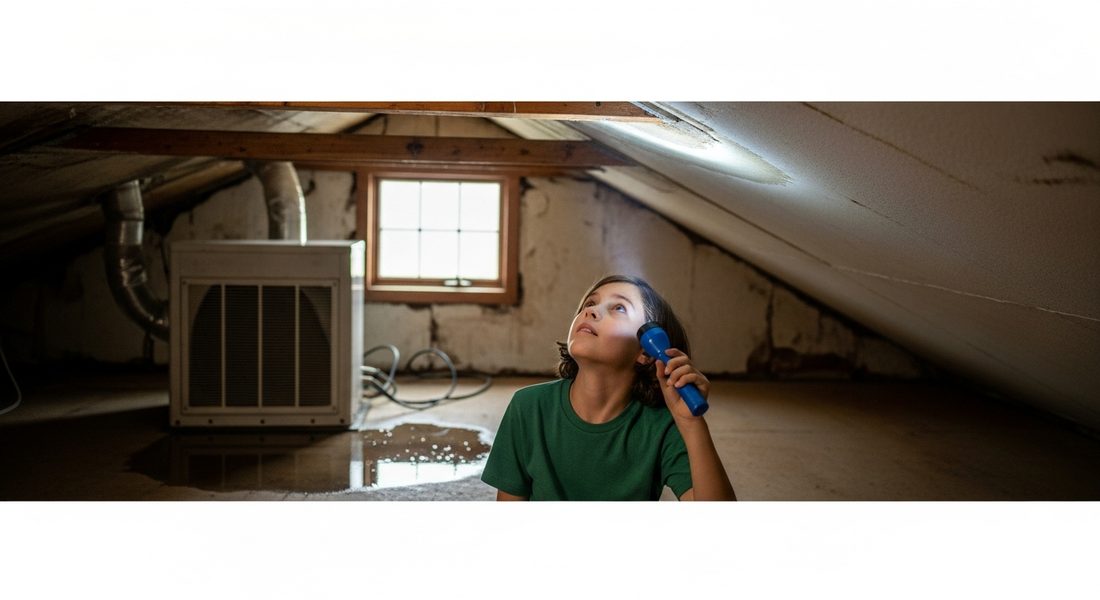
  • Check your attic for wet insulation around the air handler and condensate pan
  • Document all visible damage with photos before touching anything for insurance purposes
  • Test ceiling areas with a moisture meter if available, checking 3 feet beyond visible stains
  • Contact your insurance company within 24 hours if you find evidence of ongoing leaks
  • Schedule professional moisture mapping to identify the full extent of hidden damage

Summer AC Condensate Problems in Illinois Homes

Staunton, IL Homes: Detecting Hidden Ceiling Water Damage from Attic AC Leaks This Summer — in-context / use-case image

Attic air conditioning units produce 15-20 gallons of condensation daily during Illinois summer months when outdoor temperatures reach 85°F with 70% humidity, according to Energy Star efficiency data. This moisture normally drains through condensate lines, but blockages force water to overflow from collection pans directly onto attic flooring and insulation.

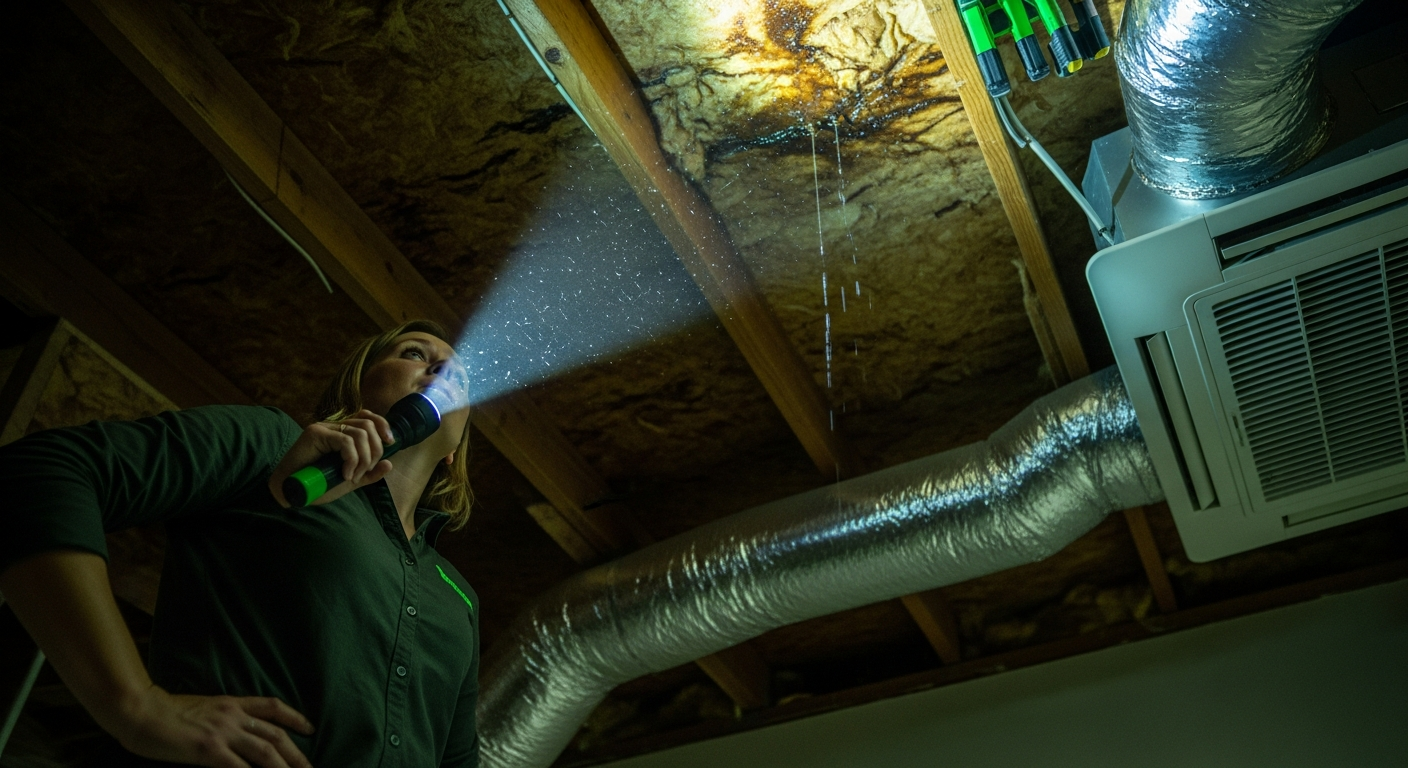
The overflow spreads laterally through blown-in insulation before gravity pulls it down to ceiling joists. Water follows the path of least resistance along electrical conduit and ductwork, often traveling 8-10 feet from the original leak point before saturating drywall. This delayed saturation explains why homeowners notice signs of AC leak ceiling damage Illinois weeks after the initial overflow occurred.

Most Staunton homes built between 1990-2010 feature R-38 blown fiberglass insulation that absorbs water like a sponge, holding moisture against wood framing for extended periods. The insulation’s thermal barrier also prevents natural drying, creating conditions for mold growth within 48-72 hours of initial water contact.

Staunton Housing Stock and AC Leak Risks

Staunton, IL Homes: Detecting Hidden Ceiling Water Damage from Attic AC Leaks This Summer — process / how-it-works image

Staunton’s housing characteristics create specific vulnerabilities for attic mold from AC leak Staunton situations. The Northbrook and Woodland subdivisions feature 1990s ranch homes with original Carrier and Trane units approaching 30-year service lives, where aging condensate pans develop hairline cracks that leak slowly over months.

Downtown Staunton’s older two-story homes near Route 4 often have retrofitted central air systems with condensate lines running through cramped attic spaces. These installations frequently lack proper drainage slopes, causing water to back up during peak cooling periods when units cycle continuously. The Madison County Building Department requires 1/8-inch slope per foot for condensate drainage, but many older retrofits don’t meet current standards.

Prairie View and Sunset Ridge neighborhoods feature newer construction with properly sloped drainage systems, but builder-grade condensate pans in these homes typically last 12-15 years before developing overflow issues. Clay-heavy soil throughout Staunton causes foundation settling that can shift condensate lines out of proper alignment, creating low spots where water pools instead of draining.

The area’s humid continental climate produces average summer dewpoints of 65-70°F, according to Illinois State Climatologist data, forcing AC units to remove substantial moisture from incoming air. Units running 12-14 hours daily during July heat waves produce condensation rates that overwhelm marginal drainage systems, leading to the overflow conditions that cause hidden ceiling water damage attic AC leak Staunton IL problems.

Signs of Hidden AC Water Damage

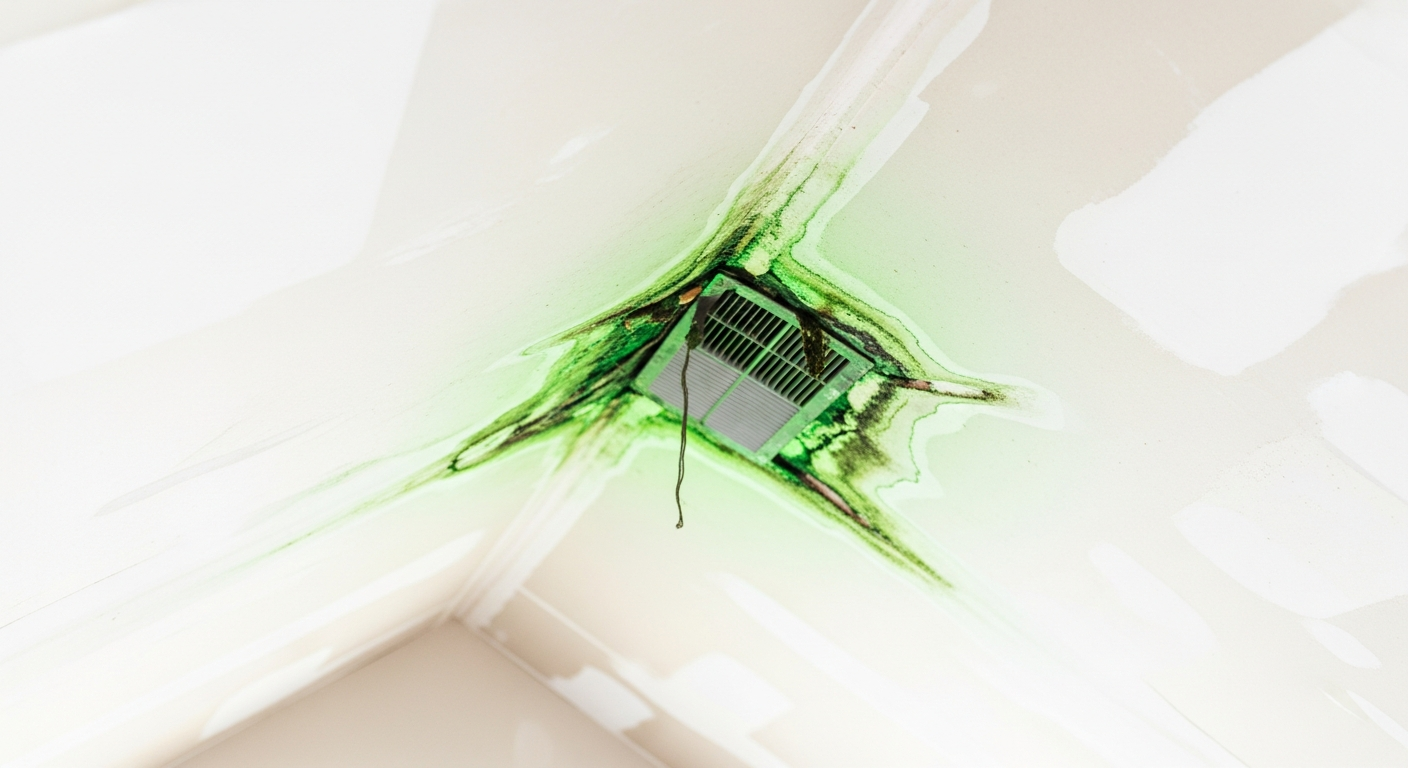
Ceiling stains from attic AC leaks typically appear as brown or yellow rings with darker edges, starting smaller than a dinner plate before expanding outward as water spreads through drywall. Fresh leaks produce wet spots that feel cool to touch, while older damage creates soft, spongy areas where drywall has lost structural integrity.

Musty odors often develop 3-4 days after water contact as mold spores activate in damp insulation and wood framing. These smells intensify during humid weather when atmospheric pressure changes draw contaminated air down through ceiling penetrations around light fixtures and exhaust fans. Paint may bubble or peel around ceiling edges where water has followed wall studs downward from attic spaces.

Gateway Water & Mold’s Detection Methods


Staunton, IL Homes: Detecting Hidden Ceiling Water Damage from Attic AC Leaks This Summer — outcome / result image

Gateway Water & Mold uses thermal imaging cameras and pin-type moisture meters to map water migration patterns in Staunton attic spaces, identifying saturated areas that show no visible signs from below. Their IICRC-trained technicians trace moisture paths along structural members to determine the full scope of water damage restoration Staunton IL attic projects require.

The company’s “test before tear-out” approach prevents unnecessary demolition by documenting exact moisture levels in ceiling materials and insulation. Jake Lusby explains their moisture mapping process typically reveals 40-60% more affected area than homeowners initially observe, but also confirms which materials can dry in place versus requiring replacement.

One Staunton homeowner on Hickory Street initially noticed a small ceiling stain above their dining room but assumed it was an old roof leak. Gateway’s moisture detection revealed water damage extending across three ceiling joists from an overflowing AC condensate pan, with wet insulation covering 120 square feet of attic space. The team’s documentation showed the insurance carrier exactly which materials needed replacement versus additional drying time, streamlining the claim approval process.

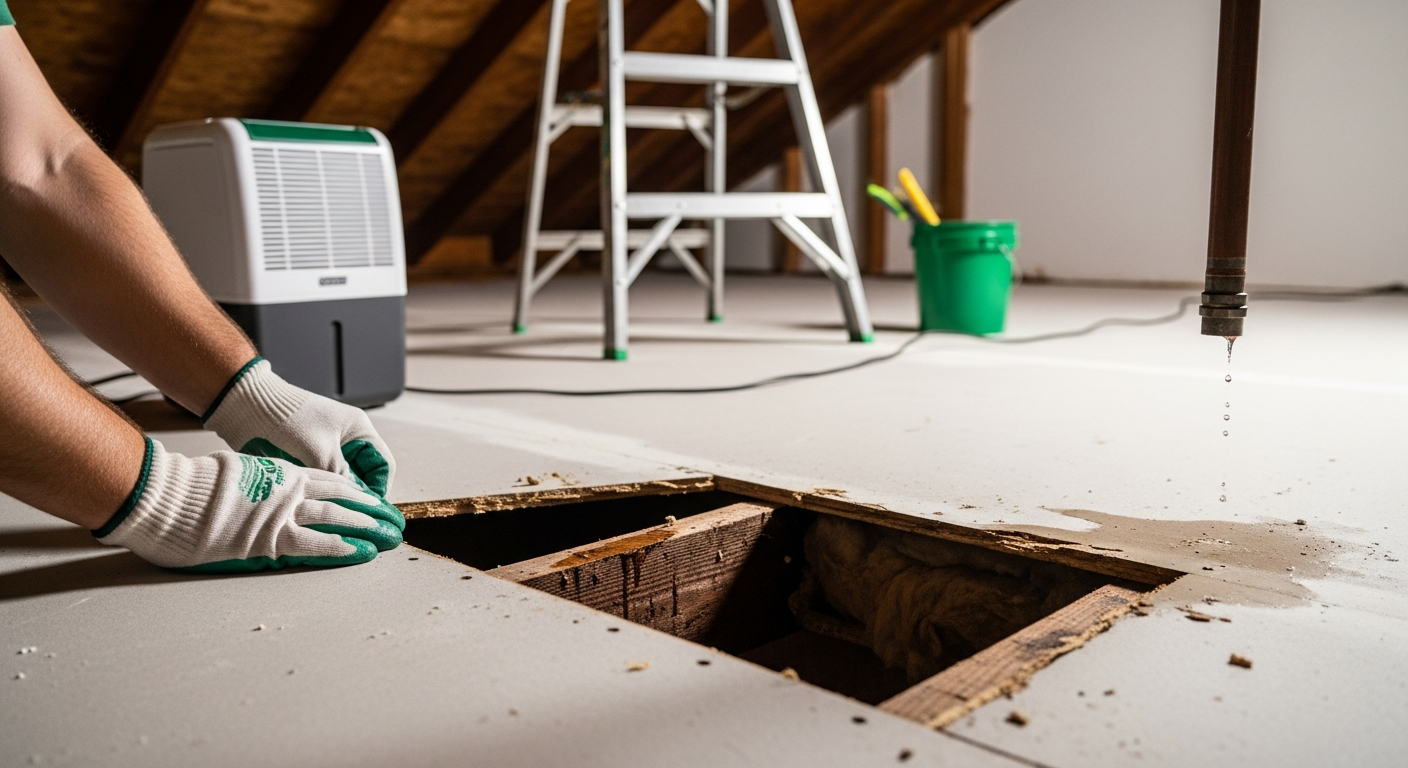
Their specialized equipment includes truck-mounted extraction systems for removing standing water from condensate overflows and negative air machines for preventing cross-contamination during summer AC unit leak repair Staunton projects. The company provides real-time moisture readings throughout the drying process, ensuring complete water removal before reconstruction begins.

Understanding the source and extent of hidden water damage helps Staunton homeowners address AC leak problems before they compromise structural materials or indoor air quality. Gateway Water & Mold’s systematic approach to water damage restoration combines immediate response with thorough documentation, providing the technical expertise needed for complex insurance claims involving concealed damage. Contact their team at the first sign of ceiling discoloration or unexplained humidity increases in your home.

Frequently Asked Questions


Staunton, IL Homes: Detecting Hidden Ceiling Water Damage from Attic AC Leaks This Summer — human element image

How long does it take for mold to grow after an attic AC leak in Staunton?

Mold typically begins growing within 48-72 hours in Staunton’s humid summer conditions once AC condensation saturates attic insulation or ceiling materials. Illinois’ average summer humidity levels of 60-70% accelerate mold development, especially in poorly ventilated attic spaces where temperatures exceed 90°F. The combination of moisture, organic materials like paper-faced drywall, and warm temperatures creates ideal conditions for rapid mold colonization.

Can I detect AC condensate overflow damage before it shows on my ceiling?

Yes, several early warning signs indicate AC condensate overflow damage before visible ceiling stains appear. Check for musty odors near ceiling vents, increased humidity in rooms below attic AC units, or water stains on attic flooring around your air handler. Running a moisture meter along ceiling edges near AC return vents can detect elevated readings before visual damage develops.

Does homeowners insurance cover hidden water damage from attic AC leaks in Illinois?

Most Illinois homeowners insurance policies cover sudden AC condensate overflow damage but exclude gradual leaks that develop over time. Documentation proving the leak’s timeline becomes critical for claim approval – Gateway Water & Mold’s moisture mapping and photographic evidence helps establish whether damage resulted from a covered sudden failure or excluded maintenance issue. Contact your insurance carrier within 24-48 hours of discovering any AC-related water damage to protect your claim rights.

Water in your home or workplace right now?

Live phone, twenty-four seven. We dispatch the nearest crew the moment we hang up, across the St. Louis metro, both sides of the river.

Call (314) 947-3419

Carrier names and trademarks referenced on this site are the property of their respective owners. Gateway Water and Mold is not affiliated with, endorsed by, or a preferred contractor for any insurance carrier. We work alongside policyholders and their carriers on restoration claims; policyholders retain the right to choose their own restoration contractor.