
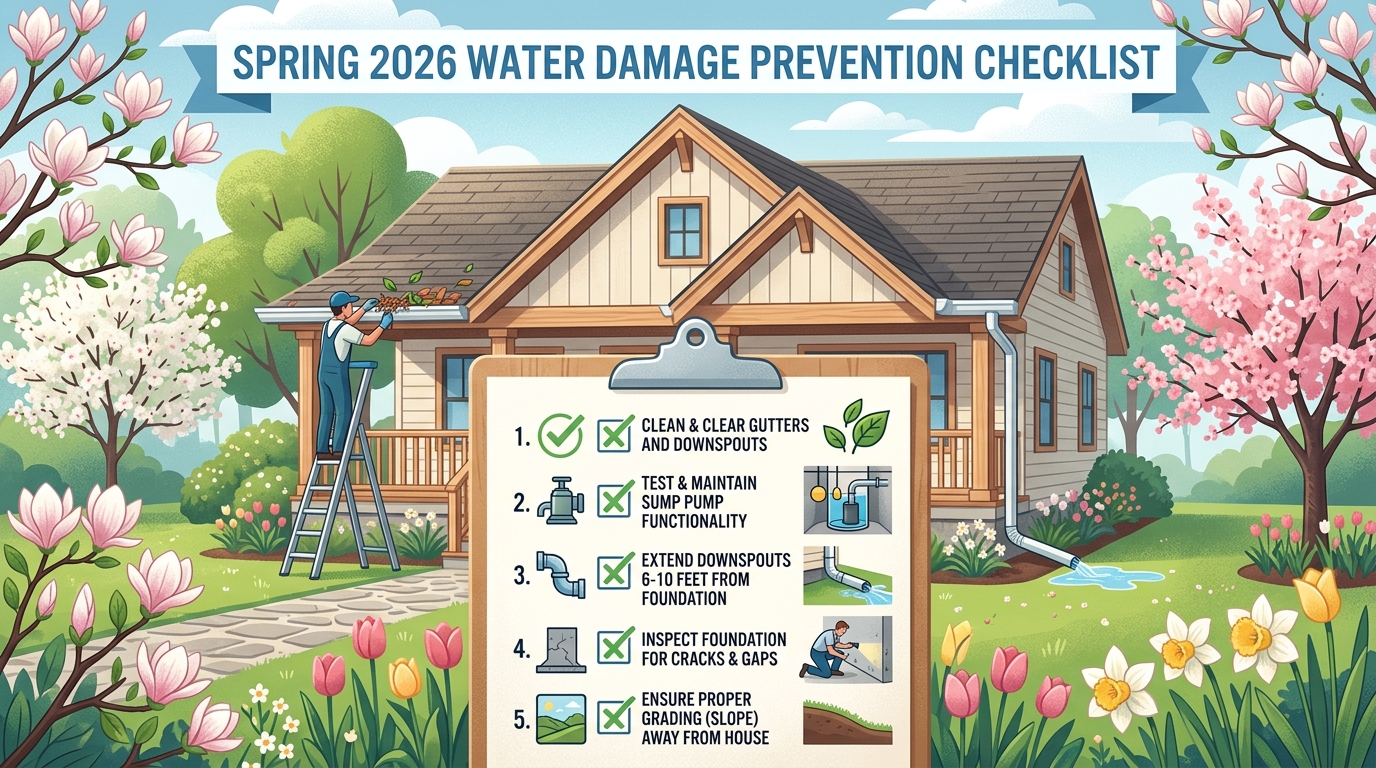
Use this spring checklist to plan safe property-specific maintenance. No seasonal checklist guarantees avoidance of repairs or insurance claims.
Why Spring Storms Cause Water Damage in St. Louis
Spring storms can overwhelm damaged gutters or expose drainage problems. Inspect roof drainage and visible water-entry points; an unsupported share of seasonal insurance claims is not needed to plan maintenance.
Contact Gateway’s water damage restoration team for current response availability; immediate arrival is not guaranteed.

Exterior Prevention Checklist
- Arrange regular gutter and downspout maintenance with safe access.
- Have downspout discharge assessed for the actual property and applicable requirements.
- Observe visible roofing from a safe ground-level location; use a qualified roofer for inaccessible areas.
- Have suspected window or door leakage assessed before choosing repairs.
- Have site grading assessed by a qualified professional and confirm applicable requirements.
For more detailed guidance on handling storm-related leaks, see our St. Louis Summer Storm Hub.

Interior Prevention Checklist
- Follow the sump-pump manufacturer’s testing instructions and have abnormal operation assessed.
- Observe accessible plumbing for visible leakage from a safe location; avoid wet electrical equipment.
- Have suspected basement moisture assessed; a meter alone does not identify all concealed dampness.
- Ask a qualified professional about backup options suitable for the actual sump system.
- Have foundation cracks and active leakage assessed before selecting a repair method.
Contact Gateway about mold remediation assessment; no guaranteed air-quality outcome is established here.
Basement & Foundation Protection
Assess the actual foundation, drainage and water entry before choosing waterproofing work. No uniform local soil condition establishes the need for a particular system. Contact Gateway about basement flooding assessment.

Insurance Preparation & Documentation
- Review your homeowner’s policy: Confirm water damage and sewer backup coverage limits.
- Document your belongings: Take photos or video of each room, including serial numbers of expensive items.
- Keep digital copies off‑site: Store policy documents and inventory in cloud storage.
- Know your deductible: Understand out‑of‑pocket costs before filing a claim.
- Identify a restoration provider before an emergency; a contractor relationship does not guarantee faster claim processing.
Emergency Contacts & Professional Help
Save Gateway’s current contact details, your insurer’s contact and relevant utility contacts. Keep out of flooded or structurally unsafe areas until appropriate professionals determine access is safe.
Frequently Asked Questions (FAQ)
How often should I clean my gutters?
Set a gutter maintenance schedule based on actual debris, condition and safe access.
Does homeowner’s insurance cover basement flooding?
Ask the insurer to review the actual policy, cause, exclusions and any backup or flood coverage. No general payment outcome is established here.
What should I do if I find mold?
Avoid disturbing suspected hidden mold and seek appropriate assessment. Gateway performs remediation; no universal licensing claim or restored-health guarantee is established here.
How can I tell if my foundation has a leak?
Have new dampness, unusual deposits or changing cracks assessed. No single instrument is established here as the most reliable method for every foundation.
What’s the first step after discovering water damage?
Keep clear of wet electrical equipment and unsafe water. Stop the source only if safe, arrange qualified restoration help, and contact your insurer for claim instructions.
Can I prevent water damage if I’m away on vacation?
Discuss leak alerts, water shutoff and property checks with appropriate professionals for your installation. These measures do not guarantee prevention while away.
How long does drying take after a flood?
Drying duration depends on actual materials and conditions. Monitoring informs progress; no universal completion date is established here.
Will my insurance rates go up if I file a water damage claim?
Ask the insurer how the actual claim may affect premiums or renewal; no general outcome is established here.
Conclusion & Call to Action
Contact Gateway for a property-specific assessment and confirm scope and charges. This checklist does not guarantee protection through the storm season.
Sources (reviewed 2026-09-10): www.cdc.gov.