Gateway/Water Damage Restoration/Clayton

Water Damage Restoration
in Clayton, MO.

Water damage restoration for Clayton, MO homeowners. IICRC S500 extraction, drying, and monitoring; every job documented to a standard Allstate, State Farm, and American Family can underwrite. We work Wydown-Forsyth Historic District, Brentmoor Park, DeMun, and the rest of the metro the same way.

Gateway Water Damage Restoration crew working in a Clayton, MO home

On the ground in Clayton

What we see in
Clayton, every week.

Clayton’s housing fabric is essentially pre-1940, with Wydown-Forsyth, Brentmoor Park, and DeMun built mostly between 1909 and 1925. Solid brick, stucco, plaster-on-lath walls, slate roofs, and full basements with limestone or rubble foundations on the oldest homes. When a hundred-year-old copper supply line lets go inside a plaster wall in a Brentmoor Park Tudor, the leak runs behind intact-looking surfaces for hours before anyone notices. When a long heavy rain saturates the loess over Mississippian limestone, the porous rubble foundations admit lateral moisture as a matter of course. We work Clayton with the structural respect old plaster requires: small openings, moisture-mapped tracing, IICRC S500 dryout, and a written Xactimate scope that captures plaster repair correctly rather than defaulting to drywall. Direct billing on Allstate, State Farm, and American Family keeps the homeowner out of the documentation loop, and we know how to scope antique materials for adjusters.

What makes water damage restoration different in Clayton.

Clayton water damage is high-stakes restoration almost by definition. The Wydown-Forsyth and Brentmoor Park historic districts are full of 1909-1925 solid-brick Tudors, Colonials, and Arts and Crafts homes with original plaster, slate roofs, and finish-grade hardwoods that cannot be casually demoed. A burst supply line on the second floor of a Wydown home isn’t just a drying job, it’s a preservation decision tree. Our scope here starts with infrared mapping of every wall the water could have reached, moisture readings inside plaster cavities through small inspection ports, and a clear plan for what we can dry-in-place versus what has to come out. Plaster on rubble foundations in the basement creates additional complication because the wall assembly behaves differently than poured concrete. We coordinate with preservation-aware millwork contractors when finish replacement is unavoidable.

Quick answers for Clayton homeowners.

Our Wydown-Forsyth house has the original rubble stone foundation. It seeps every spring. Is there a restoration fix?

Honest answer, restoration is not the fix for chronic rubble-foundation seepage. The fix is exterior drainage, regrading, gutter capacity, and sometimes interior drain tile to a sump. What we do is dry the basement after an event, document moisture levels in the lower framing and any stored contents, and treat any active mold. We will tell you when the seepage pattern stops being a one-time loss and becomes a chronic condition the carrier will likely decline. At that point a waterproofing contractor is the right call.

We’re in DeMun in a 1915 brick three-story. Pipes are galvanized. What is the realistic supply-line risk?

Galvanized supply lines from that era are well past expected service life. They fail by pinhole leaks more often than full bursts. The pinhole leak is the worse loss because it runs unnoticed inside a wall cavity for days or weeks before someone notices a stain. If you see any rust-tinted water, any flow drop, or any ceiling stain below a bathroom, get a plumber to look. Once we are called in after a pinhole loss, the affected cavities almost always need plaster removal because of saturation time.

We have antique hardwood floors throughout our Clayton home. Supply line broke. What is the realistic outcome for the floors?

Old growth oak and quartersawn hardwoods have a real chance if we start specialty mat drying within twenty four hours. The mats use negative pressure across the boards to pull moisture without overheating. We have saved century-old floors this way more often than not. The honest tradeoff is some cupping during drying that may flatten out, or may require sanding and refinishing later. Boards that have already started to cup severely or delaminate at the joints are unlikely to recover regardless of method.

“We don’t tell you it’s mold because it looks like mold. We test, we plan, and we tell you what you don’t need to remediate.”

The Gateway approach

What’s included

What every Clayton
water damage restoration job covers.

Every Gateway water damage restoration job in Clayton runs to the same standard, same equipment, same documentation, same reputation backing every step. The full scope and FAQ live on our main water damage restoration page; the short version is below.

  • 24/7 emergency dispatch with same-day on-site response
  • IICRC S500-compliant extraction, drying, and monitoring
  • Truck-mount and portable units sized for your structure
  • Daily moisture readings, written, until structure passes dry standard
  • Xactimate-aligned insurance file delivered directly to your carrier

See the full water damage restoration scope

How a Clayton call runs

Six steps. Same every job.

  1. 01

    Source control & moisture map.

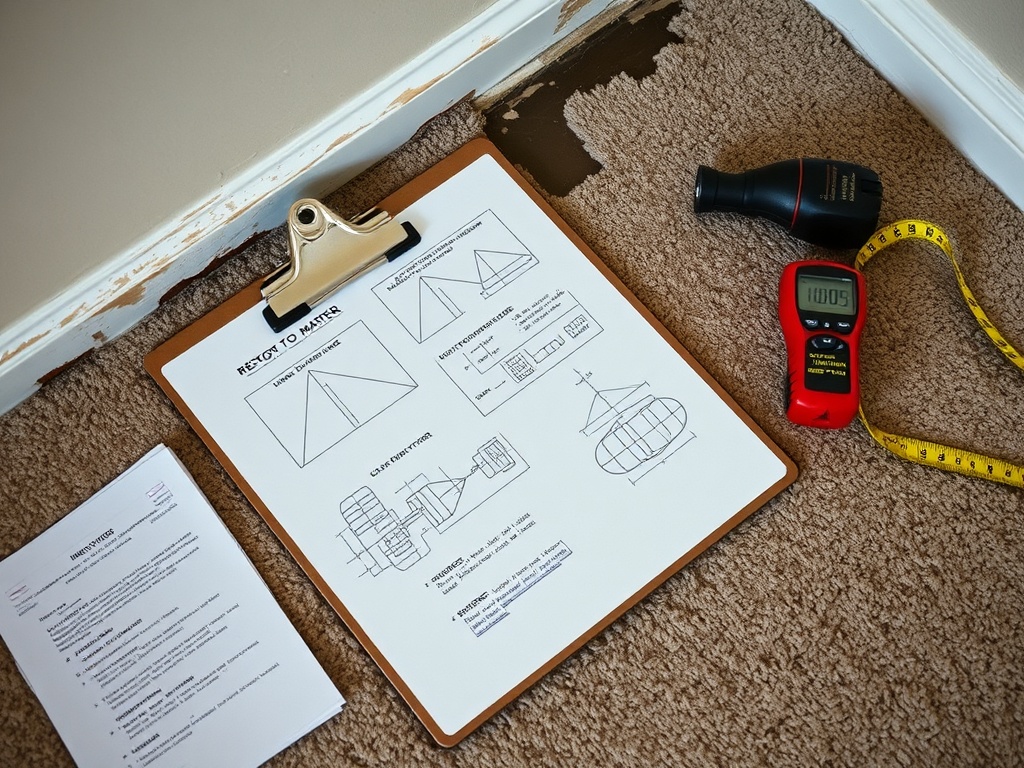
    We stop the source if accessible, then walk the structure with moisture meters and a thermal camera. The map tells us scope, not guesses.

  2. 02

    Containment, Category 2 or 3.

    If it’s gray or black water, we contain before we extract. Plastic sheeting, negative air, and HEPA filtration go up first.

  3. 03

    Truck-mount extraction.

    Standing water comes out with truck-mount units. Carpet, pad, and subfloor get extracted to dry-cut moisture levels.

  4. 04

    Air movers and LGR dehumidifiers.

    Equipment placed based on cubic-foot calculation, not eyeball. Low-grain refrigerant dehumidifiers handle wet-bulb conditions our market sees.

  5. 05

    Daily moisture readings until dry.

    Same time every day. Written log. Equipment moves as readings come down. No structure leaves wet.

  6. 06

    Affected materials removed, S500.

    Anything that can’t dry to standard comes out. Documented, photographed, in the file. IICRC S500-compliant.

Clayton address. Water emergency.

Live phone, twenty-four seven. We’ll dispatch the nearest crew the moment we hang up.

Call (314) 947-3419

Carrier names and trademarks referenced on this site are the property of their respective owners. Gateway Water and Mold is not affiliated with, endorsed by, or a preferred contractor for any insurance carrier. We work alongside policyholders and their carriers on restoration claims; policyholders retain the right to choose their own restoration contractor.