Gateway/Water Damage Restoration/St. Louis City
Water Damage Restoration
in St. Louis City, MO.
Water damage restoration for St. Louis, MO homeowners. IICRC S500 extraction, drying, and monitoring; every job documented to a standard Allstate, State Farm, and American Family can underwrite. We work The Hill, Tower Grove South, Soulard, and the rest of the metro the same way.
On the ground in St. Louis
What we see in
St. Louis, every week.
St. Louis City is Brick City: vast stock of 1880s through 1920s solid-brick row houses, two-flats, four-families, and gingerbread bungalows on full basements with limestone or rubble foundations. Plaster-on-lath walls are universal in the pre-1940 fabric. The Hill, Tower Grove South, Soulard, Lafayette Square, Central West End, Holly Hills, Dutchtown, and Shaw all share housing that is over a hundred years old. When a heavy rain hits, brick parapet walls and built-in gutters fail and channel water inside walls. When an original cast-iron stack pinholes inside a plaster wall in Carondelet or Bevo Mill, the damage spreads behind the surface for hours. We work the City with IICRC S500 dryout, truck-mount extraction, and a written Xactimate scope built for historic fabric. Direct billing on Allstate, State Farm, and American Family keeps the homeowner out of the documentation loop.
What makes water damage restoration different in St. Louis.
Water damage in the City is shaped by the metro’s oldest and densest housing stock. Vast tracts of 1880s-1920s brick row houses, two-flats, four-families, and gingerbread bungalows define neighborhoods from The Hill to Tower Grove South to Holly Hills. These structures are solid brick (often 3-wythe load-bearing), have horsehair plaster on wood lath, and sit on limestone or rubble foundations that admit lateral moisture year-round. Loss scope rarely matches what the surface suggests. A burst supply line in a Soulard four-family can run through a wall cavity into the joist bay above the unit below, and by the time the lower unit sees a stain, the upper assembly is saturated. We cavity-map every accessible wall with infrared, drill inspection ports to confirm before opening, and pull plaster selectively. Drying-in-place is sometimes viable, but the brick mass holds heat unevenly and our drying timelines run longer than modern construction would.
Quick answers for St. Louis homeowners.
Our 1908 Tower Grove South four-family has limestone basement walls and original cisterns. After a sewer backup, what is your approach?
Pre-1940 brick city housing requires a different sequence. We extract Category 3 water immediately and remove any porous materials at floor level per S500. Limestone walls are dried slowly with controlled airflow because aggressive drying spalls the stone. Original cisterns get inspected, often they are still functional drains or have been capped, and the cap may have failed. We document the lateral entry point for MSD and your sewer backup rider. Plaster walls above the waterline get metered for cavity moisture.
Built-in gutter on our Lafayette Square three-story failed in a storm. Water saturated walls from third floor down. Honest scope?
Built-in gutter failures in pre-1900 city buildings are some of the worst water losses we see. The water enters the wall cavity at the parapet and runs down all three floors through the plaster. Drying the cavities requires opening multiple small inspection points on each floor. Affected plaster usually needs partial removal because saturation time was long before anyone noticed. Roof and gutter repair is a separate contractor. We document for the carrier, but honest expectation, scope runs into five figures even for a small building.
Combined sewer backed up into our Soulard basement. Allstate is our carrier. Do they cover historic district properties differently?
Same policy mechanics, same endorsement requirement. Allstate, State Farm, and American Family treat historic district properties under the standard sewer backup rider, with the same limits. Where historic properties differ is the per-claim cost runs higher because of materials and craftsmanship. We write the Xactimate scope to reflect actual costs for plaster repair, original brick cleaning, and salvageable historic flooring. If your rider limit is the standard $5,000, that often gets consumed quickly in a historic city home. Worth reviewing your limit at renewal.
“We don’t tell you it’s mold because it looks like mold. We test, we plan, and we tell you what you don’t need to remediate.”
What’s included
What every St. Louis City
water damage restoration job covers.
Every Gateway water damage restoration job in St. Louis City runs to the same standard, same equipment, same documentation, same reputation backing every step. The full scope and FAQ live on our main water damage restoration page; the short version is below.
- 24/7 emergency dispatch with same-day on-site response
- IICRC S500-compliant extraction, drying, and monitoring
- Truck-mount and portable units sized for your structure
- Daily moisture readings, written, until structure passes dry standard
- Xactimate-aligned insurance file delivered directly to your carrier
How a St. Louis City call runs
Six steps. Same every job.
- 01
Source control & moisture map.
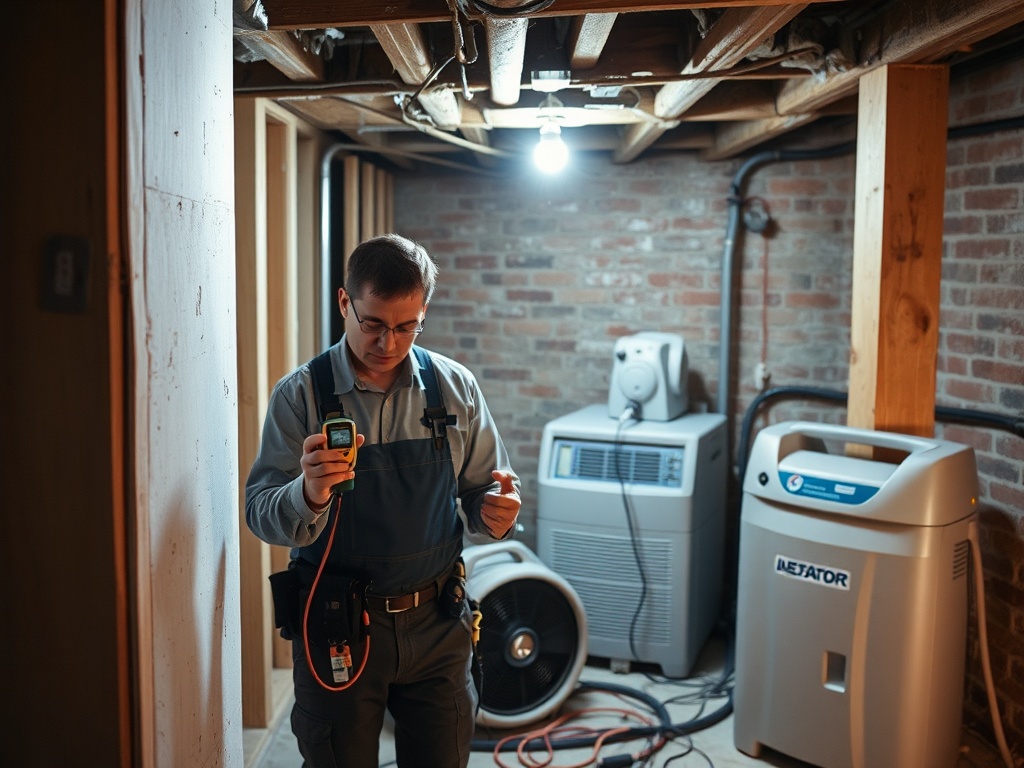
We stop the source if accessible, then walk the structure with moisture meters and a thermal camera. The map tells us scope, not guesses.
- 02
Containment, Category 2 or 3.
If it’s gray or black water, we contain before we extract. Plastic sheeting, negative air, and HEPA filtration go up first.
- 03
Truck-mount extraction.
Standing water comes out with truck-mount units. Carpet, pad, and subfloor get extracted to dry-cut moisture levels.
- 04
Air movers and LGR dehumidifiers.
Equipment placed based on cubic-foot calculation, not eyeball. Low-grain refrigerant dehumidifiers handle wet-bulb conditions our market sees.
- 05
Daily moisture readings until dry.
Same time every day. Written log. Equipment moves as readings come down. No structure leaves wet.
- 06
Affected materials removed, S500.
Anything that can’t dry to standard comes out. Documented, photographed, in the file. IICRC S500-compliant.
Other St. Louis cities we cover
Water Damage Restoration across
the metro.
St. Louis City address. Water emergency.
Live phone, twenty-four seven. We’ll dispatch the nearest crew the moment we hang up.