Gateway/Water Damage Restoration/Florissant

Water Damage Restoration
in Florissant, MO.

Water damage restoration for Florissant, MO homeowners. IICRC S500 extraction, drying, and monitoring; every job documented to a standard Allstate, State Farm, and American Family can underwrite. We work Old Town Florissant, Paddock Hills, Coldwater Commons, and the rest of the metro the same way.

Gateway Water Damage Restoration crew working in a Florissant, MO home

Why Florissant matters

What we know about
Florissant homes.

Florissant is one of the largest 1950s through 1970s suburban builds in the metro: brick veneer ranches dominant, aluminum or vinyl siding on later phases, full basements standard, and many finished as rec rooms in the 1970s and 1980s. The Paddock Hills, Coldwater Commons, Fox Run, and Old Town areas all share the same era-driven failure pattern: original copper supply lines, cast-iron drain stacks, and first-generation sump pumps all hitting end of life together. When a finished basement supply line bursts in a Florissant ranch on a Sunday afternoon, the loss spreads across paneling, drop ceilings, and carpet quickly. We respond with truck-mount extraction, IICRC S500 dryout, and a written Xactimate scope for the carrier file. Direct billing on Allstate, State Farm, and American Family shortens the timeline, and the scope captures the actual finished-basement footprint and material specifications.

Water Damage Restoration in Florissant, the specifics.

Florissant water damage scope is shaped by the massive 1950s-1970s ranch subdivision build that dominates the city. These homes are largely brick veneer with frame second stories where present, drywall interior, and full basements that were finished as rec rooms during the 1970s-80s conversion era. The dominant interior loss causes are supply-line failures, water heater ruptures, and washing machine hoses, all of which can run undetected until water reaches a finished living space. Our S500 protocol involves cavity moisture mapping before any demo, prioritized LGR dehumidification, and removal of finished-basement paneling and lower drywall along the wetted footprint. Original 1970s sub-floor and rec-room finishes typically can’t be saved once saturated, so we scope demo and rebuild rather than dry-in-place for those assemblies.

Common questions from Florissant homeowners.

Our 1967 Paddock Hills ranch has 1980s finished basement walls. Anything specific to that vintage we should know after water damage?

Yes. 1980s basement finishes were often paneling over studs against block, with fiberglass batt insulation and no vapor barrier. After any water event, the batt holds moisture against the wood for weeks and grows mold quickly. We pull the affected section to inspect. If the batt is wet, it comes out. Paneling that absorbed water rarely flattens back, so honest expectation is that drying preserves the framing and slab, but the finish surfaces likely need replacement.

Our sump pump died during a downpour and the basement got ten inches of water. What does cleanup look like for a finished basement?

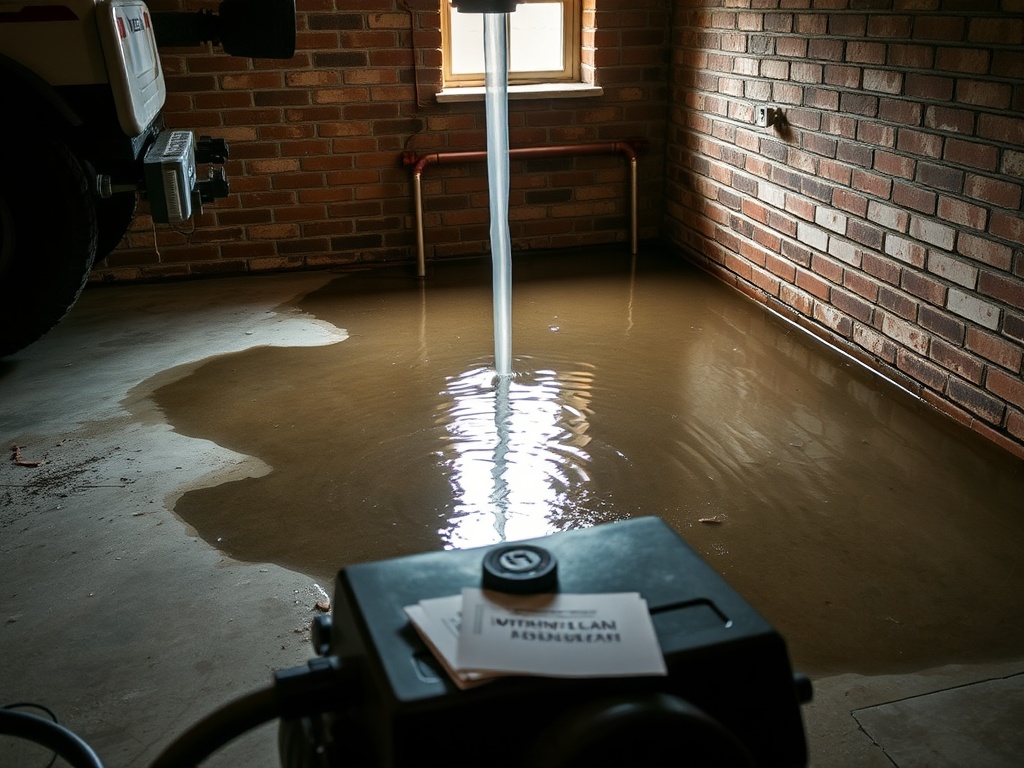
Truck-mount extraction pulls the standing water first. Pad comes out, carpet is evaluated based on contamination category, sewer-influenced backup means carpet goes too. We pull baseboards, drill drywall above the waterline for cavity airflow, and set LGR dehumidifiers sized to the space. Finished items at floor level, books, photos, furniture legs, often do not survive. We document everything for your sewer backup rider or sump pump endorsement claim and direct-bill if assigned.

Coldwater Creek flooded into our basement last spring. Does that go on a homeowner policy or flood policy?

Surface water from a creek overflow is flood insurance territory, not homeowner. NFIP or a private flood policy is what pays. Allstate, State Farm, and American Family homeowner policies exclude flood by definition. If the water also caused a sewer backup as a secondary effect, the sewer rider on the homeowner side may pick up that portion. We write the scope to separate flood damage from sewer damage when both happened, because they go to different policies. We handle both claim routes.

“We don’t tell you it’s mold because it looks like mold. We test, we plan, and we tell you what you don’t need to remediate.”

The Gateway approach

What’s included

What every Florissant
water damage restoration job covers.

Every Gateway water damage restoration job in Florissant runs to the same standard, same equipment, same documentation, same reputation backing every step. The full scope and FAQ live on our main water damage restoration page; the short version is below.

  • 24/7 emergency dispatch with same-day on-site response
  • IICRC S500-compliant extraction, drying, and monitoring
  • Truck-mount and portable units sized for your structure
  • Daily moisture readings, written, until structure passes dry standard
  • Xactimate-aligned insurance file delivered directly to your carrier

See the full water damage restoration scope

How a Florissant call runs

Six steps. Same every job.

  1. 01

    Source control & moisture map.

    We stop the source if accessible, then walk the structure with moisture meters and a thermal camera. The map tells us scope, not guesses.

  2. 02

    Containment, Category 2 or 3.

    If it’s gray or black water, we contain before we extract. Plastic sheeting, negative air, and HEPA filtration go up first.

  3. 03

    Truck-mount extraction.

    Standing water comes out with truck-mount units. Carpet, pad, and subfloor get extracted to dry-cut moisture levels.

  4. 04

    Air movers and LGR dehumidifiers.

    Equipment placed based on cubic-foot calculation, not eyeball. Low-grain refrigerant dehumidifiers handle wet-bulb conditions our market sees.

  5. 05

    Daily moisture readings until dry.

    Same time every day. Written log. Equipment moves as readings come down. No structure leaves wet.

  6. 06

    Affected materials removed, S500.

    Anything that can’t dry to standard comes out. Documented, photographed, in the file. IICRC S500-compliant.

Florissant address. Water emergency.

Live phone, twenty-four seven. We’ll dispatch the nearest crew the moment we hang up.

Call (314) 947-3419

Carrier names and trademarks referenced on this site are the property of their respective owners. Gateway Water and Mold is not affiliated with, endorsed by, or a preferred contractor for any insurance carrier. We work alongside policyholders and their carriers on restoration claims; policyholders retain the right to choose their own restoration contractor.