Gateway/Blog

East Alton, IL’s Summer Attic Alert: Preventing Hidden Mold from High Humidity and Poor Ventilation

East Alton, IL's Summer Attic Alert: Preventing Hidden Mold from High Humidity and Poor Ventilation

East Alton sits in the American Bottoms where summer humidity regularly pushes above 70%, creating perfect conditions for hidden attic mold that homeowners never see until it’s widespread. The combination of Mississippi River moisture, older housing stock in neighborhoods like Riverfront and Downtown East Alton, and inadequate attic ventilation in many pre-1980s homes creates a recipe for mold problems that develop silently above your ceiling. Jason Jackson and his IICRC-trained team at Gateway Water & Mold have found hidden attic mold in roughly 40% of East Alton homes they inspect during summer months, often in areas homeowners assumed were dry and safe.

What to Do About Attic Mold Prevention in East Alton

  • Check your attic temperature on 85°F+ days — it should stay within 10-15 degrees of outdoor temperature with proper ventilation
  • Inspect soffit vents for blockages from insulation, debris, or wasp nests that are common in the American Bottoms area
  • Look for water stains on roof decking, especially around chimneys and roof penetrations where ice dams form during East Alton’s harsh winters
  • Monitor humidity levels in living spaces below the attic — readings above 60% often indicate poor attic ventilation
  • Schedule professional moisture mapping if you smell musty odors that worsen during humid July and August weather
  • Document any roof leaks immediately with photos and moisture readings for insurance purposes

Why Summer Humidity Creates Hidden Attic Mold in East Alton


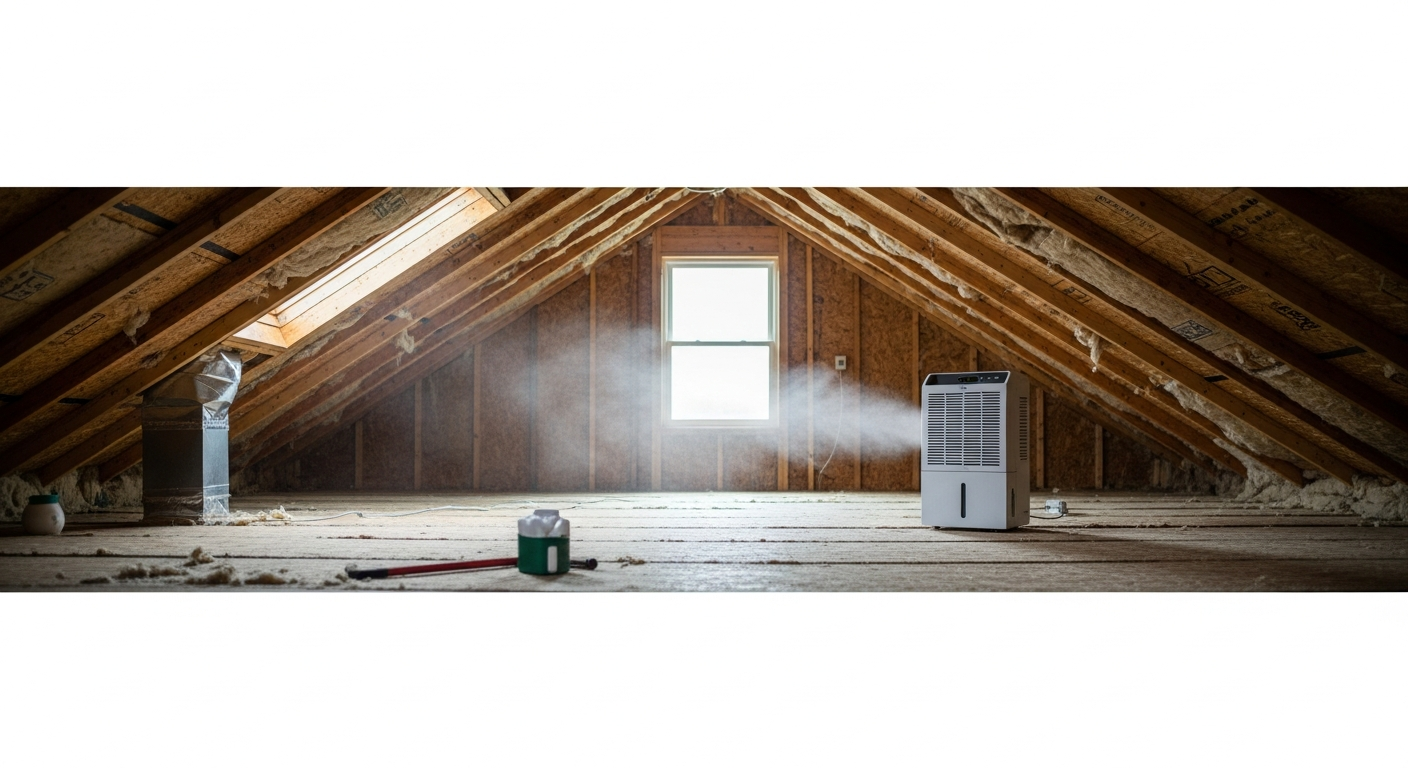
East Alton, IL's Summer Attic Alert: Preventing Hidden Mold from High Humidity and Poor Ventilation — in-context / use-case image

East Alton’s location in the Mississippi River floodplain means summer humidity levels average 75-80%, according to National Weather Service data for the St. Louis region. When outdoor air carries this much moisture into poorly ventilated attics, temperatures can reach 130-140°F while humidity stays trapped against roof decking and insulation. This creates hot, humid, dark conditions where mold spores multiply rapidly on organic materials like wood sheathing and paper-faced insulation.

The problem gets worse in East Alton because many homes built before 1980 lack adequate soffit and ridge ventilation. These older homes in areas like Wood River Heights and Elm Point were often built with minimal attic ventilation, relying instead on gable vents that don’t create proper airflow. Modern building science shows you need 1 square foot of ventilation for every 150 square feet of attic space, split evenly between intake (soffit) and exhaust (ridge) vents.

Gateway Water & Mold’s moisture mapping data shows that attic humidity in unventilated East Alton homes can stay above 80% for weeks during summer, while properly ventilated attics typically maintain 45-55% humidity even during peak summer heat.

East Alton’s Climate and Construction Challenges

The American Bottoms region presents unique challenges for preventing hidden attic mold that don’t exist in drier parts of Illinois. East Alton receives an average of 4.2 inches of rain during July according to NOAA precipitation records, often in heavy downpours that can overwhelm gutters and create roof leaks. Combined with the area’s clay-heavy soil that doesn’t drain well, moisture problems often start in basements and crawl spaces, then migrate upward through the building envelope.

Many East Alton neighborhoods feature housing stock from different eras with varying ventilation standards. The Riverfront District contains homes from the 1920s-1940s with steep-pitched roofs that trap heat, while subdivisions like Eastgate and Woodland Hills have ranch-style homes from the 1960s-70s with shallow roof pitches that don’t naturally ventilate well. Both styles struggle with summer humidity, but for different reasons.

Ranch homes in areas like Rosewood Manor often have cathedral ceilings or complex rooflines that create dead air spaces where humidity accumulates. The original builders typically installed minimal soffit vents and relied on gable vents that don’t create the continuous airflow needed in high-humidity climates. Meanwhile, older two-story homes in Downtown East Alton may have adequate natural ventilation through stack effect, but their roof decking often lacks modern vapor barriers, allowing moisture to condense directly on wood surfaces.

Jake Lusby from Gateway Water & Mold explains that East Alton’s proximity to major industrial facilities also means more airborne particulates that can clog soffit screens and reduce ventilation effectiveness over time.

Signs of Attic Mold in Summer Conditions
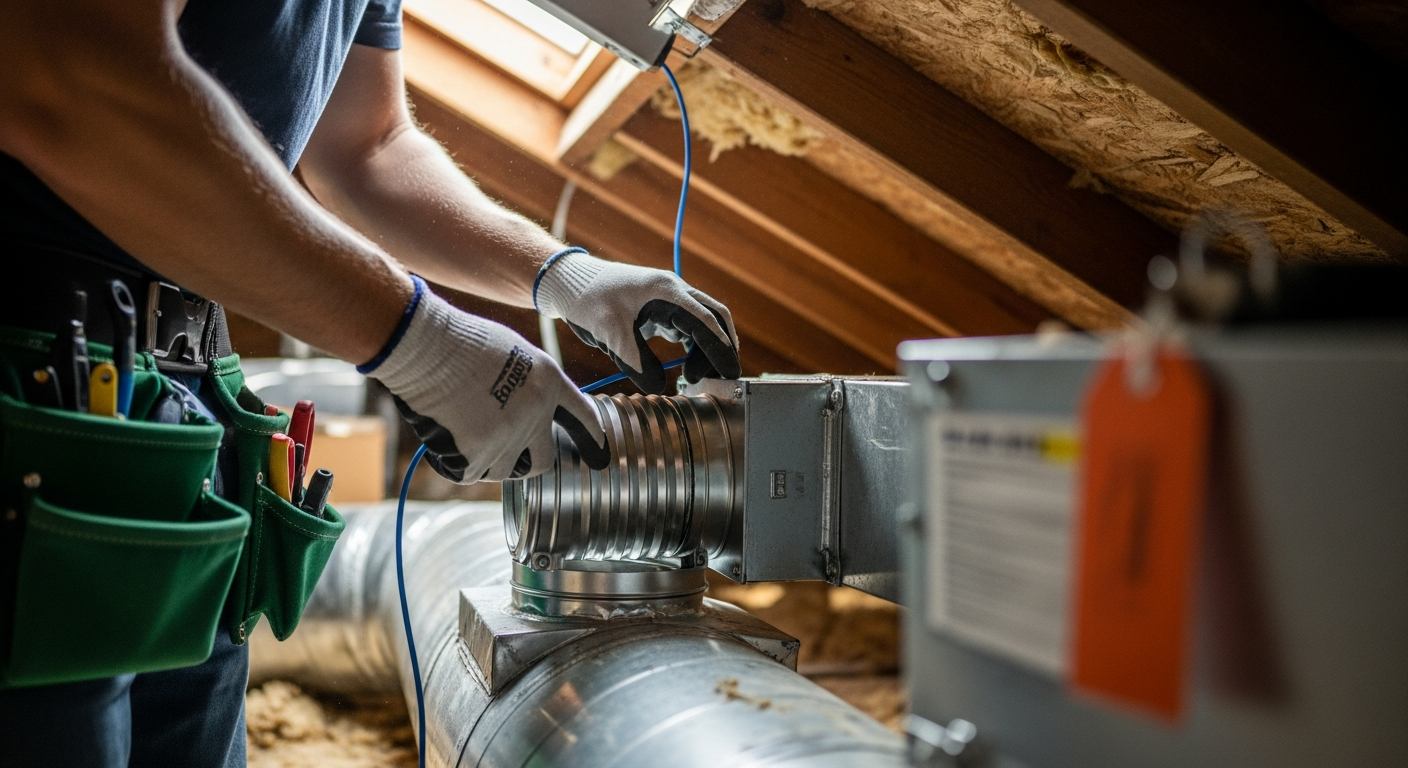

East Alton, IL's Summer Attic Alert: Preventing Hidden Mold from High Humidity and Poor Ventilation — process / how-it-works image

Hidden attic mold often announces itself through subtle signs that homeowners might dismiss as normal summer issues. The most common early indicator in East Alton homes is a musty smell that gets stronger during humid weather but seems to disappear when air conditioning runs constantly. This happens because mold growth accelerates when attic temperatures spike above 90°F and humidity stays elevated for more than 48 hours straight.

Look for dark staining or discoloration on roof decking visible from below, especially along the north-facing slopes where morning dew takes longer to evaporate. In East Alton’s climate, these areas stay damp longer and provide ideal conditions for mold colonization. You might also notice that certain rooms feel more humid than others, or that your air conditioning seems to run longer without effectively controlling humidity levels. This often indicates that humid attic air is infiltrating living spaces through gaps around light fixtures, ceiling fans, or attic access points.

Professional Attic Mold Inspection Methods


East Alton, IL's Summer Attic Alert: Preventing Hidden Mold from High Humidity and Poor Ventilation — outcome / result image

Gateway Water & Mold uses a systematic approach for detecting hidden attic mold that goes far beyond visual inspection. Their IICRC-trained technicians start with thermal imaging to identify temperature differentials that indicate moisture problems or inadequate insulation. In East Alton’s summer conditions, thermal cameras reveal hot spots where ventilation fails and cool spots where moisture may be condensing on surfaces.

The team follows thermal imaging with moisture mapping using both pin and pinless moisture meters to document exact moisture levels in roof decking, rafters, and insulation materials. This data-driven approach — part of their “test before tear-out” philosophy — prevents unnecessary demolition while ensuring they identify all affected areas. They also conduct air quality testing to determine if visible staining actually contains active mold growth, since not all discoloration in attics represents a health hazard.

For a recent project in East Alton’s Elm Point neighborhood, Gateway’s inspection revealed elevated moisture readings in roof decking that showed no visible mold growth. Air quality testing confirmed mold spore levels 3x higher than outdoor baseline, but surface sampling showed the contamination was limited to a 12-square-foot area around a roof penetration. Their targeted approach meant the homeowner needed minor roof repair and localized cleaning instead of whole-attic remediation that other contractors had recommended.

Summer Mold Prevention Tips

Effective attic mold prevention in the Metro East region requires understanding how East Alton’s specific climate affects your home’s building envelope. Start by ensuring your attic maintains proper ventilation ratios — you need equal amounts of intake ventilation at the soffits and exhaust ventilation at the ridge. Most East Alton homes need additional soffit vents installed, especially ranch-style homes in subdivisions like Eastgate where original construction included minimal ventilation.

Install a programmable attic fan if passive ventilation can’t keep attic temperatures within 15 degrees of outdoor temperature during summer afternoons. However, make sure you have adequate soffit ventilation first, or powered exhaust fans will pull conditioned air from your living spaces instead of outdoor air. This mistake actually increases energy costs and can create negative pressure that draws humid outside air into wall cavities.

Monitor your home’s indoor humidity levels with a digital hygrometer, keeping levels between 30-50% during summer months. If you can’t maintain these levels with air conditioning alone, you may need supplemental dehumidification or improved attic ventilation. Gateway Water & Mold recommends checking humidity levels in rooms directly below the attic, since poor attic conditions often affect the rooms below first.

Address roof maintenance proactively by cleaning gutters monthly during summer storm season and inspecting flashing around chimneys, vents, and skylights after heavy rains. East Alton’s clay soil means water doesn’t absorb quickly during downpours, increasing the likelihood of roof leaks from backed-up gutters or overwhelmed downspouts.

Frequently Asked Questions


East Alton, IL's Summer Attic Alert: Preventing Hidden Mold from High Humidity and Poor Ventilation — human element image

How do I know if my East Alton attic has adequate ventilation for preventing mold?

Your attic needs 1 square foot of ventilation per 150 square feet of attic floor space, split equally between soffit intake and ridge exhaust vents. In East Alton’s humid climate, check that your attic temperature stays within 10-15 degrees of outdoor temperature during summer afternoons. If your attic reaches 130°F+ when it’s 90°F outside, you need more ventilation. Look for soffit vents every 6-8 feet along your eaves and continuous ridge venting or multiple ridge vents along your roof peak.

What humidity levels in my attic indicate mold risk during East Alton summers?

Attic humidity above 60% for more than 48 consecutive hours creates conditions for mold growth on organic materials like roof decking and insulation. In East Alton’s climate, properly ventilated attics should maintain 45-55% humidity even during peak summer conditions. Use a digital hygrometer with remote sensors to monitor attic humidity levels, checking readings during the hottest, most humid parts of July and August when conditions are most challenging.

How much does professional attic mold inspection cost in the Edwardsville area?

Professional mold inspection including thermal imaging, moisture mapping, and air quality testing typically costs $300-500 for average-sized East Alton homes. Gateway Water & Mold includes surface sampling and detailed moisture documentation to determine actual scope of work needed, potentially saving thousands in unnecessary remediation costs. Their “test before tear-out” approach means you get accurate data about contamination levels instead of estimates based on visual inspection alone.

Can I prevent attic mold by just running my air conditioning more during humid weather?

Air conditioning alone won’t prevent attic mold because your HVAC system doesn’t directly condition attic space in most East Alton homes. You need proper attic ventilation to move humid air out and draw drier outdoor air in through soffit vents. Running AC constantly can actually worsen attic conditions if you have air leaks between living spaces and the attic, since conditioned air escaping upward increases humidity levels in the attic space.

What’s the difference between surface mold and hidden mold in East Alton attics?

Surface mold appears as visible discoloration or fuzzy growth on roof decking, rafters, or insulation materials. Hidden mold grows inside building materials or in areas not visible during casual inspection, such as behind insulation or inside wall cavities where roof leaks have occurred. In East Alton’s humid climate, hidden mold often develops around roof penetrations, in corners where ventilation is poorest, or along north-facing roof slopes where moisture takes longer to evaporate.

How do East Alton’s winter ice dams contribute to summer attic mold problems?

Ice dams form when heated attic air melts snow on your roof, then refreezes at the cold eaves, backing water under shingles. This water often soaks into roof decking and insulation, creating moisture reservoirs that don’t fully dry before summer humidity arrives. The combination of residual moisture from winter ice damage plus summer’s high humidity creates ideal conditions for mold growth in areas that appear dry from visual inspection.

If you’re concerned about hidden attic mold in your East Alton home, don’t wait for visible growth to appear. Contact Gateway Water & Mold for professional moisture mapping and air quality testing that reveals the actual extent of any contamination. Their systematic inspection process and insurance-friendly documentation help East Alton homeowners make informed decisions about remediation needs while avoiding unnecessary demolition costs.

Water in your home or workplace right now?

Live phone, twenty-four seven. We dispatch the nearest crew the moment we hang up, across the St. Louis metro, both sides of the river.

Call (314) 947-3419

Carrier names and trademarks referenced on this site are the property of their respective owners. Gateway Water and Mold is not affiliated with, endorsed by, or a preferred contractor for any insurance carrier. We work alongside policyholders and their carriers on restoration claims; policyholders retain the right to choose their own restoration contractor.