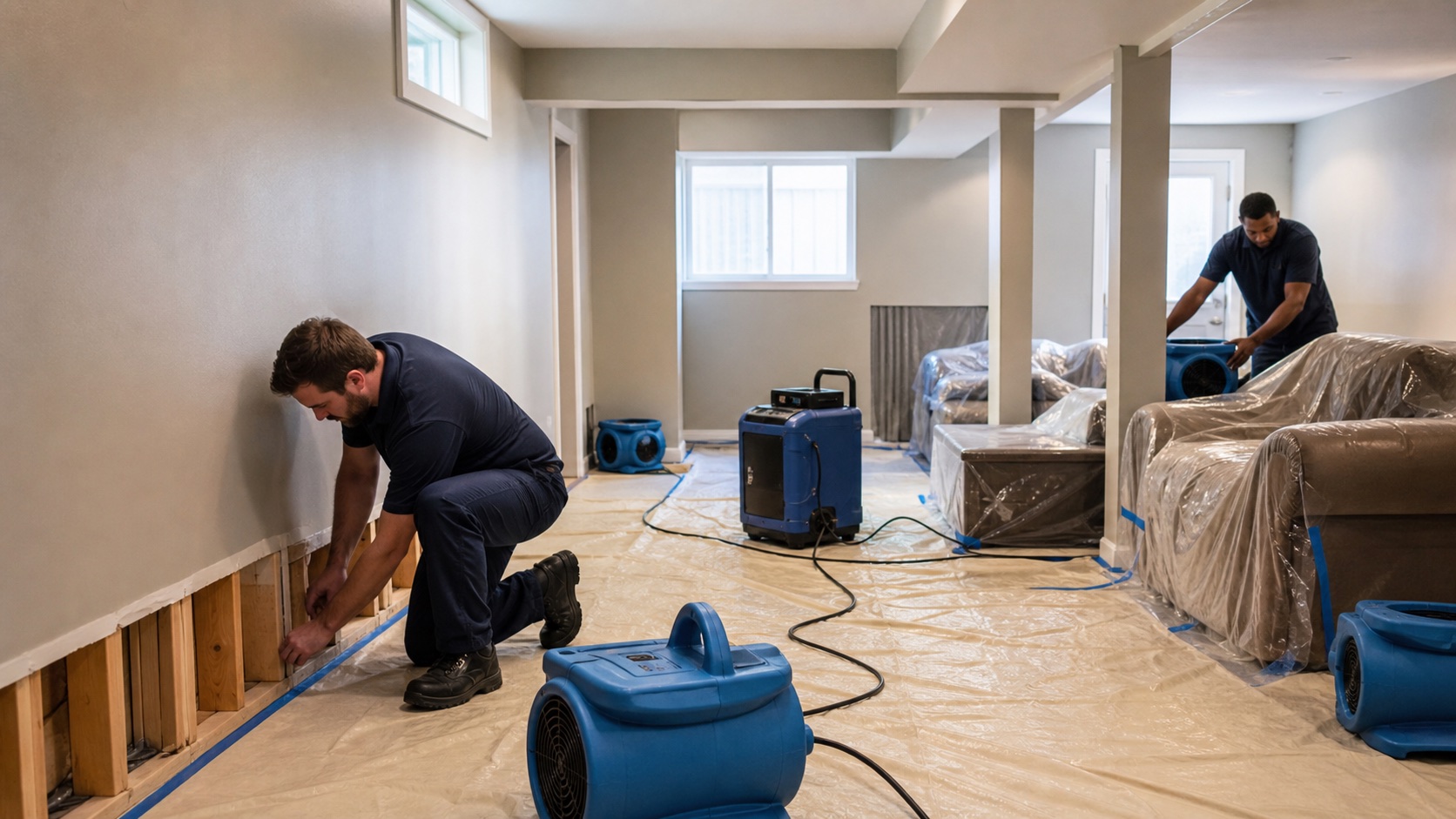
A finished basement leak in Edwardsville needs more than surface cleanup. Water can move under flooring, behind baseboards, into insulation, and along the bottom plate before the room looks badly damaged. The right response maps those hidden layers, removes standing water, dries what can be saved, and documents any material that cannot stay.
Where does water travel in a finished basement?
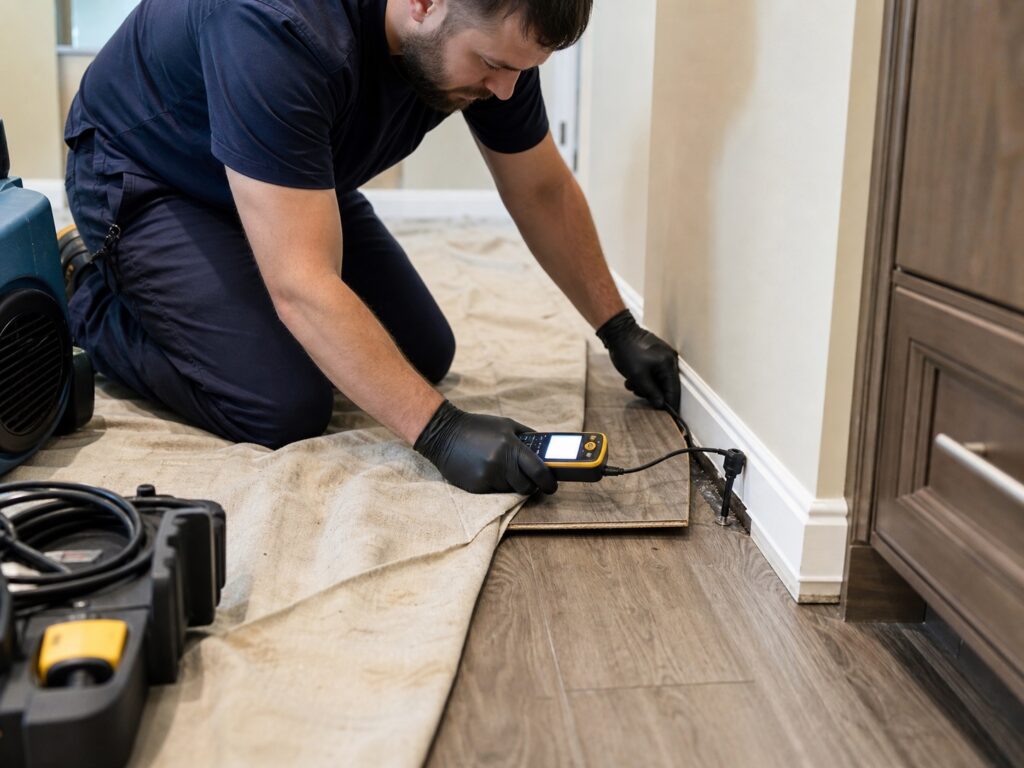
Water follows seams and low points. It can run beneath floating flooring, soak carpet pad beyond the visible edge, wick into drywall, and collect behind cabinets or finished walls. A supply-line leak may also travel through a ceiling or wall cavity before reaching the basement floor.
Edwardsville homes range from older plaster and wood assemblies near established neighborhoods to newer finished basements in growing subdivisions. Gateway’s Edwardsville water damage restoration team checks the materials actually present instead of applying one drying plan to every lower level.
What should happen before wet furniture and flooring are moved?
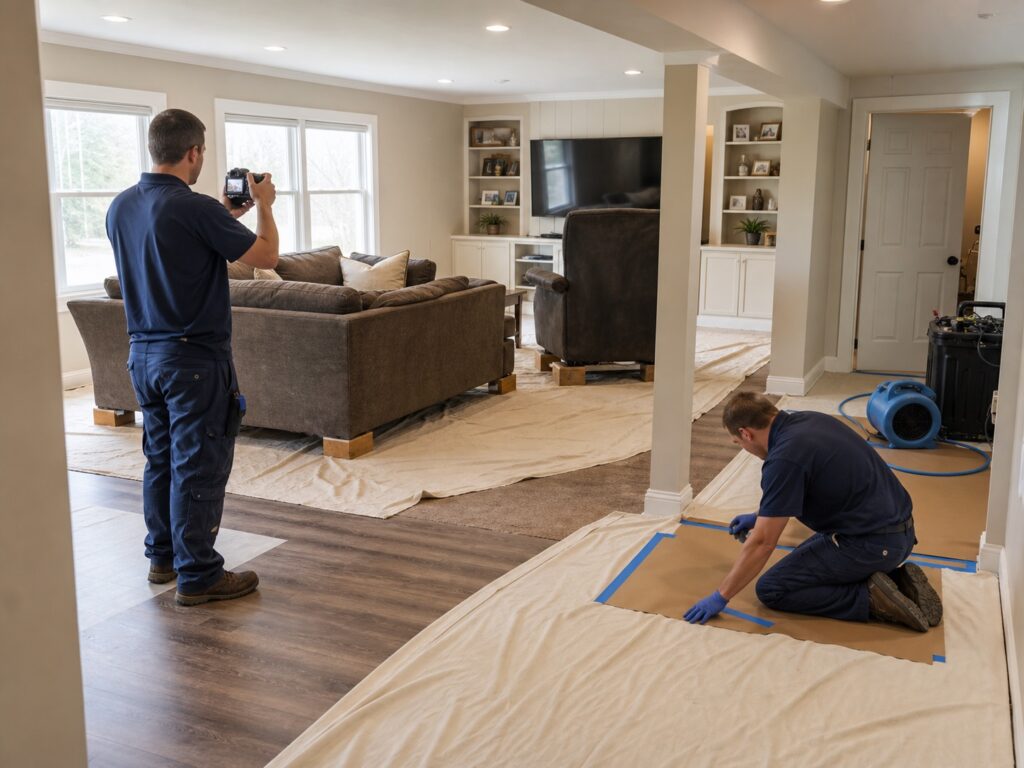
Document the room and source first. Photograph the water line, flooring transitions, built-ins, furniture, electronics, and any path the water followed from another floor. Then move dry contents to a protected area and separate clearly damaged items without throwing them away before they are documented.
- Record when the leak began, when it was discovered, and when the source stopped.
- Photograph model and serial numbers on damaged equipment.
- Keep receipts for emergency plumbing and temporary protection.
- Ask the restoration team to record readings before removal begins.
Can wet drywall and flooring dry in place?
Some materials can dry in place when the water source is clean, the exposure is recent, and the assembly can be opened to controlled airflow. Other materials block drying or cannot be cleaned safely. Carpet pad, laminate cores, insulation, and paper-faced products need individual decisions based on contamination and readings.
Professional water extraction in Edwardsville removes bulk water first. Drying equipment then handles moisture inside materials and the air. Monitoring confirms whether the plan is working.
Why are daily moisture readings important?
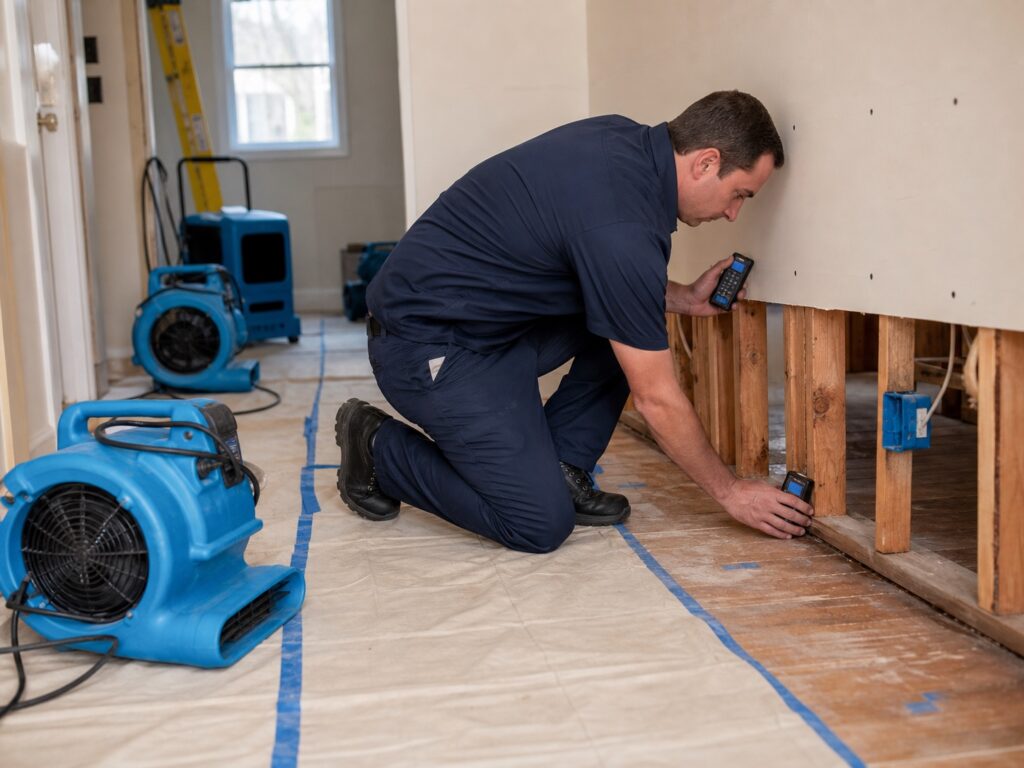
Equipment noise is not proof of drying. Daily readings show which materials are improving, which areas were missed, and when the structure has reached the established goal. They also prevent equipment from being removed because the visible surface feels dry.
A useful drying log identifies the material and location, not just a room-wide number. The result is a record the homeowner, contractor, and insurance carrier can understand later.
How do you prevent mold after a finished-basement leak?
Stop the source, remove trapped water, expose wet layers as needed, control humidity, and verify dryness. The EPA recommends drying wet materials within 24 to 48 hours when possible. If the leak went unnoticed or a musty odor remains, investigate before rebuilding.
If mold testing or controlled removal is justified, Gateway’s Edwardsville mold remediation service uses a written scope built from the affected boundary rather than a blanket demolition estimate.
What should the restoration scope tell you?
The scope should identify the source, affected materials, water category, removal decisions, equipment plan, monitoring schedule, documentation, and completion standard. It should also say what can remain. A homeowner should be able to read it and understand why each line exists.
When can reconstruction begin?
Reconstruction can begin after the source is controlled, affected cavities are accessible, sanitation work is complete, and remaining structural materials meet the documented dry standard. Closing a wall early can trap the last moisture behind new insulation and drywall. Keep the final readings with the job file so the rebuild starts from a recorded condition.
Can you stay home during basement water damage drying?
Often, yes, when the affected area is isolated and the loss does not involve a health or electrical hazard. Sewage, extensive demolition, significant dust, or equipment blocking the only safe exit can change that answer. Ask the crew how the work area, equipment cords, noise, and daily access will be managed before drying begins.
For a wet finished basement in Edwardsville, call Gateway at (314) 947-3419. Our Edwardsville water and mold team answers live, twenty-four seven, and gives you a real ETA based on location, weather, and current dispatch conditions.