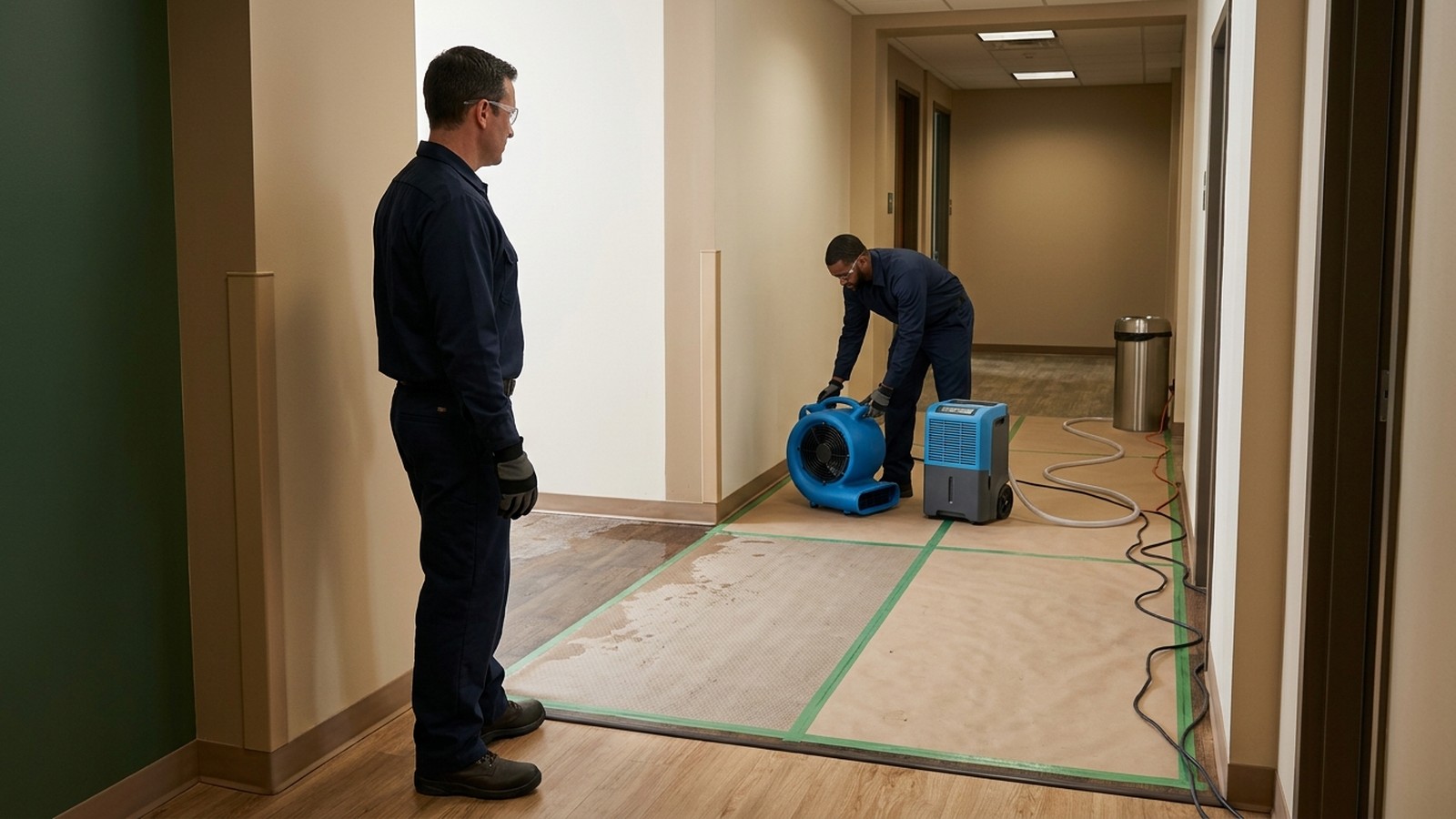
A commercial water damage emergency response plan should protect people, control the source only when safe, restrict access, document conditions, and guide drying and reopening. For owners, facility managers, and tenants in the St. Louis metro, the plan should assign responsibilities before an incident occurs and provide a practical checklist when water enters the building. It also should account for electrical equipment, inventory, tenant operations, restricted areas, and communication across Missouri or Illinois locations. The goal is not to make every restoration decision immediately. It is to stabilize the situation, preserve accurate information, and support a structured assessment by qualified restoration professionals.
What should a business do immediately after discovering water damage?
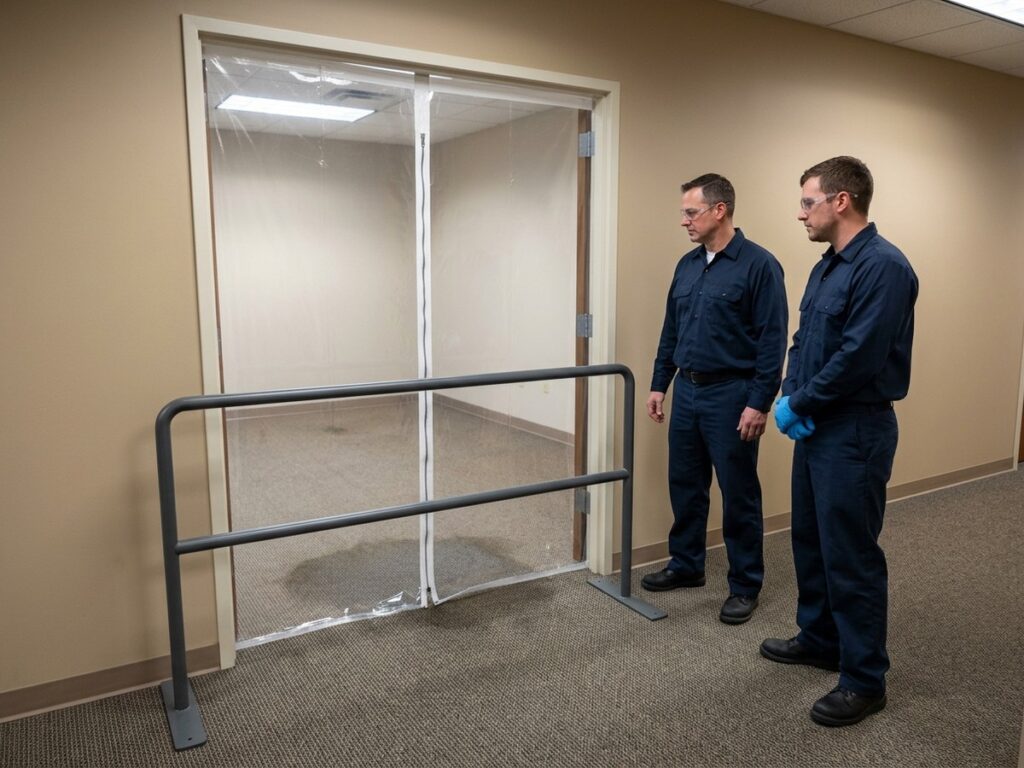
Life safety takes priority over property protection. Occupants should move away from the affected area, and only authorized personnel should attempt to identify or stop the water source. Standing water, damaged building materials, electrical equipment, sewage, chemicals, or possible structural instability can make an area unsafe.
Use this immediate-response checklist:
- Follow the property’s evacuation or shelter procedures when conditions require it.
- Contact emergency services if there is an active threat to occupants.
- Account for employees, visitors, contractors, and tenants according to the site plan.
- Keep people out of affected rooms, corridors, stairwells, and service areas.
- Do not touch electrical panels, outlets, machinery, or cords in or near water.
- Shut off a valve or equipment connection only when the location is known, accessible, and safe to operate.
- Notify building ownership, property management, maintenance, and the designated restoration contact.
- Avoid moving wet materials through occupied areas unless the route has been approved.
OSHA’s emergency preparedness guidance identifies core planning functions such as reporting emergencies, evacuation, accounting for employees, assigning critical duties, and naming plan contacts. Businesses can use those elements to review their site-specific procedures without treating a water-loss checklist as a substitute for their broader emergency plan. Review OSHA’s emergency action planning guidance.
How should source control, access control, and loss documentation be handled?
Source control should be limited to actions that authorized personnel can perform safely. Access control should remain in place while hazards and the extent of damage are being evaluated. Documentation should begin as soon as conditions permit, without sending someone into an unsafe area.
Control the source and affected space
A facility representative can identify known shutoffs, equipment connections, roof access points, utility contacts, and responsible vendors. If the source is uncertain or the shutoff area is unsafe, wait for the appropriate utility, trade professional, emergency responder, or restoration team.
Use doors, signs, temporary barriers, and alternate routes to separate the affected area. Record who has authority to enter, particularly when the loss involves tenant suites, server rooms, production areas, records storage, laboratories, kitchens, or mechanical spaces.
Create a factual loss record
Photographs and written notes should show conditions, not assumptions about cause or coverage. A useful record may include:
- Date and time the water was discovered
- Rooms, floors, and tenant areas visibly affected
- Apparent source and whether it remains active
- Photographs or video taken from safe locations
- Equipment, inventory, furnishings, and finishes in contact with water
- Shutoffs, evacuations, barriers, and other actions taken
- Names of notified property, maintenance, tenant, and vendor contacts
- Changes observed as inspection and drying continue
Keep original files and avoid discarding damaged materials until the appropriate parties have discussed documentation needs. Gateway can also help organize restoration records through its insurance claims assistance service, but coverage and payment decisions remain with the insurer under the applicable policy.
What should a commercial extraction and drying plan include?
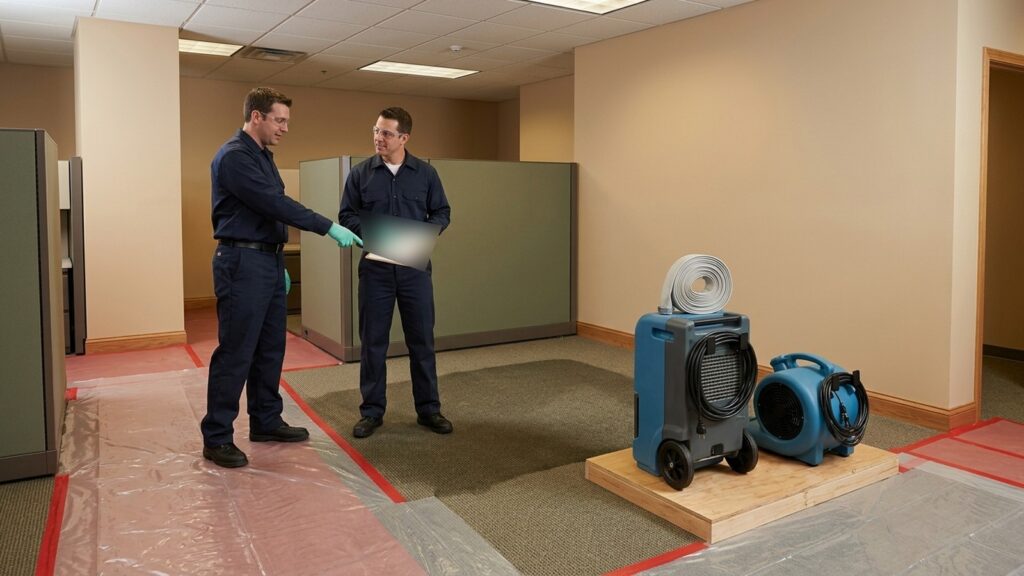
A commercial drying plan should define the affected area, immediate stabilization work, material decisions, equipment layout, and methods for tracking conditions. It should reflect the building’s actual use rather than apply the same setup to every office, warehouse, retail space, or multifamily property. The plan may change when concealed damage or additional affected areas are found.
| Plan component | Operational decision |
|---|---|
| Scope | Identify affected rooms, assemblies, contents, and adjacent spaces that need evaluation. |
| Water removal | Determine where extraction is appropriate and how equipment can be operated safely. |
| Material handling | Decide what can be cleaned and dried, what needs further evaluation, and what should be removed. |
| Drying setup | Position air movement and dehumidification equipment around access, occupancy, and containment needs. |
| Monitoring | Record relevant conditions and adjust the drying plan based on documented progress. |
| Work-area control | Manage debris, pathways, dust, equipment cords, and separation from occupied operations. |
| Coordination | Schedule access with owners, tenants, maintenance teams, and specialty contractors. |
The EPA’s commercial mold remediation guide emphasizes assessing the affected area, identifying moisture problems, selecting appropriate remediation methods, and considering occupants during the work. It also recognizes that professional judgment is necessary because building conditions vary. See the EPA guide for schools and commercial buildings.
Gateway’s approach is plan-driven: inspect the loss, define the work, perform controlled restoration, and document progress as conditions become clearer. The company’s restoration process provides a framework for keeping property contacts and work decisions aligned without assuming that the initial visible damage represents the full scope.
How should owners, managers, and tenants communicate during restoration?
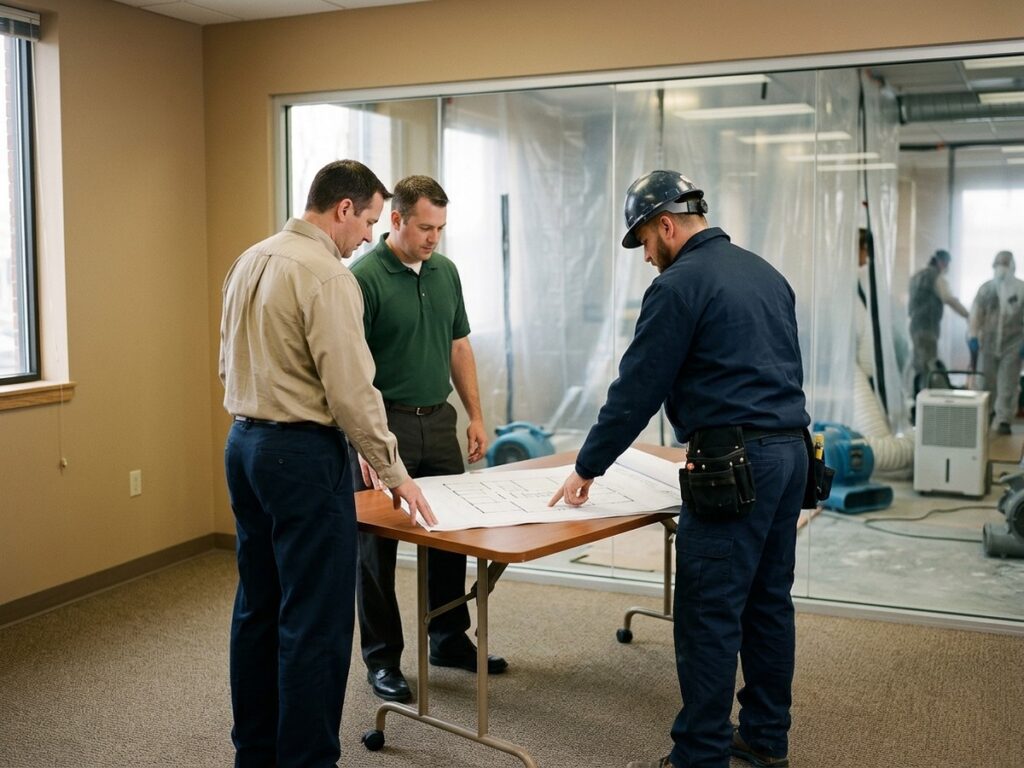
Communication should identify who makes property decisions, who receives updates, and who communicates with occupants. One designated contact for each organization reduces conflicting instructions. Updates should separate confirmed conditions from items still being evaluated.
A concise status update can cover:
- Areas closed, restricted, or available for normal use
- Safe entry routes and temporary changes to deliveries or parking
- Current source-control status
- Inspection, extraction, removal, and drying activities underway
- Equipment that must remain powered and undisturbed
- Decisions needed from ownership or tenant representatives
- Operational concerns involving inventory, records, machinery, or scheduled visitors
- The time and method for the following update
Tenant communications should avoid speculation about cause, mold, liability, insurance, or reopening. If separate employers occupy the property, each employer remains responsible for communicating its own workplace procedures to employees.
What conditions should be reviewed before reopening a water-damaged area?
Reopening should be based on documented conditions and the intended use of the space, not appearance alone. The source should be controlled, immediate hazards addressed, affected materials managed, and required restoration work sufficiently complete for the proposed occupancy. Some buildings can continue limited operations in unaffected areas when access and work zones remain properly separated.
A reopening review should address:
- Whether the water or moisture source has been corrected
- Whether electrical, structural, sanitation, or other identified hazards remain
- Whether wet or damaged materials have been removed, cleaned, or included in an active drying plan
- Whether restoration equipment creates access, noise, heat, or electrical-load concerns
- Whether work zones are adequately separated from occupied areas
- Whether exits, corridors, restrooms, and required operational spaces are usable
- Whether property representatives and affected tenants understand remaining restrictions
- Whether follow-up inspections or restoration tasks are still scheduled
For mold-related work, EPA completion guidance states that the moisture problem should be fixed and that visible mold, mold-damaged materials, and moldy odors should not remain when remediation is considered complete. The agency also recommends revisiting the site to check for signs of recurring water damage or mold growth. Read EPA Chapter 4 on remediation planning and completion.
After reopening, conduct an operational review. Record what caused delays, which contacts were unavailable, where shutoff information was missing, and whether access procedures worked. Update emergency contact lists, floor plans, shutoff labels, vendor information, tenant instructions, and document-storage practices based on those findings.
What should businesses know about commercial water damage response?
Commercial response decisions should be tied to the specific building, water source, affected materials, and ongoing operations. These common questions can help property teams clarify responsibilities before or during restoration.
Can employees or tenants retrieve items from a restricted area?
Entry should wait until the person controlling the site confirms that the route and destination are suitable for access. If retrieval is necessary, coordinate it with property management and the restoration team rather than allowing unplanned entry.
Who should shut off the water?
A known valve may be operated by an authorized person when it is safely accessible and the consequences of the shutoff are understood. Utility, fire protection, process-water, and shared-building systems may require coordination with the responsible facility professional or service provider.
Can part of the building stay open during restoration?
Limited operations may be practical when unaffected areas have safe access and can be separated from the work zone. That decision requires site-specific professional judgment and coordination among ownership, facility management, tenants, and restoration personnel.
How can a business reduce disruption during a future loss?
Maintain current emergency contacts, identify shutoffs, assign decision-makers, preserve floor plans, and establish a communication method for employees and tenants. Review the plan after building alterations, tenant changes, or an incident that reveals gaps.
Get Help With a Commercial Water Damage Response Plan
Gateway Water & Mold helps St. Louis metro businesses assess affected areas, organize restoration work, and document the path from stabilization through drying and recovery. Service is available for commercial properties in Missouri and Illinois. Learn how Gateway approaches commercial water damage restoration and contact the team to discuss the conditions at your property.