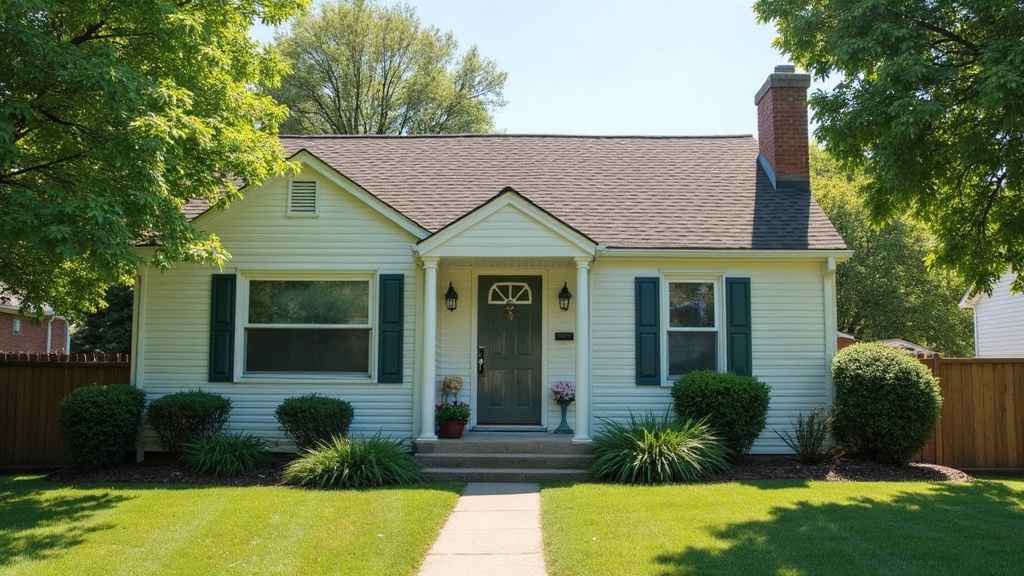
Caseyville’s proximity to the American Bottom floodplain makes summer storms particularly challenging for basement window wells, especially in neighborhoods like Old Town Caseyville and the Collinsville Road corridor where older homes sit closer to the water table. Gateway Water & Mold has worked with dozens of Caseyville homeowners whose finished basements flooded through compromised window wells during the intense thunderstorm seasons that hit Madison County between May and August. Professional mold remediation is often required afterward because prolonged moisture in window wells promotes hidden growth. The company’s IICRC-trained crews understand how Metro East Illinois soil conditions and drainage patterns create unique basement flooding risks that differ from properties on higher ground in Edwardsville or Glen Carbon.
What to Do About Window Well Flooding in Caseyville
- Clear debris from window well drains immediately after storms — leaves and sediment block the 4-inch drainage pipes that connect to your foundation drain tile
- Check window well covers for cracks or gaps where water can pool instead of shedding away from the foundation
- Inspect window well walls for separation from the foundation — even 1/4-inch gaps allow thousands of gallons during heavy rain
- Test basement windows for proper sealing — press firmly around frames to identify soft spots where caulk has failed
- Document any standing water with photos before pumping out — insurance claims require proof of water entry points
- Contact a certified water damage restoration company within 24 hours if water enters your basement through window wells
Summer Storm Patterns and Caseyville Basement Water Issues
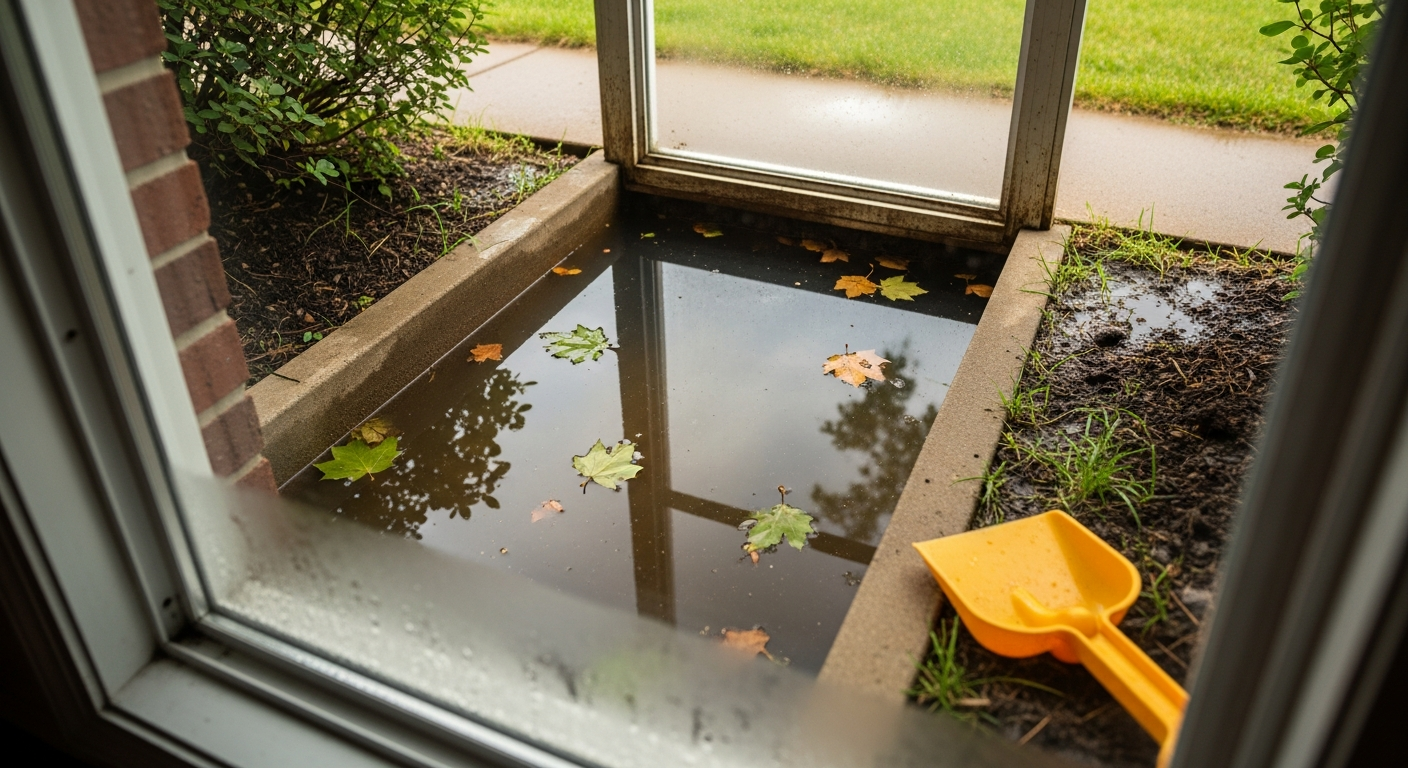
Caseyville receives an average of 4.1 inches of rainfall during May, the wettest month according to NOAA climate data for Madison County. The village’s location in the American Bottom means storm water doesn’t drain as quickly as it does in elevated areas. When thunderstorms dump 2-3 inches in an hour — common during summer severe weather events — window wells act like collection basins if they’re not properly maintained.
The clay-heavy soils throughout Caseyville and neighboring Fairview Heights don’t absorb water quickly. This creates surface runoff that flows toward the lowest points around your foundation, which are typically the window wells. Properties along Collinsville Road and in the Caseyville Park subdivision see the most window well flooding because these areas were developed when building codes didn’t require the robust drainage systems we install today.
Window Well Drainage Solutions for Metro East Illinois
Proper window well drainage requires three components working together: adequate depth below the basement floor level, functioning drain connections to your foundation’s perimeter drainage system, and graded backfill that slopes away from the window. Many Caseyville homes built in the 1970s and 1980s have window wells that were never connected to drain tile systems, creating a bathtub effect during storms.
The most effective drainage solution involves installing a 4-inch perforated drain pipe at the bottom of each window well, connected to your home’s foundation drainage system or a separate sump pump if your property lacks perimeter drains. Gateway Water & Mold often recommends this upgrade after cleaning up basement flooding because it prevents repeat incidents. The company has seen homes in Falling Springs and along Route 157 where proper window well drainage eliminated chronic basement water problems that had persisted for years.
Window well covers also play a role in preventing basement leaks in Illinois. Clear polycarbonate covers allow natural light while shedding water away from the window area. During summer storms, an uncovered window well can collect 50-100 gallons of water in less than an hour. That water has to go somewhere — and if the drainage system can’t handle the volume, it goes through your basement window.
Caseyville’s Foundation and Drainage Challenges
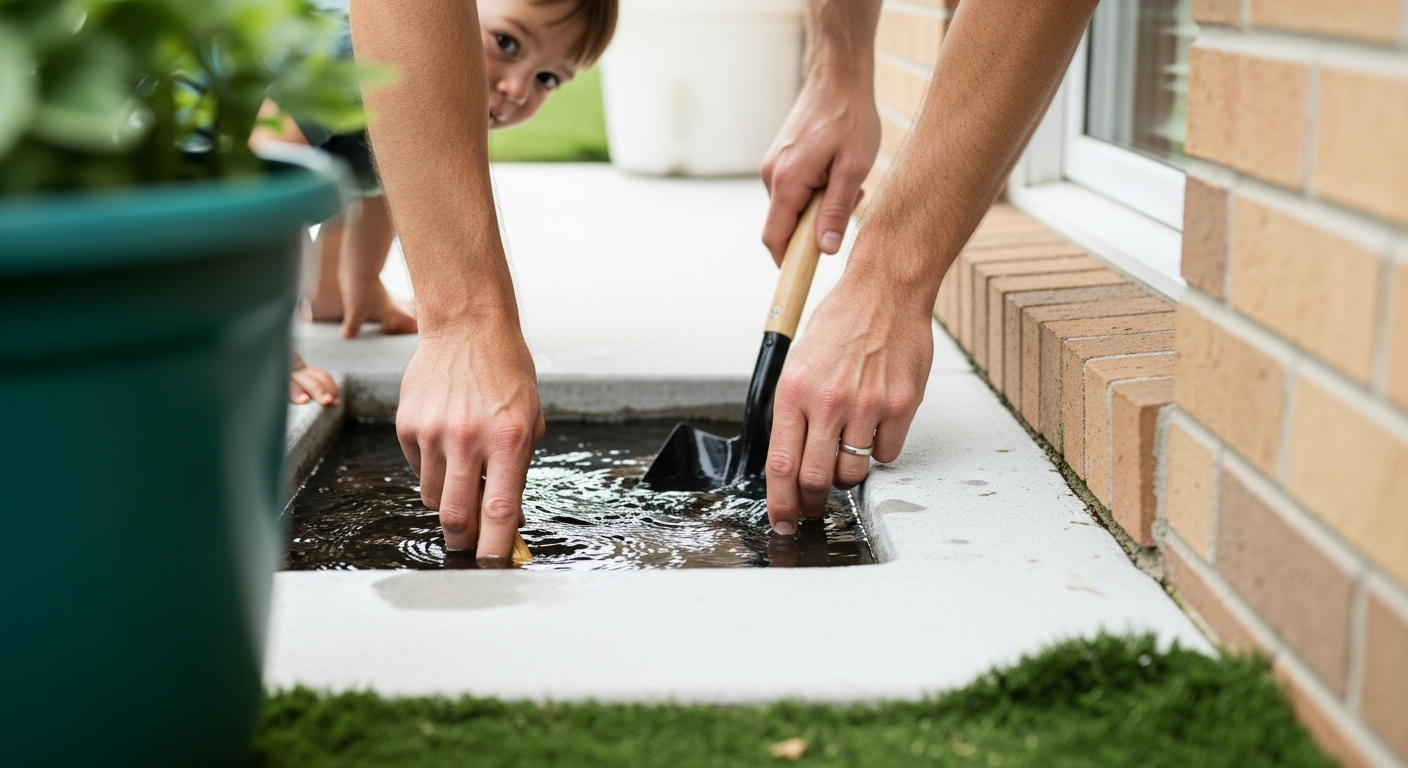
The American Bottom’s geology creates specific challenges for basement waterproofing that don’t exist in hillier parts of Madison County. Caseyville sits at roughly 410 feet elevation, significantly lower than Edwardsville’s 550-foot average elevation. This means groundwater levels stay closer to basement floors throughout the year, and they rise quickly during wet periods.
Properties in Old Town Caseyville, particularly those built before 1960, often have stone or block foundations that weren’t waterproofed with modern membrane systems. Window wells in these neighborhoods frequently show signs of foundation settlement — small cracks where the well walls pull away from the basement wall, creating direct paths for water intrusion.
The Caseyville Park and Fairmont Park subdivisions, developed in the 1970s and 1980s, have poured concrete foundations but often lack adequate exterior drainage systems. Window wells in these areas collect water because the original builders didn’t install drain connections, assuming the sandy backfill would be sufficient. That backfill often gets contaminated with clay over time, reducing its drainage capacity.
Gateway Water & Mold frequently works in the neighborhoods around Frank Holten State Recreation Area, where homes built on former wetland areas experience seasonal groundwater fluctuations that affect window well performance. These properties need more robust drainage solutions because the water table can rise within 3-4 feet of the surface during extended wet periods.
Warning Signs Your Window Wells Need Attention
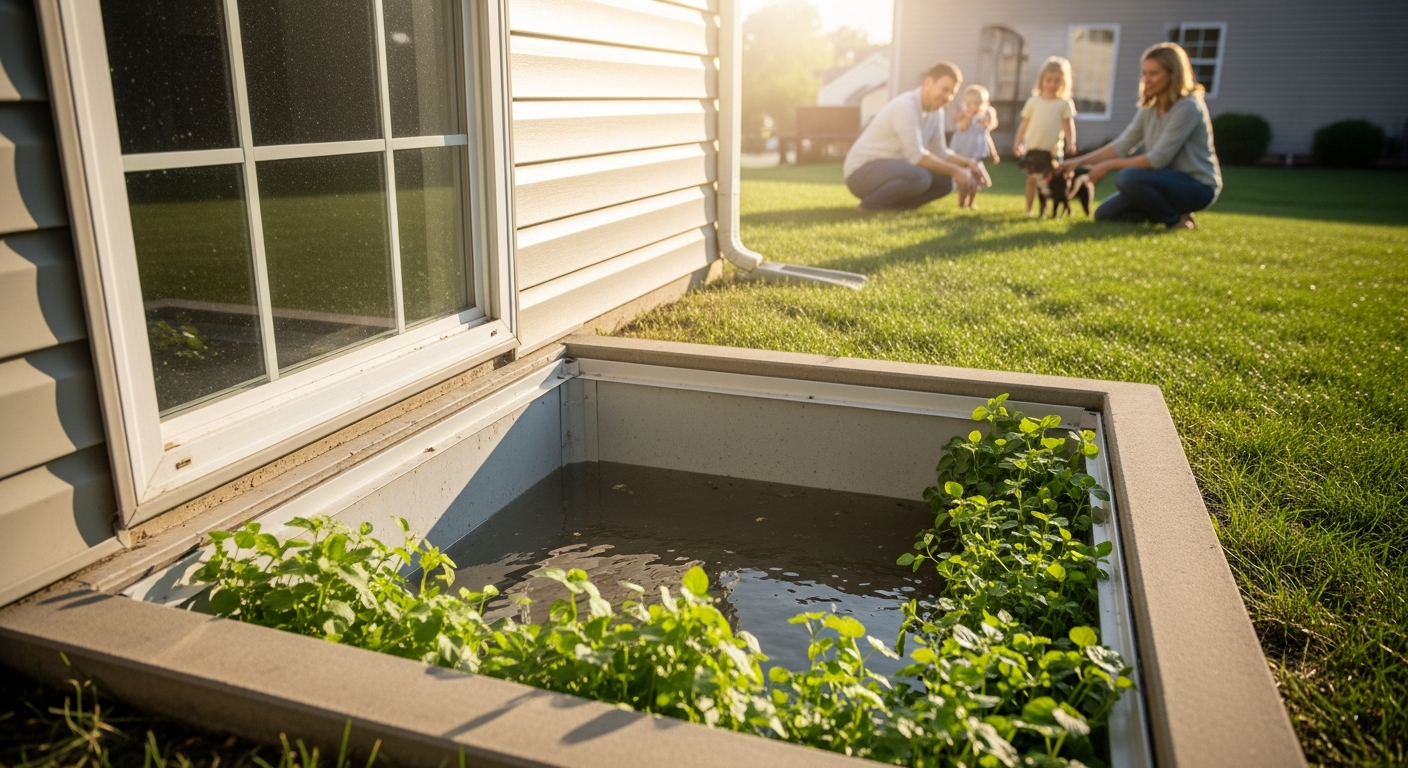
Standing water in window wells after rain indicates drainage problems that will likely lead to basement flooding. In Caseyville’s clay soils, water should drain from properly functioning window wells within 2-3 hours after storms end. If you see water lingering for 6-12 hours, the drain connection is probably blocked or non-existent.
White mineral deposits (efflorescence) on window well walls signal that water is moving through the foundation material. This happens when water pressure builds up against basement walls because window well drainage can’t keep pace with storm runoff. Properties along busy roads like Collinsville Road and Route 157 often show these signs because road drainage systems can overwhelm residential window well capacity during heavy rain events.
How Gateway Water & Mold Handles Window Well Flooding Cleanup
Gateway Water & Mold’s approach to basement window well flooding starts with identifying the water source and documenting the extent of damage for insurance purposes. The crew uses truck-mounted extraction equipment to remove standing water, then sets up dehumidification systems to prevent mold growth in the humid conditions common to Metro East basements during summer months.
The company’s “test before tear-out” methodology proves valuable for window well flooding because water damage often appears worse than it actually is. Their moisture mapping equipment identifies which materials can be dried in place versus what needs replacement, preventing unnecessary reconstruction costs. A recent project in Fairview Heights involved a finished basement where window well flooding affected 400 square feet of carpet and drywall — but moisture testing showed the wall framing was salvageable with proper drying, saving the homeowner nearly $3,000 in reconstruction costs.
Gateway Water & Mold documents every step of the cleanup process with photos, moisture readings, and equipment logs that align with Xactimate estimating software used by insurance companies. This detailed approach helps homeowners avoid claim delays that often occur when restoration companies provide insufficient documentation. The company’s crews also identify the specific cause of window well failure — whether it’s blocked drains, failed sealing, or inadequate drainage capacity — so homeowners can address the root problem and prevent future flooding.
For Caseyville homeowners dealing with window well flooding, the key is acting quickly to prevent secondary damage like mold growth, which thrives in the humid summer conditions typical of the American Bottom region. Gateway Water & Mold’s 24/7 emergency response ensures crews can begin water extraction and drying within hours of initial flooding, when restoration efforts are most effective. The company’s experience with Metro East Illinois drainage challenges means they understand both the immediate cleanup requirements and the long-term solutions needed to protect basements from future storm damage.
Professional cleanup becomes necessary when window well flooding affects finished basement spaces, electrical systems, or HVAC equipment. Gateway Water & Mold’s certified technicians follow IICRC water damage restoration standards to ensure thorough drying and proper disinfection of affected areas. Their work includes coordinating with local contractors for any necessary basement flooding prevention upgrades once the initial damage is resolved.
Frequently Asked Questions

How long does window well drainage repair take in Caseyville?
Most window well drainage installations take 1-2 days per window well, depending on whether drain connections to existing foundation systems are feasible. Properties in older Caseyville neighborhoods without perimeter drainage systems require additional work to connect window well drains to sump pump systems. Gateway Water & Mold coordinates with local excavation contractors for drainage work that extends beyond the immediate cleanup scope.
Do insurance policies cover basement flooding from window wells in Illinois?
Standard homeowners insurance typically covers sudden water intrusion through windows if it results from storm damage, but excludes flooding from surface water or groundwater. Window well flooding falls into a gray area that depends on the specific cause — wind-driven rain through damaged window seals is usually covered, while groundwater seepage through foundation cracks is not. Gateway Water & Mold’s detailed documentation helps establish the water source for insurance claim purposes, including photos of entry points and moisture readings that support coverage decisions.
What’s the best time of year to upgrade window well drainage in Metro East Illinois?
Late fall through early spring offers the best conditions for window well drainage work in the Caseyville area, when groundwater levels are typically lower and contractors can access foundation areas without dealing with muddy conditions. However, emergency drainage repairs after flooding can’t wait for ideal weather. Gateway Water & Mold recommends addressing water damage restoration immediately after storm damage, then scheduling permanent drainage improvements during the next dry season to prevent recurring problems.