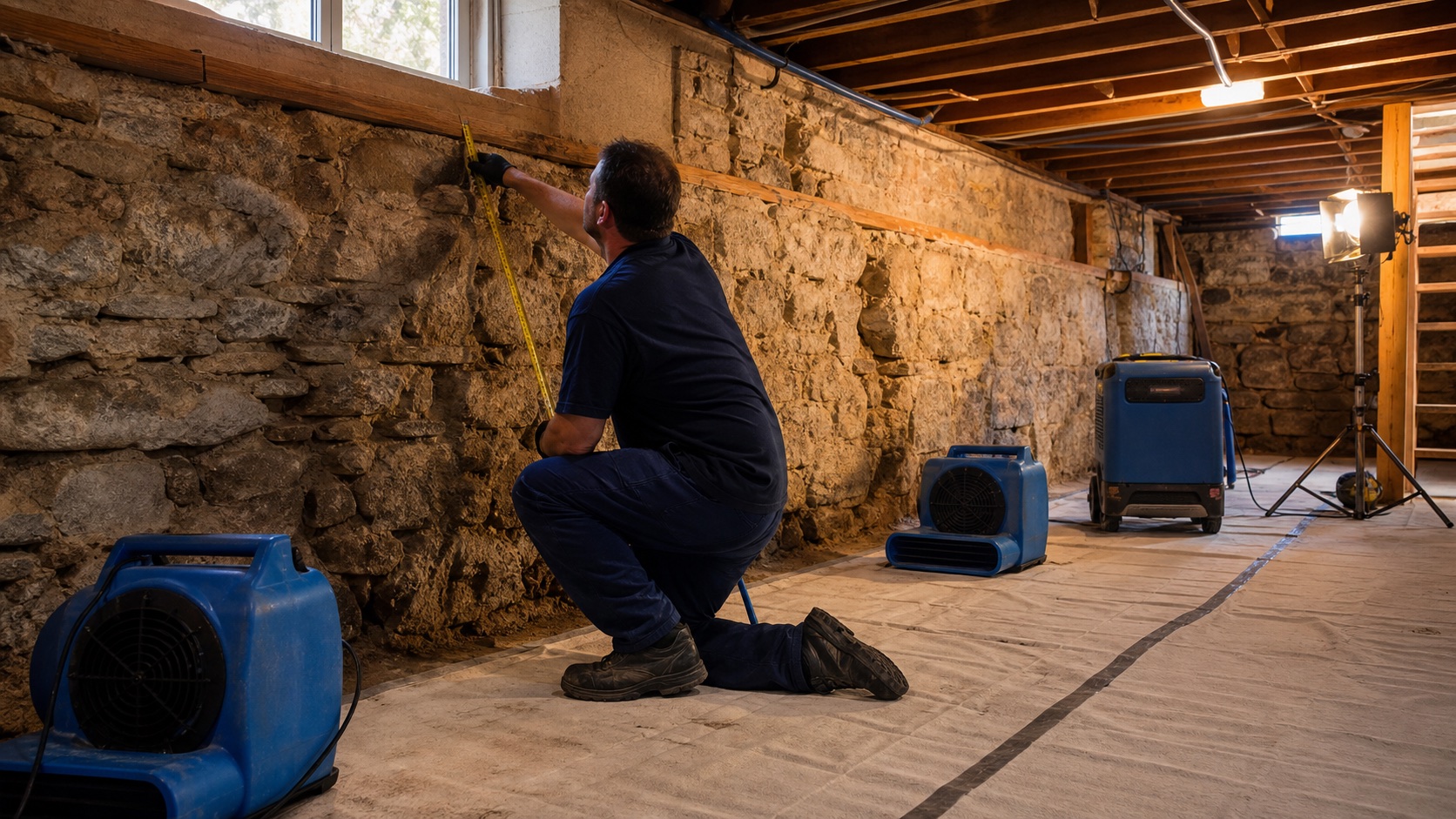
Basement water in an Alton limestone home can remain in mortar joints, sill plates, framing, and finished wall layers after the floor is clear. The drying plan has to follow the water path through the whole assembly. Removing the puddle without measuring the stone and wood above it can leave the slowest-drying materials behind.
Why do Alton limestone basements stay damp?
Limestone and older mortar are porous. They can absorb water, move it through joints, and release it slowly as conditions change. The wall may also be one part of a mixed assembly that includes wood framing, plaster, newer drywall, foam, paneling, or a later waterproof coating.
That mix matters because each material dries at a different rate. Gateway’s Alton water damage restoration process begins with readings at the visible damage, the joints, the sill plate, and the framing above.
What should you do when water is standing on the basement floor?
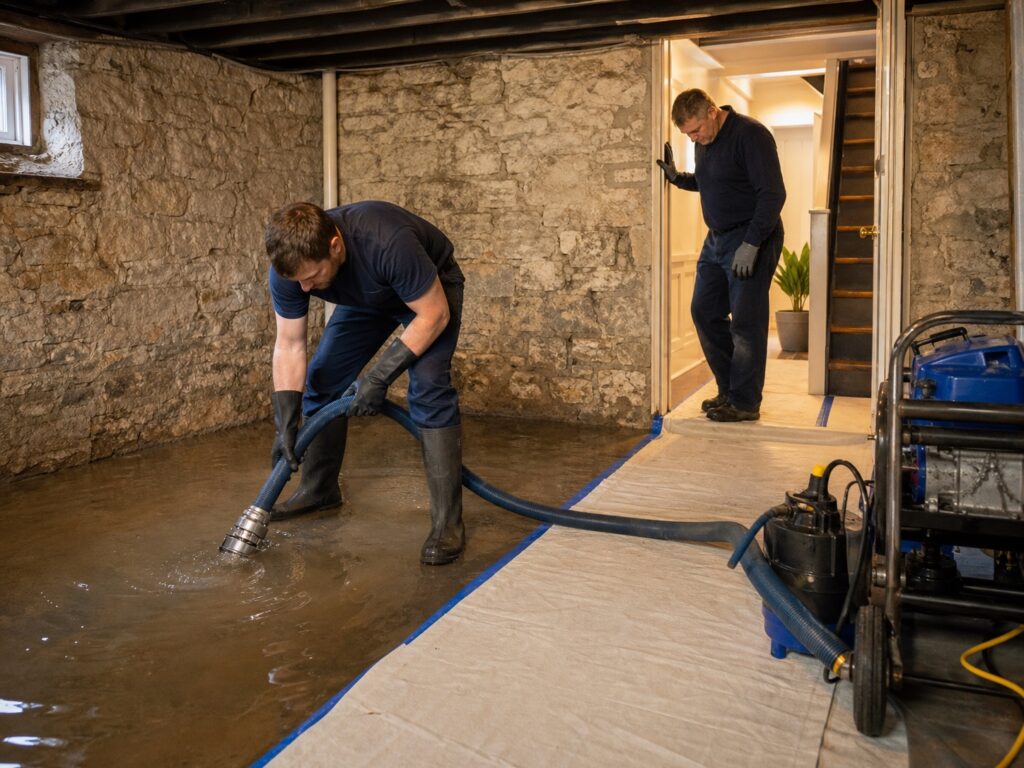
Keep away from electrical hazards and unknown water sources. Stop a plumbing source if it is safe, photograph the affected area, and protect dry contents without carrying contaminated water through the house. If water may involve a sewer or drain backup, limit access and avoid consumer fans that could spread contaminated material.
Professional water extraction in Alton removes the standing water and establishes where it traveled. Extraction should be followed by controlled airflow, dehumidification, and monitoring.
Can a limestone wall be dried without demolition?
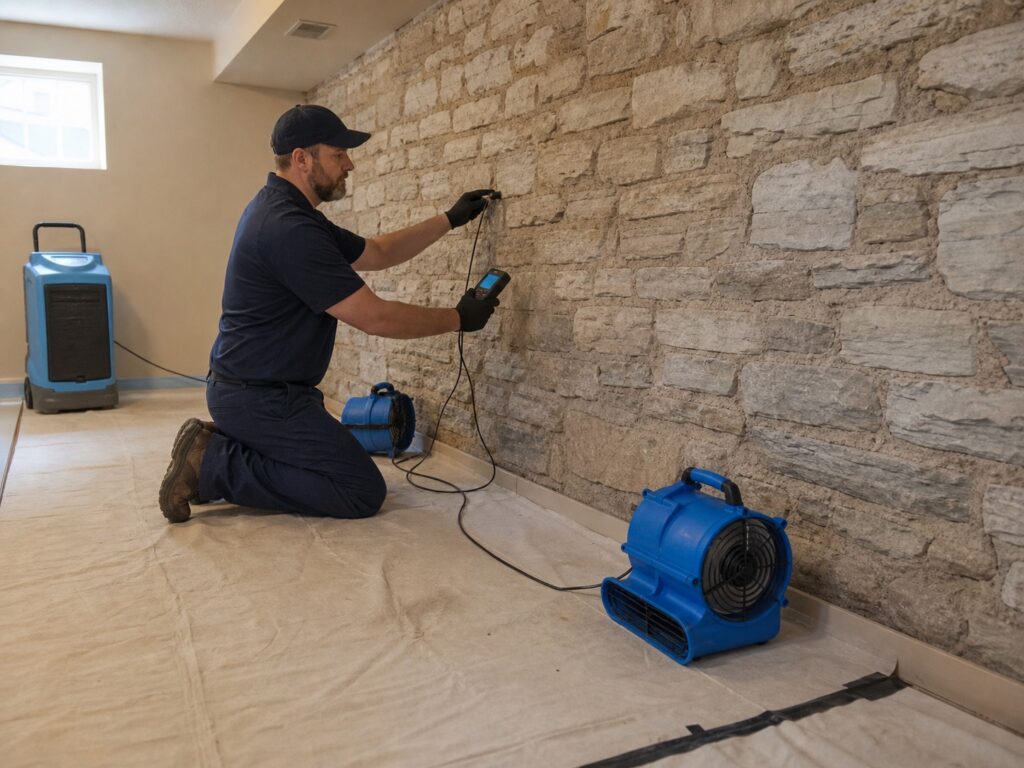
Often, the stone itself does not need to be removed. The harder decision involves the materials attached to it. Wet insulation, drywall, wood furring, paneling, and floor finishes may block evaporation or trap contamination. The scope should distinguish a durable masonry wall from a finish layer that cannot be cleaned or dried in place.
- Map the water line on stone, mortar, trim, and framing.
- Check the sill and joist ends above the visible wet area.
- Inspect finished wall cavities and flooring transitions.
- Compare readings with a dry section of the same material.
- Document progress before equipment is removed.
Should you seal or paint the basement wall after a flood?
Not until the source is understood and the wall has reached an appropriate dry condition. Coating a damp masonry wall can slow drying, hide staining, and make the next inspection harder. A coating also cannot correct failed grading, a plumbing leak, a blocked drain, or water entering at a joint.
Source correction and structural drying come first. Cosmetic work comes after the moisture readings support it.
When does mold remediation become necessary?
Mold remediation may be needed when growth is confirmed, porous finish materials cannot be cleaned, or hidden dampness remained long enough to create a wider affected area. The EPA advises drying wet materials within 24 to 48 hours when possible. When that did not happen, inspect and test based on the actual condition rather than assuming the entire basement needs removal.
Gateway’s Alton mold remediation team separates the masonry moisture problem from the materials that truly need containment, removal, or cleaning.
What belongs in the drying and insurance record?
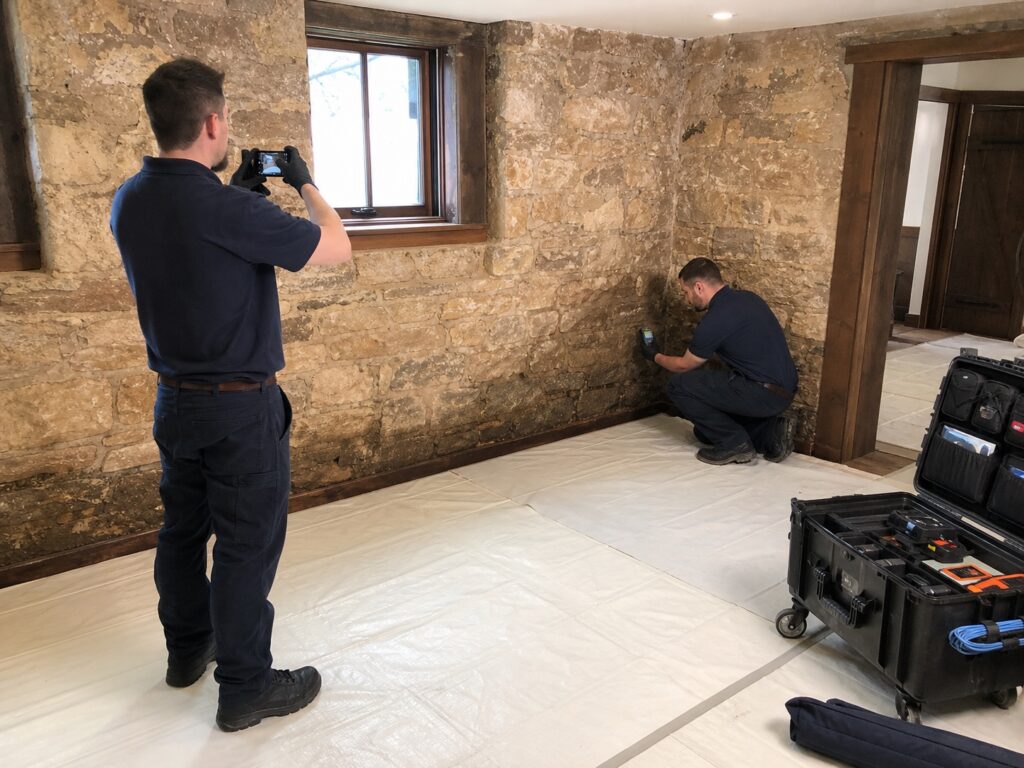
The file should include source photos, affected-room photos, initial moisture readings, equipment placement, monitoring readings, removed-material documentation, and the final dry standard. Older homes can create scope questions because water moves through materials that are not obvious from a room photo alone.
How long does an Alton stone basement take to dry?
There is no honest fixed number of days. Drying time depends on how much water entered, how long it remained, the wall thickness, the attached finishes, indoor conditions, and whether the entry path is still active. The completion decision should come from a stable sequence of readings compared with an appropriate dry area, not a calendar promise.
If your Alton basement is wet now, call Gateway at (314) 947-3419. Our Alton water and mold team will identify the source, measure the full affected area, and explain what can dry before any removal decision is made.