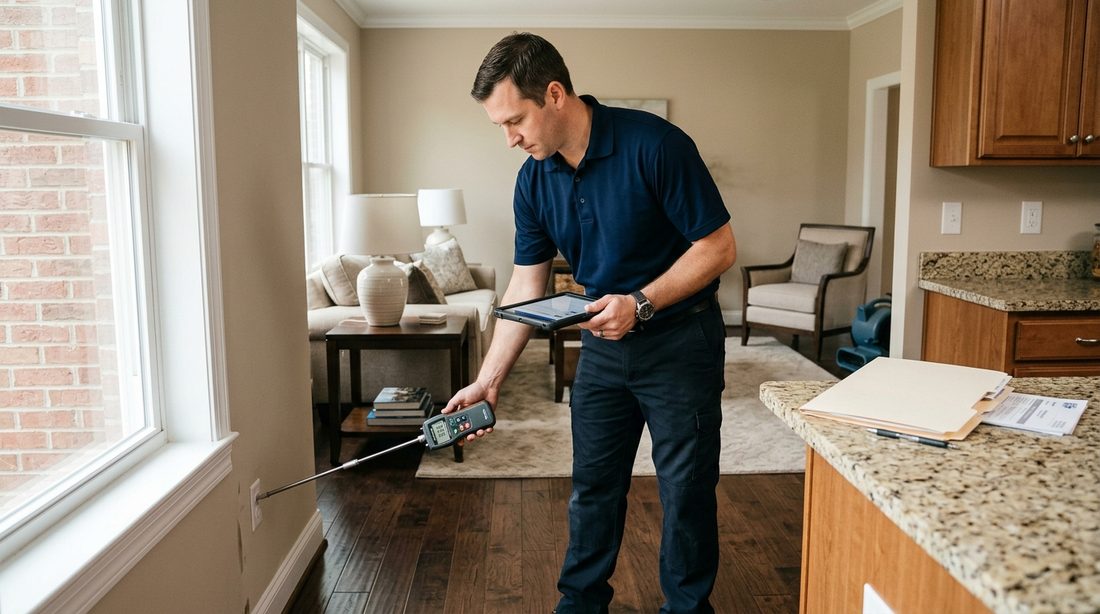
Start a claim record when it is safe to do so, using observations, photographs and available work records. Ask the insurer what the specific claim needs; a particular collection time does not guarantee a clearer review. Keep records of observed water damage.
Gateway can document observed conditions and mitigation work. Documentation supports review but does not guarantee coverage or satisfy every insurer requirement. Record any mold-related observations without assuming coverage.
Start with the source of loss
Write down where the water came from, when you found it, and whether the source has stopped; for storm-driven losses, compare your notes with Gateway’s St. Louis summer storm water damage guide so roof, basement, and mold risks are documented together. A burst supply line, failed sump pump, appliance leak, sewer backup, roof leak, and long-running seepage can all be handled differently by a policy. If you are not sure, document what you can see and avoid guessing in writing.
Photograph visible affected areas from a safe location. Do not enter unsafe water, touch wet electrical equipment or approach unstable materials to obtain pictures.
Photograph affected materials before cleanup
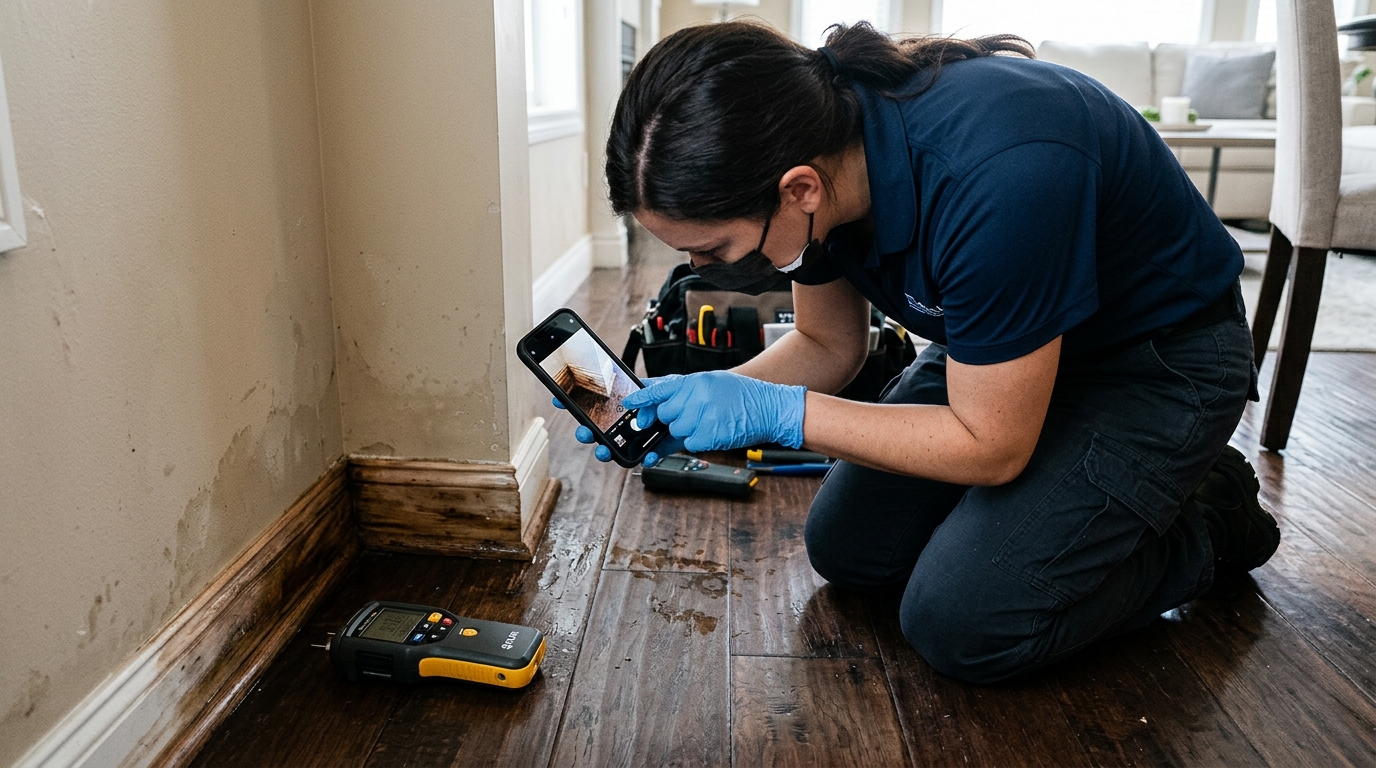
Photograph visible damage before removal where safe, without delaying urgent safety measures. Ask the insurer which records the specific claim needs.
For standing water, arrange safe emergency water extraction and ask the provider to document observed conditions and work. No universal first-visit documentation package is established here.
Save moisture readings and drying logs
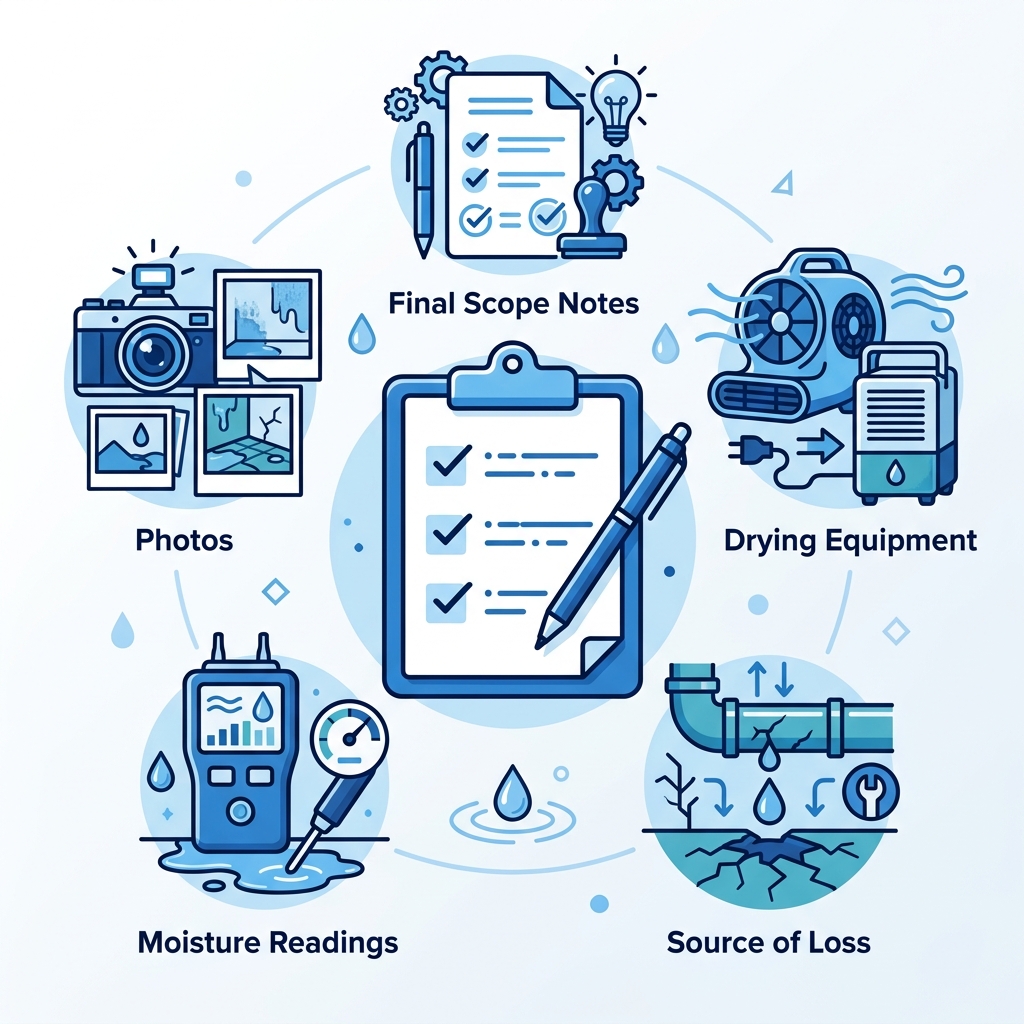
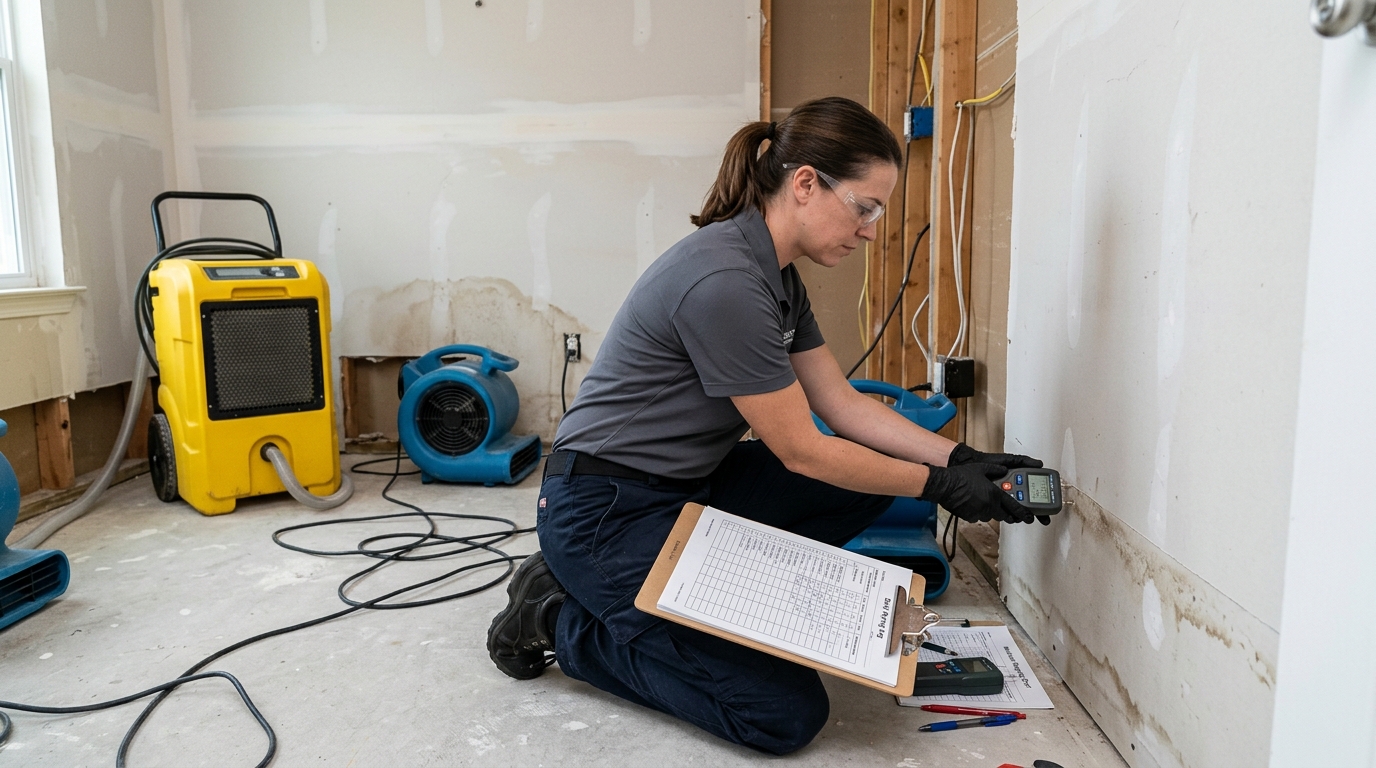
Moisture readings help show the difference between a surface spill and water that has moved into walls, flooring, trim, cabinets, or subfloor. They also help explain why drying equipment was needed and whether materials could dry in place or had to be removed.
Ask for readings from the first visit, during drying, and at completion. Daily logs are useful because they show progress over time. If a wall cavity, wood floor, or cabinet base is not drying, that record supports the next step in the mitigation scope.
Keep the mitigation scope connected to the claim
A strong water damage claim file connects the cleanup work to the documented conditions. It should explain what was extracted, what was dried, what was monitored, what was removed, and why. This is where professional water damage restoration documentation helps: the scope is tied to readings, photos, and the drying plan instead of a vague description of “water cleanup.”
Document observed conditions and the timing of any mold remediation or mitigation. Those records support review but do not determine coverage or establish that every preventive step was reasonable.
What to keep in one claim folder
- Photos and videos from the first discovery of the water damage.
- Notes on the source of loss and when it was stopped.
- Initial moisture readings and affected-room list.
- Extraction, drying equipment, and monitoring records.
- Invoices, estimates, and scope notes from the mitigation contractor.
- Messages from the carrier, adjuster, plumber, restoration company, or property manager.
- Final dry-standard readings or completion documentation.
Call before demolition if insurance may be involved
If the loss may become a claim, do not tear out drywall, carpet, cabinets, or flooring before the damage is documented unless there is an immediate safety issue. Start by stopping the source if possible, protecting yourself from electrical or contaminated-water hazards, and calling a mitigation company that can document the loss while beginning cleanup.
Gateway offers insurance claims assistance through mitigation records and scope notes. Starting a record promptly does not guarantee faster or easier claim review.
FAQ
Should I clean up before taking photos?
Take photos first if it is safe. Then remove standing water or call for extraction. If there is electrical risk, sewer water, or structural concern, prioritize safety and let the mitigation crew document the damage on arrival.
Do moisture readings matter for an insurance claim?
Moisture readings can inform assessment of affected materials and drying progress. Their meaning depends on the material, method and context; a reading alone does not determine coverage or prove the whole structure is dry.
Can Gateway guarantee my claim will be covered?
No restoration contractor can guarantee coverage. Gateway can document the loss clearly, explain the mitigation scope, and give the carrier a cleaner file to review.
Sources (reviewed 2026-09-10): www.cdc.gov.