Spring humidity in Highland consistently pushes crawl space moisture levels to dangerous thresholds, creating ideal mold breeding conditions in homes throughout the Metro East region. Gateway Water & Mold’s IICRC-trained crew sees a 40% spike in crawl space mold calls between March and June across Highland, Edwardsville, and neighboring Madison County communities. The combination of Illinois clay soil, older home construction, and seasonal temperature swings creates conditions for hidden mold growth that most homeowners don’t discover until it’s already established.
What to Do About Crawl Space Mold in Highland
- Check humidity levels with a digital hygrometer — readings above 60% indicate immediate action needed
- Look for white mineral deposits or dark staining on foundation walls and floor joists
- Inspect any existing vapor barriers for tears, gaps, or standing water underneath
- Document musty odors with photos of suspected areas for insurance purposes
- Contact a certified mold remediation company for air quality testing before disturbing materials
- Review your homeowner’s insurance policy for mold coverage limits and requirements
Why Highland’s Spring Weather Creates Crawl Space Problems

Highland sits in Madison County’s clay-heavy soil zone, where seasonal ground moisture creates hydrostatic pressure against foundation walls. When outdoor temperatures fluctuate between 40°F nights and 70°F days — typical for March through May — crawl spaces become condensation factories. The National Weather Service reports Highland averages 4.2 inches of precipitation each spring month, with soil moisture levels staying elevated through June.
Clay soil doesn’t drain like sandy soil. Instead, it holds water against your foundation, pushing moisture through concrete block and poured concrete walls. Add poor ventilation common in homes built before 1990, and you’ve got relative humidity levels reaching 80-90% in enclosed crawl spaces. Mold spores need only 48-72 hours at these moisture levels to begin colonizing organic materials like floor joists, subflooring, and stored items.
The Illinois Department of Public Health notes that Aspergillus and Penicillium — two common crawl space molds — thrive in temperatures between 60-80°F with high humidity. Spring weather in Highland delivers exactly these conditions for weeks at a time.
Highland Housing and Crawl Space Vulnerabilities
Highland’s housing reflects typical Metro East construction patterns, with significant implications for crawl space moisture control. Neighborhoods like Highland Hills and areas near Grantfork Road feature ranch-style homes from the 1960s-80s built with minimal crawl space moisture barriers. The original 6-mil plastic sheeting used in this era tears easily and often wasn’t sealed at seams or foundation walls.
Newer developments around Highland Oaks and subdivisions near Route 143 generally include better moisture control, but even these homes face challenges. Madison County building codes didn’t require comprehensive crawl space encapsulation until the 2000s, leaving thousands of homes with inadequate protection. The City of Highland follows Illinois state building codes, which now require vapor barriers with sealed edges, but retrofit requirements remain limited.
Foundation types matter significantly. Highland’s older homes often feature concrete block construction with mortar joints that allow moisture penetration. Homes in the Pocahontas Road area and older sections near downtown Highland frequently have fieldstone foundations that were never designed for moisture control. These foundations allow ground moisture to enter freely, especially during spring when soil saturation peaks.
Crawl space height also affects moisture problems. Many Highland homes have crawl spaces under 3 feet high, making inspection and maintenance difficult. Poor access leads to deferred maintenance, allowing small moisture issues to become major mold problems before detection.
Signs of Mold in Highland Crawl Spaces
Musty odors entering your living space often indicate established mold growth below. In Highland’s humid spring conditions, these odors intensify because warm air rises from crawl spaces into main floors through gaps around plumbing penetrations, electrical boxes, and unsealed ductwork. Pay attention to smells that worsen on humid days or when your HVAC system runs.
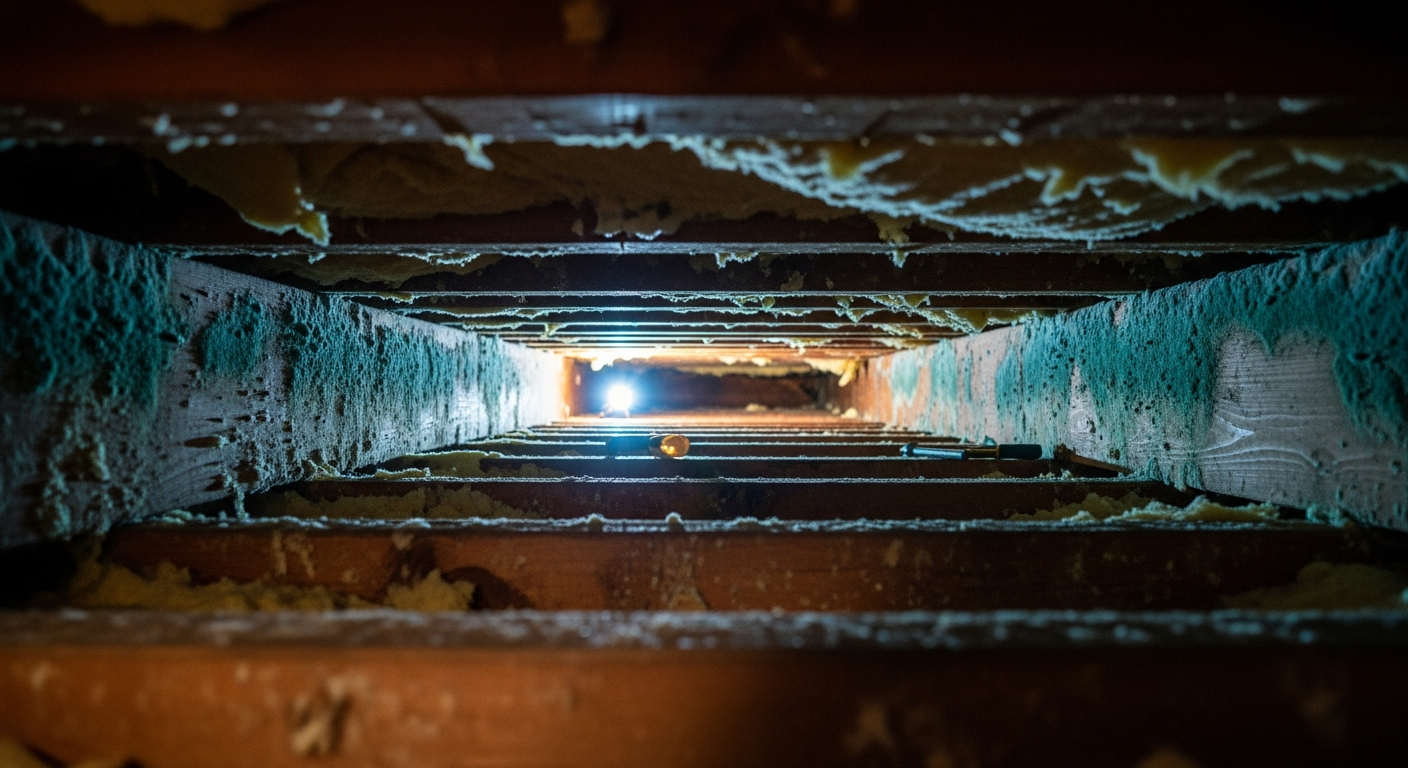
Visual indicators include white, fuzzy growth on floor joists and subflooring, plus dark staining on foundation walls. Highland’s clay soil creates distinctive mineral deposits that look like white chalky residue — this efflorescence signals ongoing moisture problems even without visible mold. Standing water or consistently damp soil under vapor barriers means your moisture control system isn’t working.
Check stored items regularly. Cardboard, fabric, and paper materials in crawl spaces often show mold damage first. If items stored in your crawl space develop musty odors or visible growth, assume the space has elevated humidity levels requiring immediate attention.
Gateway Water & Mold’s Highland Crawl Space Approach
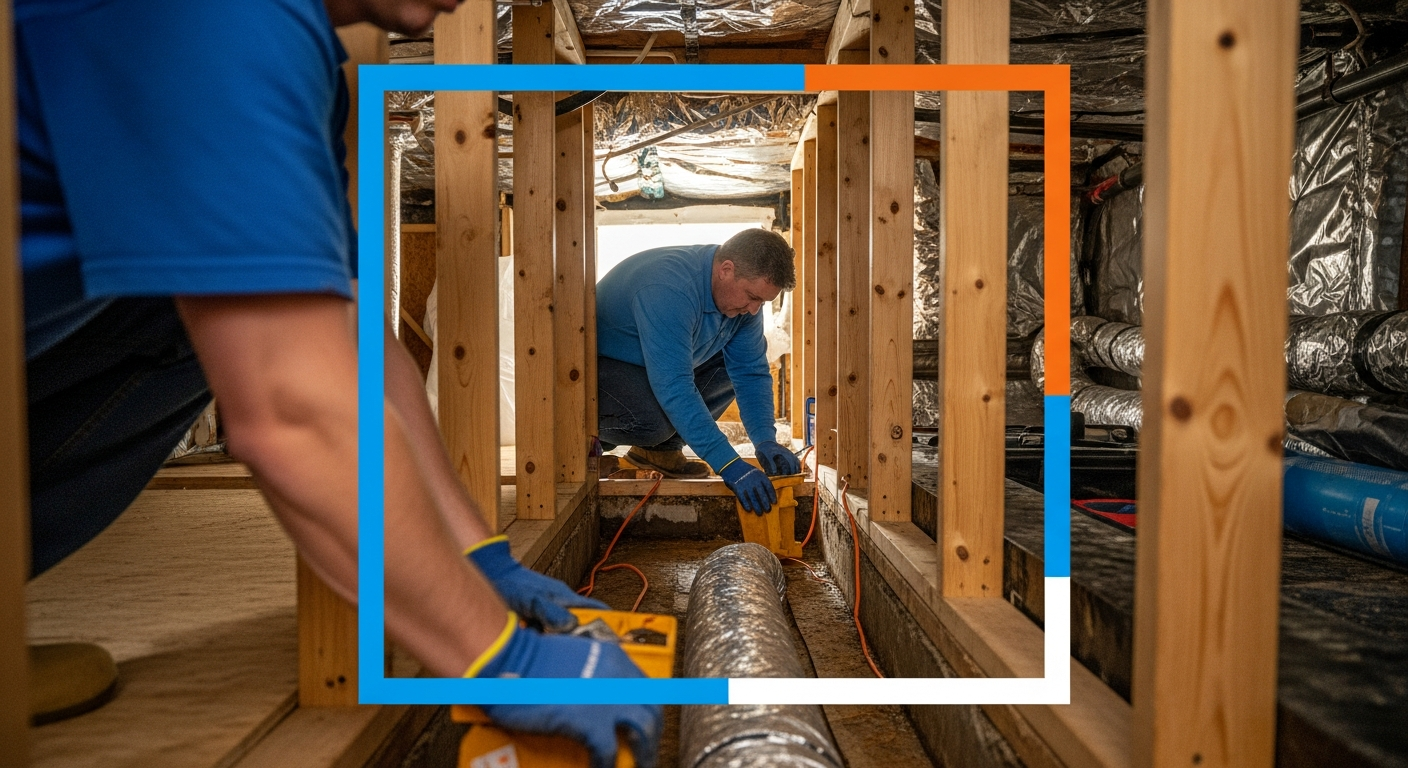
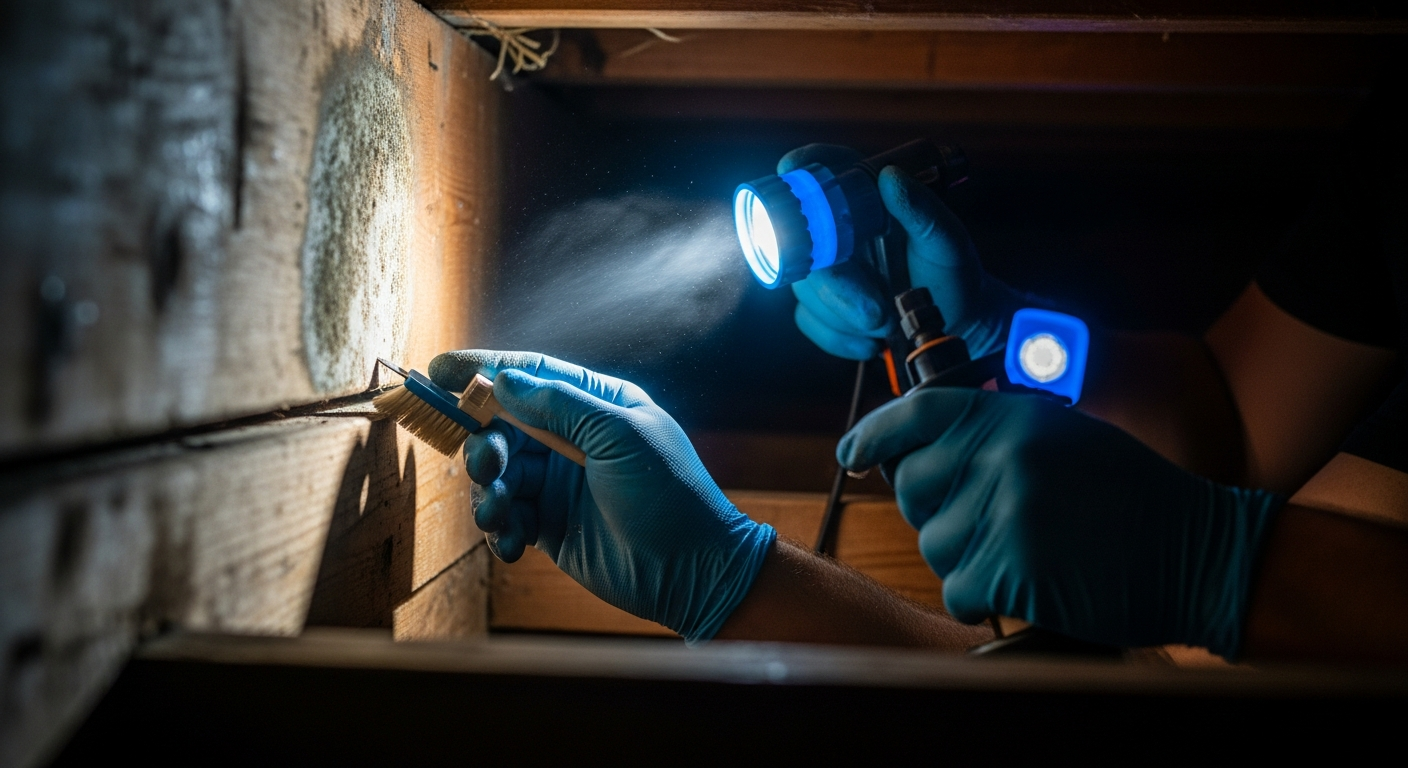
Gateway Water & Mold follows their “test before you tear out” methodology for Highland crawl space mold issues. Their technicians use thermal imaging to identify moisture patterns in foundation walls and subflooring, plus pin and pinless moisture meters to document exact readings for insurance purposes. This documentation proves essential for homeowner’s insurance claims, which often require specific moisture measurements and professional assessment.
The team recently worked with a Highland homeowner whose crawl space showed extensive mold growth after spring flooding near Cahokia Creek. Rather than immediately removing all affected materials, Gateway’s crew conducted air quality sampling to determine spore concentrations and identify specific mold types. Testing revealed the contamination was limited to surface growth on floor joists, avoiding the expense of subfloor replacement. Their moisture mapping traced the problem to failed foundation drainage, allowing targeted repairs instead of wholesale remediation.
Gateway’s approach includes source correction alongside mold removal. For Highland’s clay soil conditions, this often means improving exterior drainage, sealing foundation penetrations, and upgrading crawl space ventilation. Their insurance documentation expertise proves valuable because many Highland homeowners don’t realize their policies include mold coverage when water intrusion causes the initial damage.
Professional vs DIY Crawl Space Moisture Control
Small-scale moisture control like improving crawl space ventilation falls within most homeowner’s capabilities, but mold remediation requires professional expertise. Illinois doesn’t license mold remediation contractors, but the Illinois Department of Public Health recommends hiring IICRC-certified companies for contamination exceeding 10 square feet. Gateway Water & Mold’s certification ensures proper containment procedures that prevent spore spread to living areas during cleanup.
Professional remediation becomes essential when mold affects structural materials like floor joists or subflooring. Highland’s older homes often have mold growth hidden inside wall cavities or under subflooring where homeowners can’t safely access affected areas. Professional equipment like truck-mounted extraction and commercial dehumidification systems handle moisture removal beyond typical residential capabilities.
Insurance considerations also favor professional remediation. Most homeowner’s policies require professional assessment and documentation for mold claims. Gateway Water & Mold prepares Xactimate-aligned documentation that includes moisture readings, photographic evidence, and scope of work details that insurance adjusters expect. DIY attempts often lack this documentation, complicating claims processing.
Highland homeowners dealing with crawl space moisture issues should address source problems immediately while arranging professional mold assessment. Spring humidity creates optimal conditions for rapid mold growth, making quick response essential. Gateway Water & Mold’s emergency water extraction services and mold remediation expertise provide comprehensive solutions for Highland’s unique crawl space challenges.
Contact Gateway Water & Mold at the first signs of crawl space moisture problems. Their 24/7 emergency response and thorough assessment approach prevents minor spring humidity issues from becoming major mold remediation projects. Professional evaluation costs less than extensive remediation later.
Frequently Asked Questions

How quickly does mold grow in Highland crawl spaces during spring humidity?
Mold spores begin germinating within 48-72 hours when crawl space humidity exceeds 60%, which happens frequently during Highland’s spring weather patterns. Madison County’s clay soil and typical April-June precipitation create sustained high-humidity conditions lasting weeks. Visible growth appears within 7-10 days on organic materials like floor joists, subflooring, and stored items. Highland’s temperature fluctuations between 40-70°F during spring provide ideal growth conditions for common crawl space molds like Aspergillus and Penicillium.
What humidity level indicates crawl space mold problems in Highland homes?
Crawl space humidity above 60% creates mold growth conditions, while levels exceeding 70% virtually guarantee mold development in Highland’s spring climate. The Illinois Department of Public Health recommends maintaining crawl space humidity below 50% year-round. Highland homeowners should monitor humidity with digital hygrometers, especially during March-June when soil moisture and temperature swings create condensation. Sustained readings above 60% require immediate moisture control measures including improved ventilation, vapor barrier repairs, or professional remediation assessment.
Does homeowner’s insurance cover crawl space mold remediation in Highland?
Illinois homeowner’s insurance policies typically cover mold remediation when water intrusion causes the initial damage, but coverage varies significantly by carrier and policy terms. Highland homeowners should review their policies for mold coverage limits, which often range from $10,000-$50,000. Insurance requires professional documentation including moisture readings, photographic evidence, and detailed scope of work. Gateway Water & Mold’s insurance documentation expertise helps Highland homeowners navigate claims processes and provides the Xactimate-aligned paperwork that adjusters expect for efficient claim resolution.