
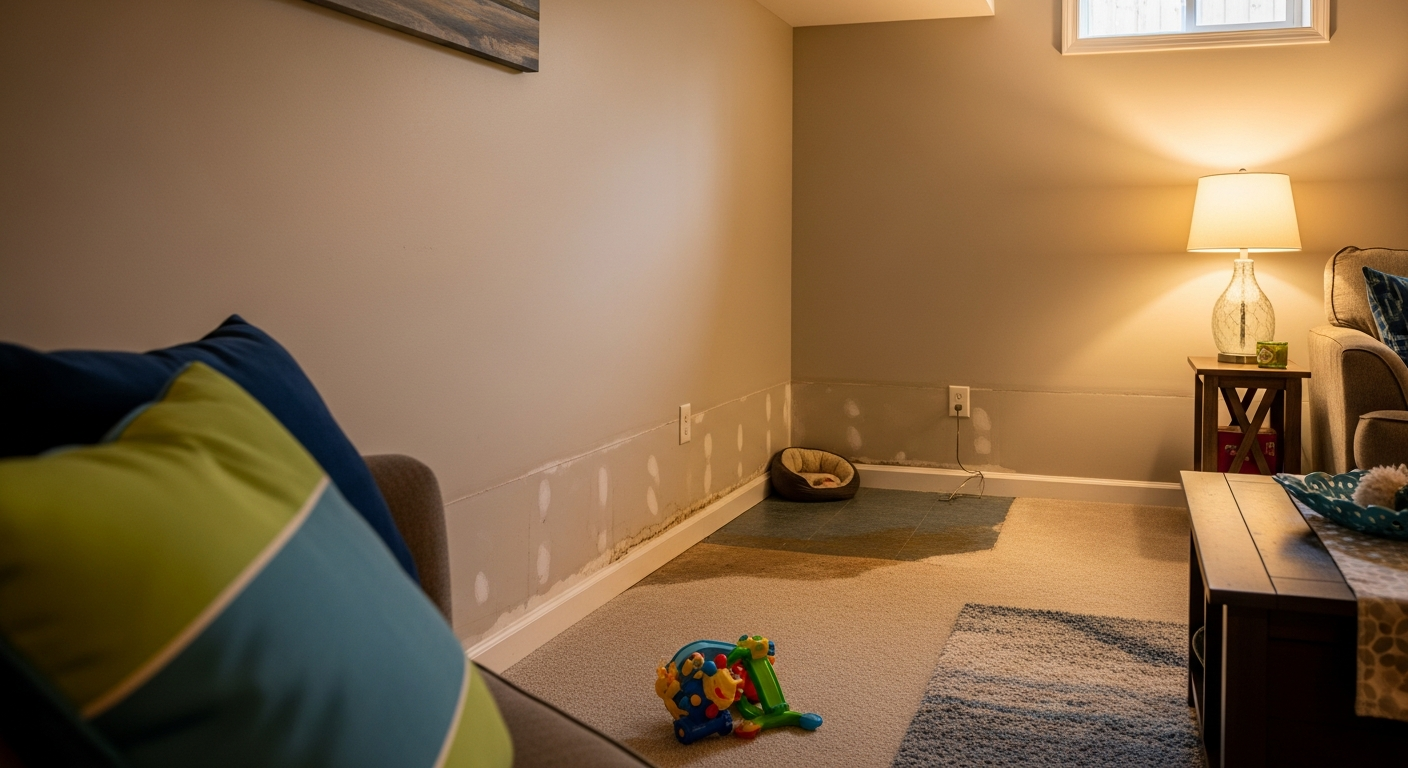
Appliance leaks can wet concealed materials in finished basements in O’Fallon, Illinois. Gateway Water & Mold provides water damage restoration and moisture assessment; the source and extent require inspection.
Spring Water Leak Detection in O’Fallon
- Check for musty odors near appliances, especially after humid spring days
- Inspect accessible baseboards visually from a safe location; avoid reaching behind appliances or touching wet electrical equipment.
- Look for water stains on ceiling tiles in finished basements, particularly under bathrooms
- Ask a qualified plumber to assess unexplained pressure changes; a pressure drop alone does not identify a concealed leak.
- Investigate an unexplained change in water use; no fixed percentage confirms a leak.
- Ask a qualified professional to assess suspected moisture rather than interpreting one meter reading as a diagnosis.
Assessing Suspected Appliance Leaks

Inspect appliance connections and supply lines when a leak is suspected. An assumed seasonal soil movement cannot establish the cause of an individual connection failure. Regional geological information is available from the Illinois State Geological Survey.
Check water heaters, fittings and nearby finishes for visible leakage or moisture. Weather averages alone do not establish corrosion or equipment stress at the property. Current weather information is available from the National Weather Service.
O’Fallon’s Basement Construction Challenges
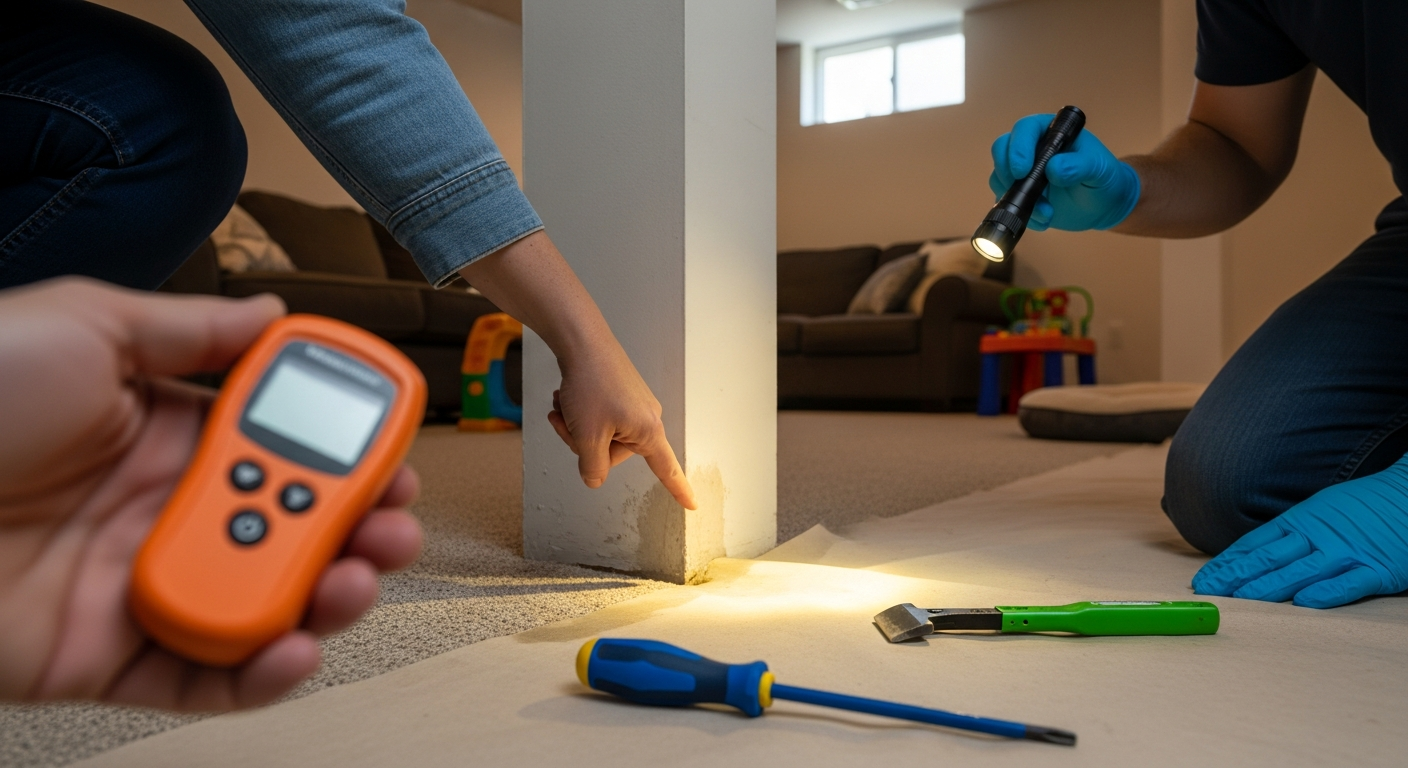
Finished basement construction and drainage vary by property. Review the actual assembly and source of water rather than assuming one system from the construction date.
Inspect the finished basement’s actual wall assembly and moisture conditions. Construction year or subdivision does not establish how the wall was built or whether it complies with applicable requirements.
Assess each home’s actual moisture source and affected areas. Neighborhood names and assumed construction periods do not establish a particular hidden-water risk.
Spring Water Leak Warning Signs
Measure indoor humidity and investigate condensation or staining. A particular humidity reading alone does not establish mold behind drywall.
New water marks, damaged finishes or musty odors warrant assessment of the actual source. These signs alone do not establish concealed mold or a particular drainage failure.
How Gateway Water & Mold Handles Hidden Damage

Gateway performs moisture assessment and remediation. If sampling is needed, an independent inspector or industrial hygienist collects samples and an independent laboratory analyses them; sampling is not a universal prerequisite to drying or material removal.
Gateway can assess suspected moisture and affected materials. No verified Cambridge Crossing case, leak duration or measured spread is presented here.
Gateway selects the restoration scope for actual conditions and can provide insurance claims assistance through documentation. Neither equipment selection nor documentation establishes coverage for an appliance leak.
Contact Gateway for current water damage restoration or basement flooding response availability. Moisture concerns warrant assessment; no arrival time or prevention outcome is guaranteed.
Frequently Asked Questions
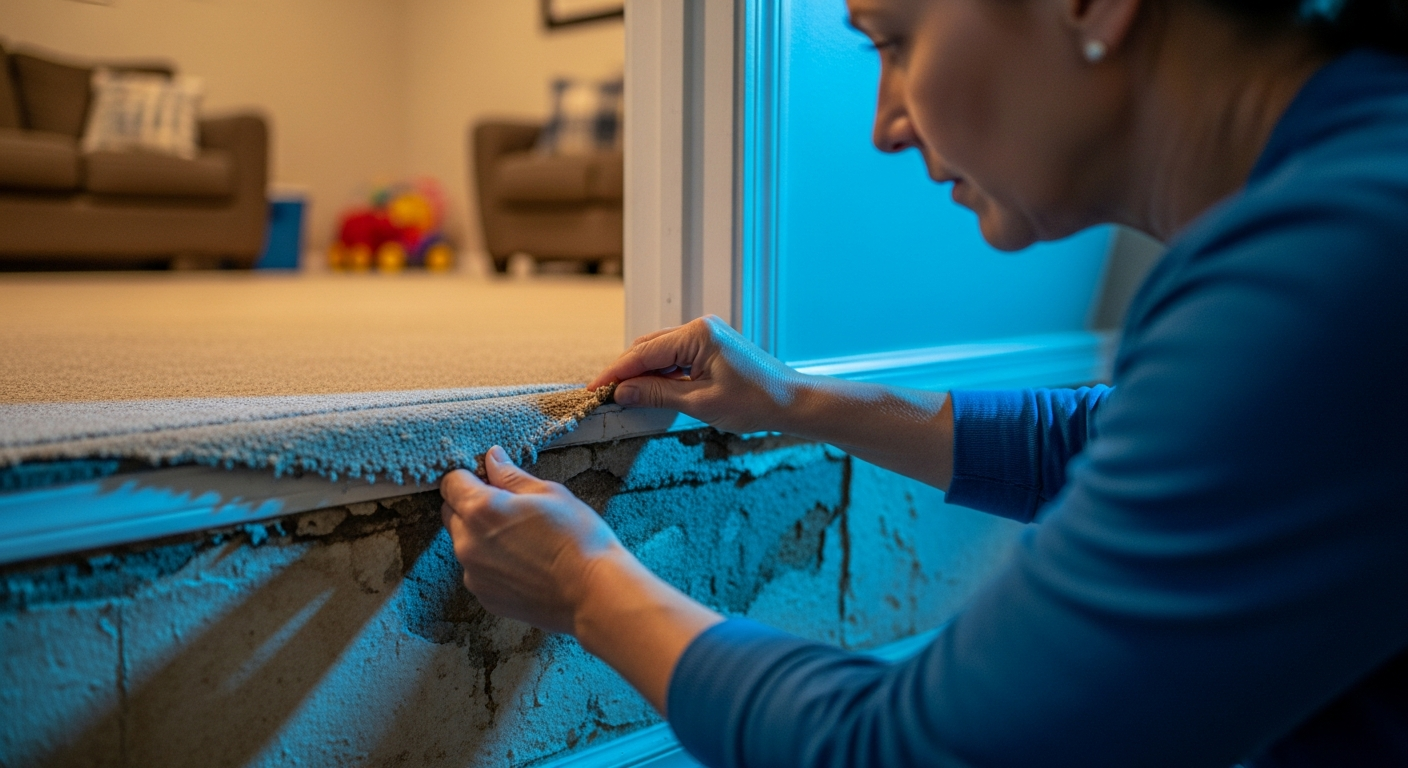
How quickly can appliance leaks cause mold in O’Fallon’s newer homes?
Wet materials should be addressed promptly. A fixed seasonal timeline or musty odor does not establish when mold began or how extensive it is.
What appliances cause the most hidden basement damage in newer O’Fallon homes?
Water heaters, washing-machine connections and condensate drains are possible leak sources. Identify the actual source rather than applying an unsupported percentage breakdown to the home.
Does homeowner’s insurance cover spring appliance leak damage in finished basements?
Appliance-leak and resulting mold coverage depend on the policy, endorsements and loss circumstances. Gateway’s documentation supports the claim file but does not guarantee coverage under Illinois law.
Sources (reviewed 2026-09-10): www.cdc.gov.