
Gateway/Mold Remediation/Webster Groves
Mold Remediation
in Webster Groves, MO.
An independent inspector or industrial hygienist collects mold samples; an independent laboratory analyses them. Gateway handles moisture assessment and remediation, using the independent findings to inform the scope.
Mold remediation in Webster Groves, MO: containment, removal and moisture control. Call to discuss the next step and claim documentation.
Regional mold project — Belleville, IL · Containment, controlled removal, HEPA cleaning and clearance documentation. View project
When mold follows a leak or flood, start with our Webster Groves water damage restoration team to correct moisture, dry affected materials, and reduce the chance of regrowth.
A typical Webster Groves call
How a Webster Groves
mold remediation call runs.
Mold remediation in Webster Groves is shaped by century-old plaster walls, limestone-foundation basements that seep through mortar joints, and finished basements that have been wet across multiple events. Original plaster on horsehair lath retains moisture and develops hidden mold patches behind paint. We work under IICRC S520 with full containment, HEPA-filtered negative air, and third-party lab clearance when the file requires defensibility. The combined-sewer area in older central sections means sewer-backup events introduce Category 3 water that requires removal of porous materials per protocol. Webster Park and Tuxedo Park homes share similar housing-age profiles, and we apply consistent protocols with clearance documentation owners can keep on file for resale, real estate transactions, or future insurance disputes. The protocol is built on readings and lab results, not visible staining alone. Containment integrity is verified during work, and clearance is documented at completion.
Mold Remediation in Webster Groves.
Mold in Webster Groves is concentrated in pre-1940 plaster walls, in joist bays above bathrooms, and behind paint on horsehair lath where decades of intermittent moisture have produced hidden growth patches. The Lockwood and Gore Avenue stretches in Old Webster see this pattern across most older homes. Limestone-foundation basements seep through mortar joints whenever the loess-clay subsoil is saturated, and any framing tight against those walls produces baseline mold conditions over time.
What that means on a call
Our S520 protocol uses findings from cavity samples collected by an independent inspector and analysed by an independent laboratory, selective demo of affected sections, HEPA-vacuum of the original lath, and antimicrobial treatment with appropriate rebuild detailing. Independent third-party clearance is run on every project, and we document baseline conditions on properties with prior remediation history.
Questions Webster Groves homeowners ask.
Our 1898 Webster Park Queen Anne has a brick foundation that has seeped for decades. Owner before us painted over efflorescence. Mold concern?
Painting over efflorescence does not stop it, the salts continue pushing through the paint and eventually flake it off. That is not mold, that is mineral crystallization. Mold concern in a chronically damp Webster Park basement is on organic materials, framing, stored items, paper-faced insulation, and any wood furring against the brick. We meter and inspect those surfaces. If growth is confirmed, S520 scope. The brick itself usually does not host mold but the materials in contact with it often do.
Our 1912 Webster Groves home has plaster walls and we found mold behind a piece of furniture on an exterior wall. Why?
Exterior walls in old construction often have minimal insulation and high condensation potential. Furniture against an exterior wall blocks airflow, lets condensation build, and creates mold conditions on the back of the plaster and behind the furniture. We meter, inspect, and lab-test. Scope is usually localized if caught early. The fix is removing the source, then improving airflow, which sometimes means relocating furniture or adding ventilation. Historic exterior walls are a common location for this pattern in Webster Groves.
Webster has combined sewer in the older sections. Our 1905 home backed up. Allstate is our carrier. Will they cover historic plaster restoration?
Allstate covers the resulting damage including plaster repair under your sewer backup rider, up to the limit. Where it gets tricky is that historic plaster restoration costs more per square foot than drywall, so the rider limit gets consumed faster. We write the scope at actual local plaster repair costs, not modern drywall pricing. The carrier may push back on per-unit pricing but documented historic restoration craft pricing is the right scope. If the rider limit is exhausted, the remaining cost is out of pocket.
“We don’t tell you it’s mold because it looks like mold. We use independent findings, we plan, and we tell you what you don’t need to remediate.”
What’s included
What every Webster Groves
mold remediation job covers.
Every Gateway mold remediation job in Webster Groves runs to the same standard, same equipment, same documentation, same reputation backing every step. The full scope and FAQ live on our main mold remediation page; the short version is below.
- Independent third-party pre-test (air + surface) before we cut anything
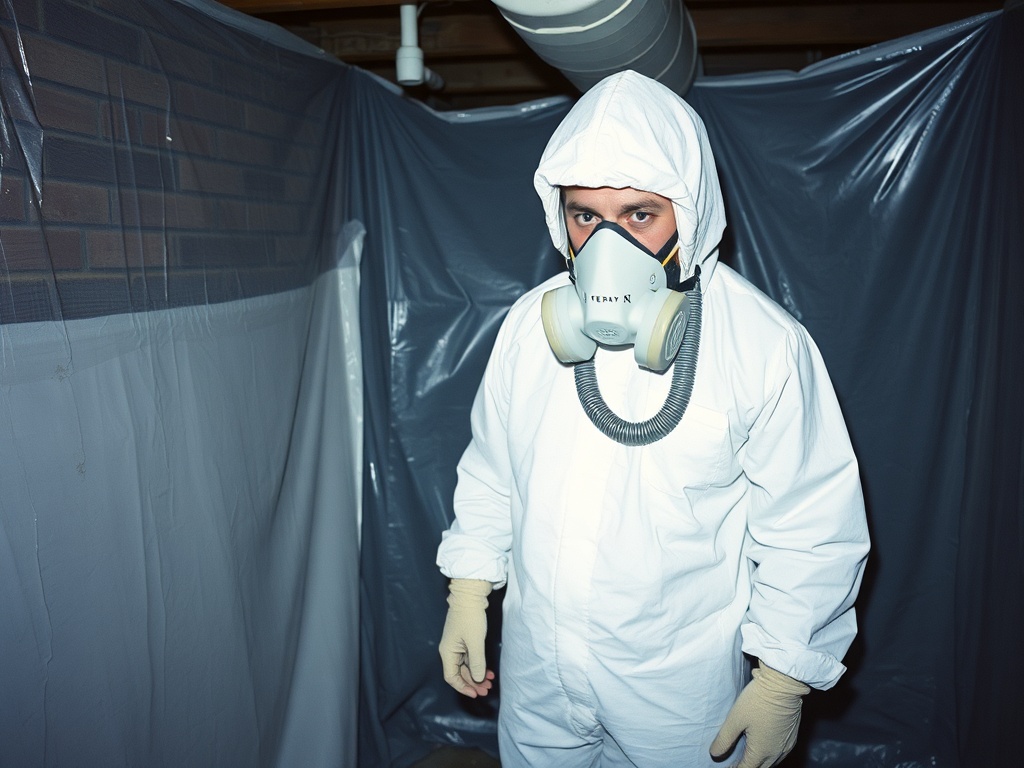
- IICRC S520 containment with poly and negative-air HEPA
- Affected materials removed under PPE and HEPA-vacuumed
- Antimicrobial application plus post-remediation third-party lab clearance
- We tell you what does not need remediation, honest scope, not maximum invoice
How calls run in Webster Groves
What are the six steps in mold remediation in Webster Groves, MO?
- 01
Independent inspection and mold sampling
An independent inspector or industrial hygienist collects mold samples; an independent laboratory analyses them. Gateway handles moisture assessment and remediation, using the independent findings to inform the scope.
- 02
Building containment before mold removal
Poly sheeting, ZipWalls, and negative-air machines establish a pressure differential. Spores don’t migrate out of the work area.
- 03
HEPA air filtration during mold remediation
Air scrubbers run continuously inside containment. We measure pressure daily to confirm integrity.
- 04
Mold-affected materials removed under PPE
Drywall, carpet, and porous materials cut to a clean edge inside containment. PPE per IICRC S520.
- 05
HEPA vacuum and antimicrobial after mold removal
Every surface inside containment gets HEPA-vacuumed, wiped, and antimicrobial-treated. No shortcut here.
- 06
Third-party clearance test after mold remediation
Independent re-test before we tear down containment. You get pass-fail in writing. If it fails, we go back in, same price.
Other St. Louis cities we cover
Mold Remediation across
the St. Louis metro
Mold inspection or remediation: five questions to consider
Use these questions to describe the moisture problem when you call Gateway. An inspection establishes the scope; this guide does not diagnose health conditions.
- Can you see suspected mold, or is there only an unexplained musty odor?
- Where is the affected material, and approximately how much is affected?
- Is a leak, flood, condensation or another moisture source still present?
- Has the problem returned after previous cleaning or drying?
- Do you need an inspection, documentation or a remediation scope before work begins?
Describe what you can see without disturbing affected materials. Call Gateway at (314) 947-3419, 24/7, or learn about mold remediation.
Webster Groves address. Water emergency.
Live phone, twenty-four seven. We’ll dispatch the nearest crew the moment we hang up.
Related service information
See our mold remediation service and process for the complete scope of work.
For other needs at this property, explore all water damage and mold services in Webster Groves, MO.