Gateway/Mold behind drywall near plumbing in a rental home
Mold behind drywall near plumbing in a rental home
A localized mold job at a Metro East Illinois rental: 6 square feet of drywall out, framing cleaned and treated, and released for reconstruction in a single visit.
Job date: October 2026. Written from Gateway’s job report.
| Property | Rental home, Metro East Illinois (property management client) |
|---|---|
| Problem | Water-damaged drywall and visible mold in a wall and ceiling area next to plumbing |
| Removed | About 6 square feet of drywall |
| Lab testing | None performed; visible growth next to a known plumbing area |
| Visits | One |
What we found
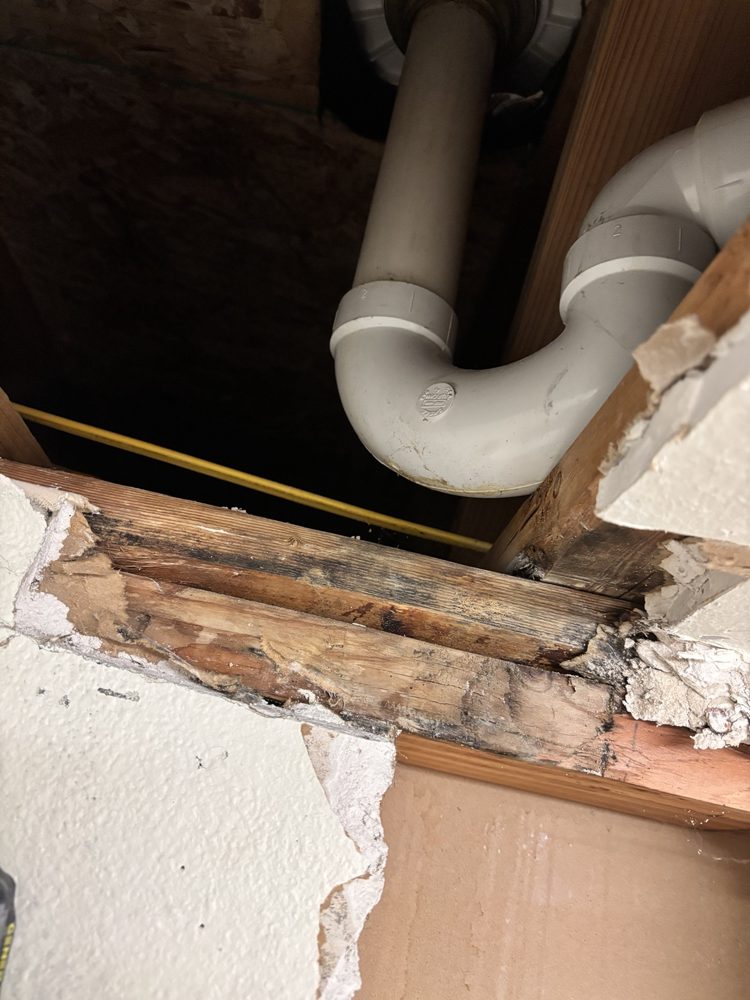
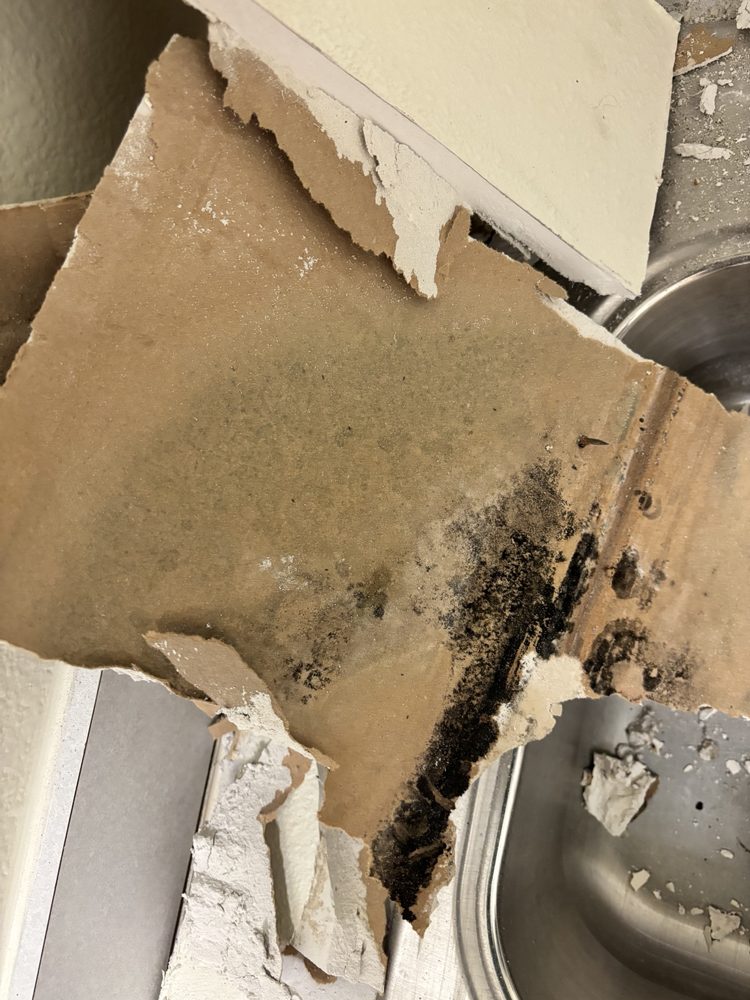
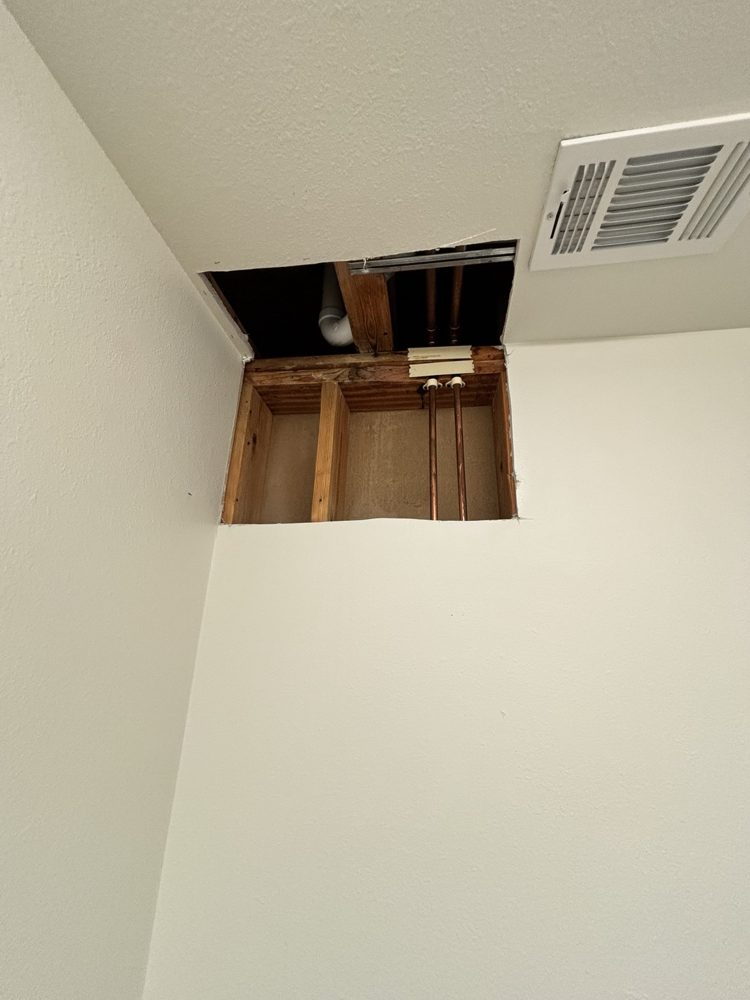
We were called out for water-damaged drywall in a wall and ceiling area next to the home’s plumbing. When we arrived, the drywall was stained and there was visible mold growth. We opened the wall and ceiling assembly as far as needed to see how far the growth went and to check the framing and the materials around it.
Was water still getting in?
Before removing anything, we took moisture meter readings across the affected area and on the materials next to it. The readings were in the normal range, which told us the leak was no longer active: the problem was the damage it had left behind, not water still coming in. That matters because remediating around an active leak only buys time until the mold comes back.
What we did
- Set up containment around the work area and ran a HEPA-filtered air scrubber for the whole job, so spores and dust stayed in the work zone.
- Removed the affected drywall until no visible growth remained, about 6 square feet in total.
- Mechanically cleaned and HEPA-vacuumed the exposed framing and the remaining surfaces to remove visible growth and residue.
- Applied an antimicrobial (moldicide) treatment to all affected areas.
- Inspected the area again and took final moisture readings, which stayed in the normal range.
Result
The work was finished in a single visit. Final photos documented the opening cleaned, treated and ready for the drywall to be replaced. Rebuilding was outside our scope. Our report noted that the plumbing source should stay corrected and the wall should be closed only after the responsible party confirmed that.
No lab sampling or species identification was done. With visible growth, a known cause and a dry structure, testing would not have changed what needed to be removed. Our indoor mold page explains when testing is worth it.
What property managers can take from it
- Read moisture before you cut. Dry readings mean you’re cleaning up old damage; wet readings mean the leak still has to be found first.
- Small jobs still need containment and HEPA air filtration. Opening moldy drywall without them spreads spores into the rest of the unit.
- Remove until the growth stops, not to a fixed size. Here that was about 6 square feet.
- Document the end condition. Final readings and photos show the wall was ready to close.
Related glossary terms
Need this kind of work? See Mold remediation or call (314) 947-3419.
Written by Jake Lusby, owner of Gateway Water & Mold. Customer name and address are left out for privacy. More case studies.
Why a defined water damage process matters
Call. We’ll walk you through step one right now.