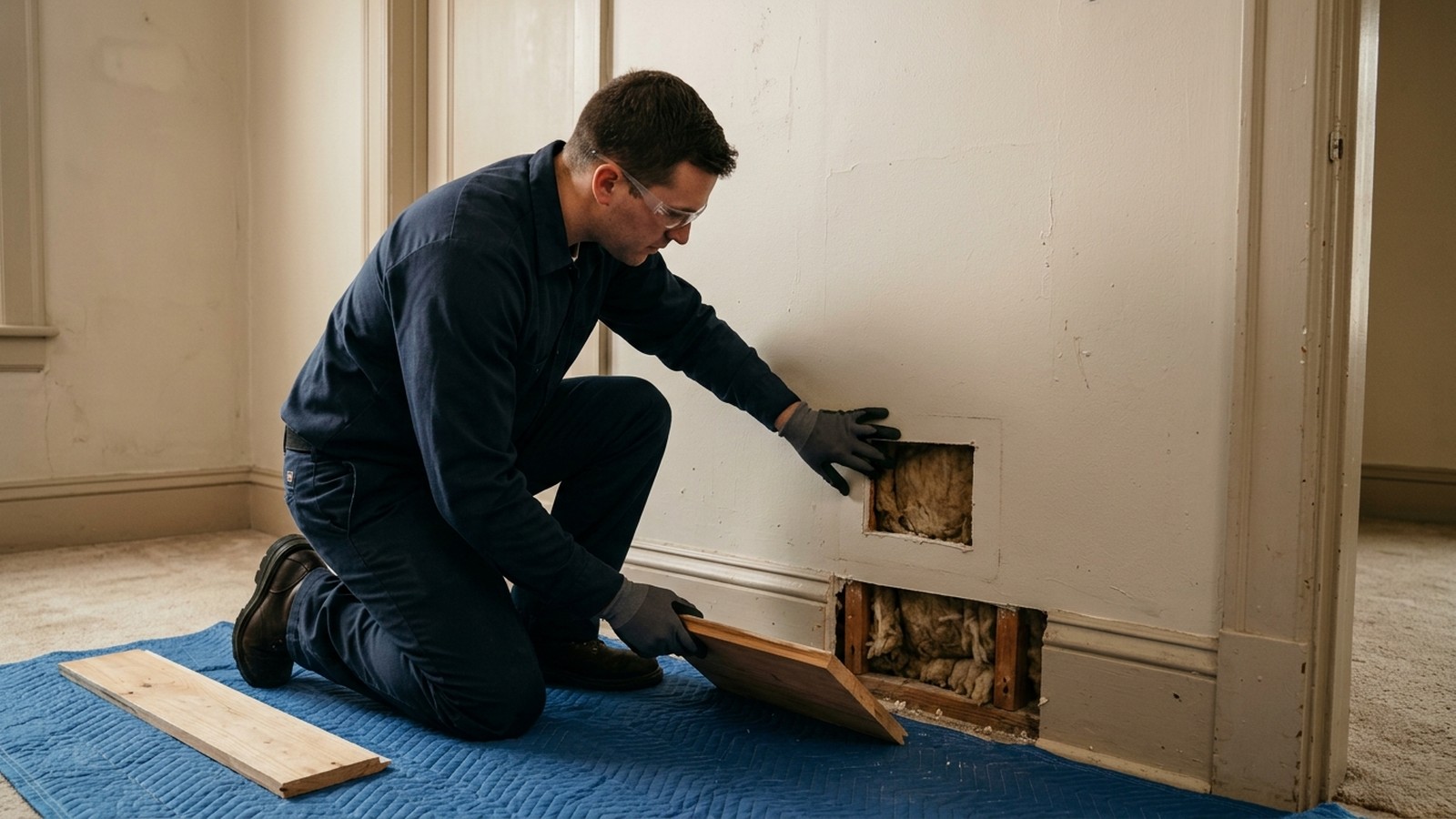
Can water-damaged drywall be saved? Yes, it can sometimes be saved when the water source is addressed, the panel remains firm and flat, the seams are intact, and the wall assembly can be dried completely. Removal becomes more likely when drywall is swollen, soft, crumbling, contaminated, mold-affected, or trapping moisture inside the wall. The decision should account for the type of water, how long materials remained wet, insulation, wall-cavity conditions, and measurable drying progress. For homes and businesses in the St. Louis metro, including communities on both sides of the Missouri-Illinois line, a careful assessment can prevent both unnecessary demolition and incomplete drying.
Can wet drywall be dried in place?
Wet drywall may be dried in place when it has no obvious swelling, its seams remain intact, and the surrounding wall assembly can be properly ventilated and dried. The panel also needs to be structurally sound rather than soft, bowed, cracked, or separating. These conditions should be verified rather than assumed from appearance alone.
The EPA water-damage response table specifically notes that wallboard may be dried in place when there is no obvious swelling and the seams are intact. If those conditions are not present, removal and replacement may be appropriate.
Conditions that may support drying in place
Professional judgment may favor drying when:
- The water source has been stopped.
- The affected area is limited and accessible.
- The drywall remains firm and dimensionally stable.
- Joint seams have not separated.
- Moisture readings show steady progress toward an appropriate dry reference.
- The wall cavity can be ventilated or otherwise dried.
- There is no visible mold or other evidence requiring a broader assessment.
- Wet insulation is not preventing the assembly from drying.
Drying in place does not mean leaving the wall alone. It requires controlled drying, monitoring, and confirmation that moisture is no longer trapped behind the finished surface.
How do the water source and elapsed wet time affect the decision?
The water source affects what can reasonably be cleaned and dried, while elapsed wet time affects the likelihood of secondary damage. Water from a recently stopped supply line presents a different restoration problem from water containing soil, waste, or other contaminants. Source conditions must be considered before deciding to preserve porous materials.
The EPA’s table is framed around damage from clean water and advises additional professional involvement when the water may be contaminated. In practical restoration work, questionable water sources often lead to a more cautious removal decision because drywall readily absorbs water.
Elapsed time matters, but it should not be used as a rigid demolition rule. The EPA’s mold guidance emphasizes drying wet materials within approximately 24 to 48 hours when possible, while also recognizing that remediation decisions depend on the material, the amount of water, and the conditions present.
A panel that has been wet for more than 48 hours is not automatically unsalvageable. It does, however, deserve closer evaluation for softness, swelling, odor, hidden moisture, seam failure, and mold growth. The actual condition of the assembly should drive the scope.
What drywall conditions point toward saving or removal?
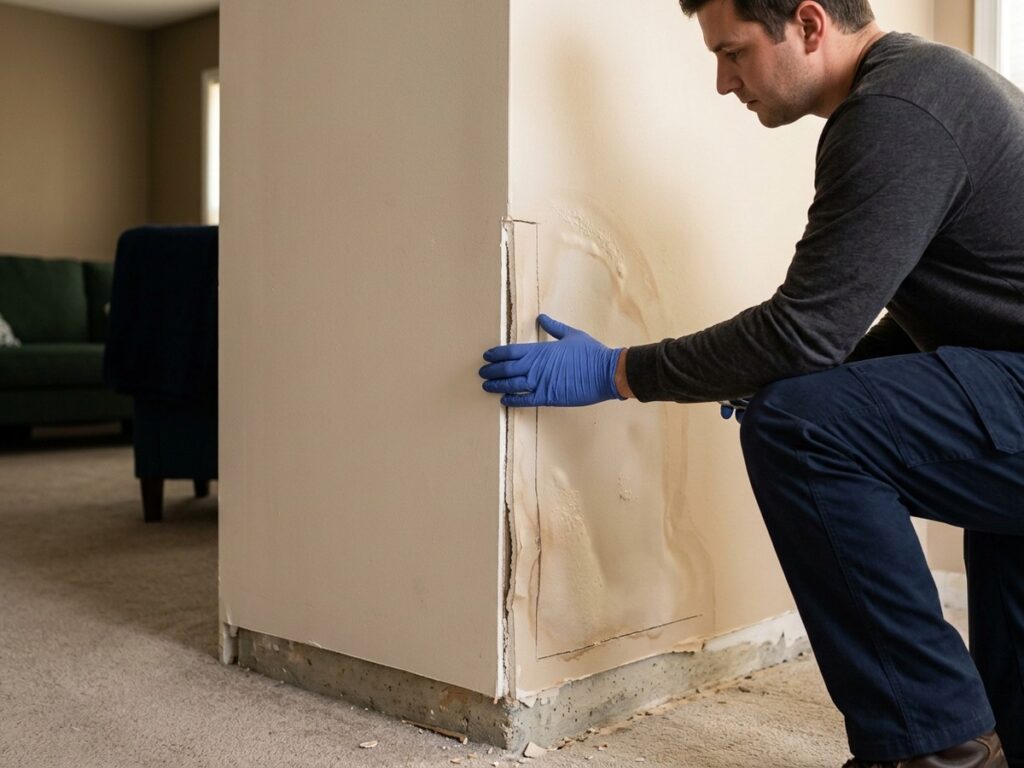
Drywall that remains firm, flat, clean, and measurably responsive to drying may be a candidate for preservation. Drywall that has lost its shape or strength, contains visible mold, or blocks access to wet cavity materials is more likely to require selective removal. The decision should consider the entire wall assembly, not just the painted face.
| Condition | Drying in place may be reasonable | Selective removal may be appropriate |
|---|---|---|
| Water source | Known, controlled, and suitable for restoration | Contaminated, uncertain, or still active |
| Panel condition | Firm, flat, and intact | Soft, swollen, bowed, cracked, or crumbling |
| Seams and fasteners | Seams remain intact | Seams separate or fasteners pull through |
| Elapsed wet time | Promptly addressed with measurable drying progress | Extended exposure with no verified drying progress |
| Wall cavity | Accessible to airflow and monitoring | Moisture remains trapped or access is blocked |
| Insulation | Dry or capable of being evaluated and dried | Saturated, compacted, contaminated, or obstructing drying |
| Mold | No visible or suspected growth | Visible growth or conditions requiring remediation |
| Finish materials | Paint and coverings allow evaluation | Impermeable coverings conceal or trap moisture |
This is a decision framework, not a substitute for site-specific assessment. A small opening may sometimes provide enough access to evaluate insulation and cavity conditions without removing an entire wall.
Why is a dry drywall surface not proof that the wall is dry?
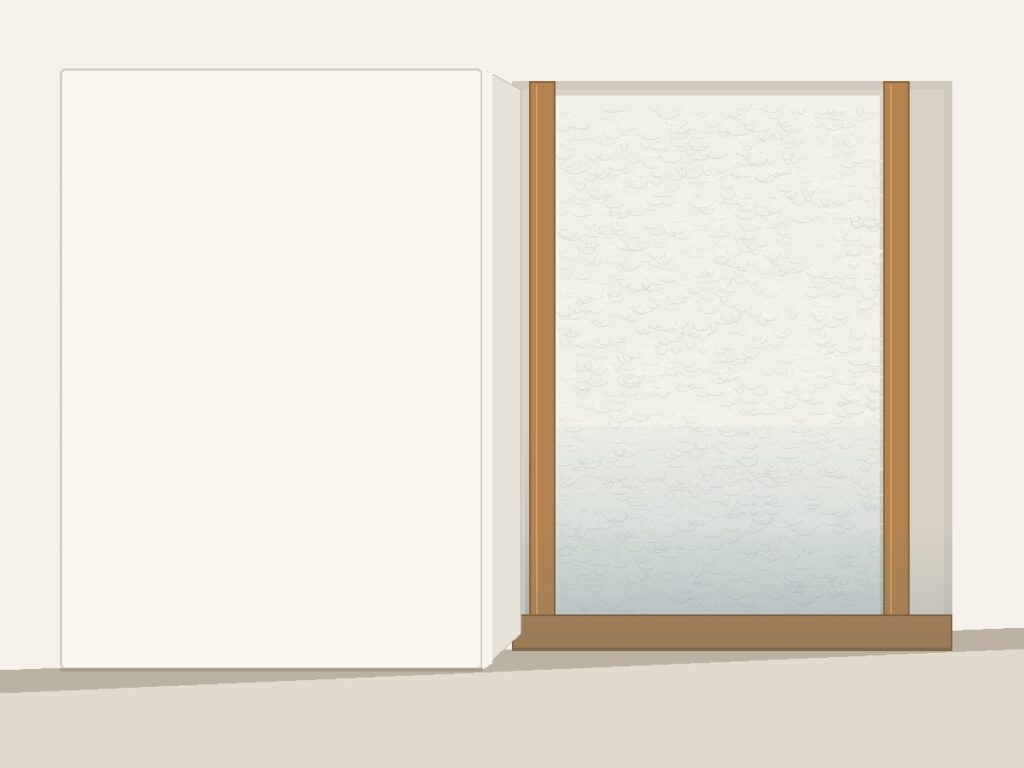
A dry-feeling surface does not prove that the gypsum core, framing, insulation, or back side of the panel is dry. Paint, vinyl wallcovering, cabinets, trim, and tightly enclosed cavities can limit evaporation or hide the remaining moisture. Touch alone cannot document moisture conditions.
The EPA homeowner guide notes that mold can be hidden behind drywall, wallpaper, paneling, and other concealed surfaces. Official guidance supports investigating hidden moisture carefully, while the exact inspection method and removal scope remain matters of professional judgment.
Wet insulation deserves particular attention. Even when the drywall face appears normal, insulation may hold moisture against the back of the panel or adjacent framing. An assessment may require readings at multiple heights, inspection from an adjoining space, removal of baseboard, or a limited access opening.
How does moisture mapping help limit unnecessary demolition?
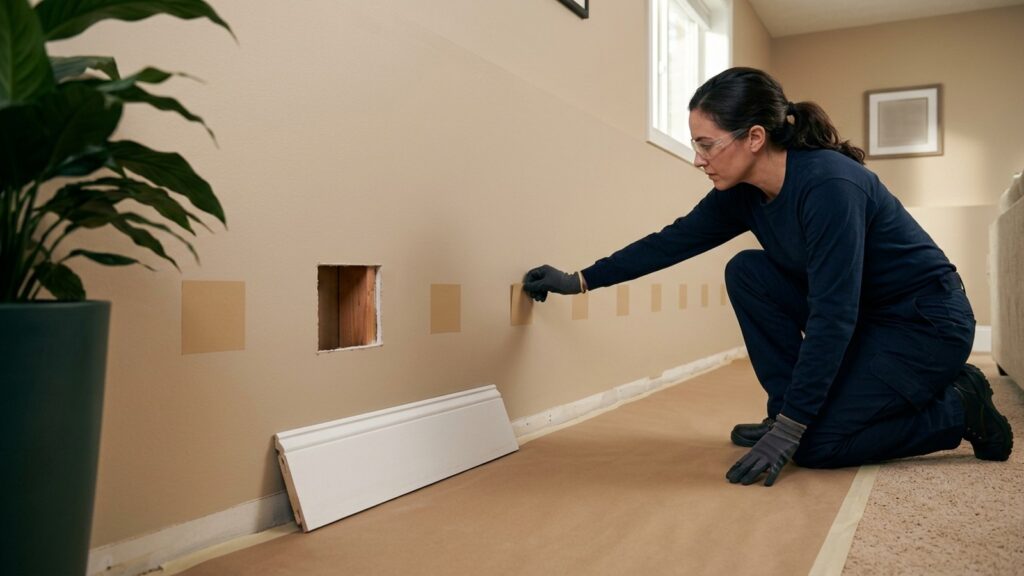
Moisture mapping identifies where abnormal moisture is present, how far it extends, and whether drying efforts are working. It supports selective removal by separating confirmed wet areas from unaffected materials. Mapping also creates a documented basis for adjusting the drying plan.
In restoration practice, technicians compare affected-area readings with dry reference materials in similar locations. Non-invasive meters can help screen broader areas, while penetrating readings may provide more specific information. Thermal imaging may reveal temperature patterns associated with moisture, but those patterns should be confirmed with moisture-measuring equipment.
Gateway Water & Mold uses a plan-driven approach that connects inspection findings, water extraction, drying strategy, monitoring, and necessary material removal. The company’s restoration process is designed to define the affected area before work expands beyond what conditions support.
This approach does not assume that every wet wall must be demolished. It also does not preserve drywall simply to avoid removal. The goal is to match the scope to the documented source, material condition, cavity moisture, and drying response.
What should property owners know about wet drywall?
Property owners should know that wet drywall can sometimes dry in place, but the water source, panel condition, contamination, insulation, and wall-cavity moisture determine whether it can be saved. These common questions clarify how drying time, mold, and cosmetic appearance fit into that assessment.
Does wet drywall always need to be replaced?
No. EPA guidance allows wallboard to be dried in place when there is no obvious swelling and seams are intact. Replacement becomes more likely when the panel is damaged, contaminated, mold-affected, or preventing the wall cavity from drying.
Can fans dry wet drywall without professional equipment?
Fans may move air across a surface, but air movement alone does not confirm that the drywall core or wall cavity has dried. The water source, indoor humidity, insulation, coatings, and extent of saturation all affect the drying plan.
What happens if mold is found on drywall?
Visible mold changes the assessment because drywall is porous and growth may extend beyond the painted surface. The EPA explains that moldy porous materials can be difficult or impossible to clean completely, so affected drywall may require removal rather than surface treatment.
Should baseboards be removed after a wall gets wet?
Not in every situation. Baseboard removal may be useful when it provides access for inspection, drying, or limited wall openings, but the decision should depend on measured moisture and the construction of the wall.
Need help evaluating water-damaged drywall in the St. Louis metro?
Gateway Water & Mold assesses water sources, drywall condition, hidden wall-cavity moisture, insulation, and drying progress for properties in Missouri and Illinois. Learn how its water damage restoration service uses inspection findings to build a focused drying and removal plan rather than defaulting to unnecessary demolition.