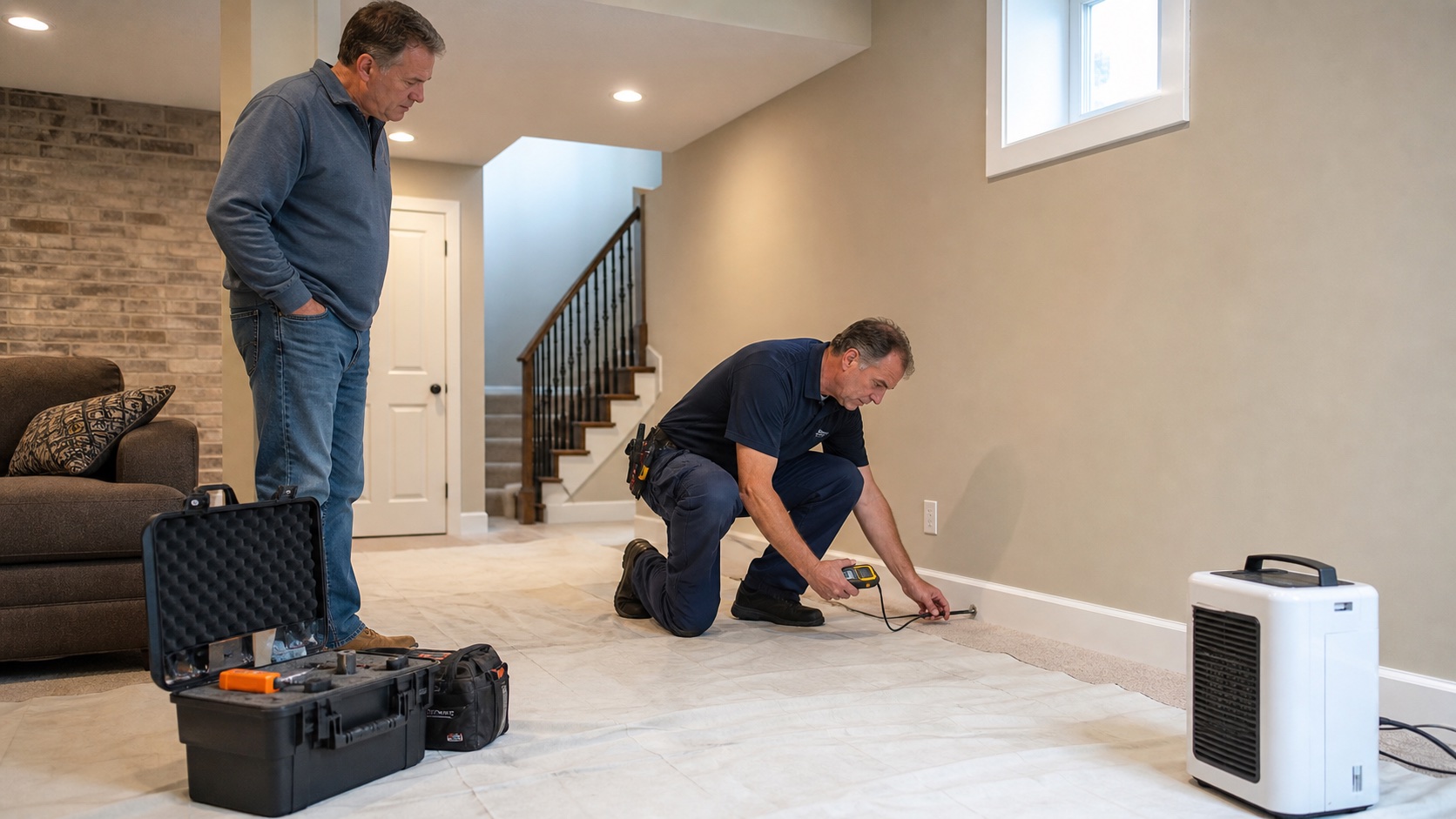
A musty smell in a Chesterfield finished basement usually means moisture is lingering somewhere, but odor alone cannot tell you whether visible mold, hidden growth, damp carpet, a drain, or elevated humidity is responsible. Find the moisture source first. Then decide whether drying, cleaning, testing, or controlled remediation is justified.
Does a musty basement smell always mean mold?
No. Mold can create a musty odor, but damp carpet pad, wet wood, floor drains, stored cardboard, and consistently high humidity can smell similar. Treat the odor as an investigation trigger rather than a diagnosis.
Start with what changed. A recent storm, small plumbing leak, sump alarm, HVAC condensate problem, or new staining can narrow the search. If the smell is strongest along one wall, inside a closet, or after the room has been closed overnight, note that pattern before moving contents.
Where can moisture hide in a finished Chesterfield basement?
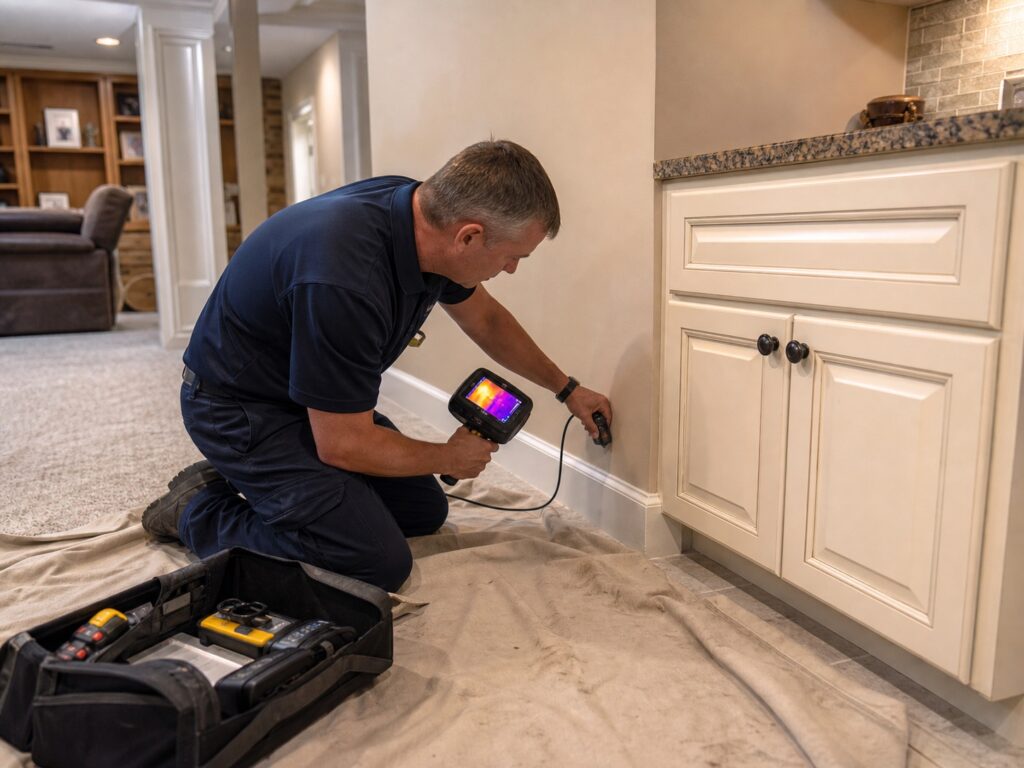
Finished basements create concealed layers: trim over drywall, drywall over insulation, flooring over pad, cabinets against foundation walls, and mechanical chases that connect several rooms. Water can move at the slab edge or behind a wall and surface far from the entry point.
A moisture inspection should compare suspect materials with known-dry materials of the same type. Gateway’s Chesterfield mold remediation team uses the readings to define the boundary before discussing removal.
What can a homeowner check without opening walls?
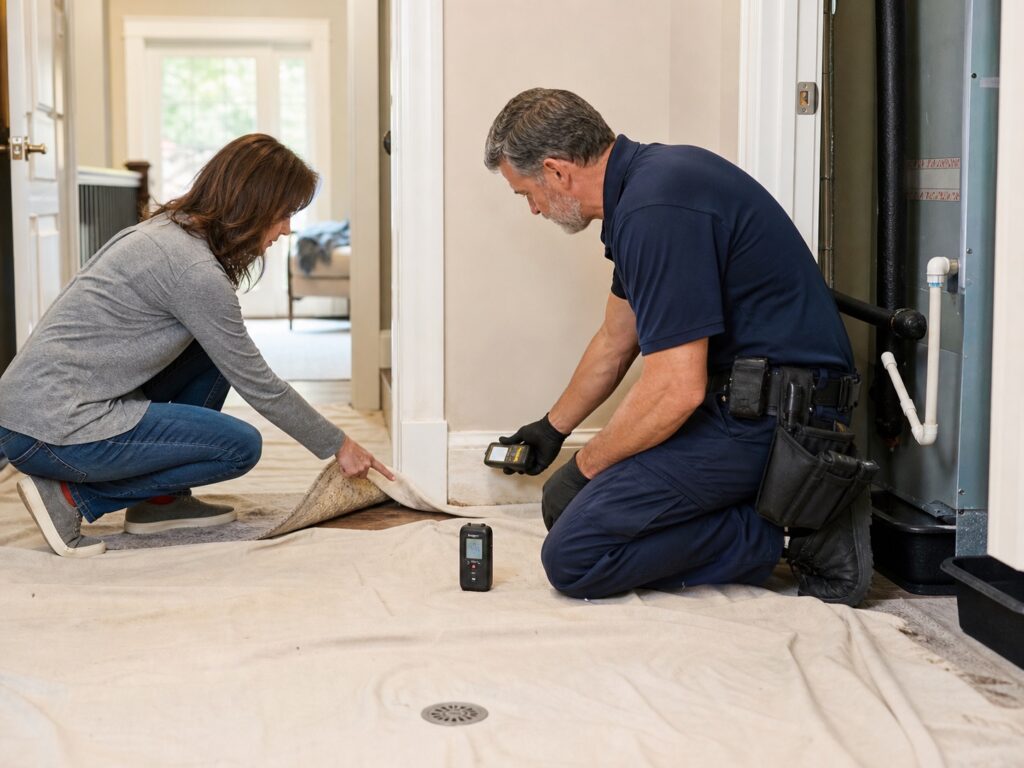
- Look for swollen baseboards, loose flooring, bubbling paint, and rust on metal furniture feet.
- Check under rugs and along the edge of carpet where the pad is easier to feel.
- Inspect the sump pit, utility room, floor drains, and HVAC condensate line.
- Move stored boxes away from exterior walls and check the wall surface behind them.
- Record indoor humidity over several days instead of relying on one reading.
Do not cut into a wall just to see what is there. Uncontrolled opening can spread dust, disturb hidden growth, and erase useful evidence of the water path.
When does mold testing help?
Testing helps when suspected growth is hidden, the odor persists without a visible source, a written record is needed, or the result will change the cleanup scope. It is not a substitute for fixing the moisture source. It also should not be used as a sales device to turn every damp basement into a large remediation job.
Gateway tests before tearing out when the answer is not already obvious. The scope should say where samples were taken, what the moisture readings showed, and why each removal or cleaning step is included.
How dry should a basement be before it is closed back up?
The answer depends on the material and the dry standard established from unaffected areas. A wall should not be closed because it feels dry to a hand. The framing, sill plate, drywall edge, flooring, and other affected layers should reach documented targets appropriate for those materials.
The EPA’s mold cleanup guidance emphasizes correcting the moisture problem as part of cleanup. Rebuilding over a damp assembly preserves the condition that caused the odor.
What does a controlled mold-remediation scope include?
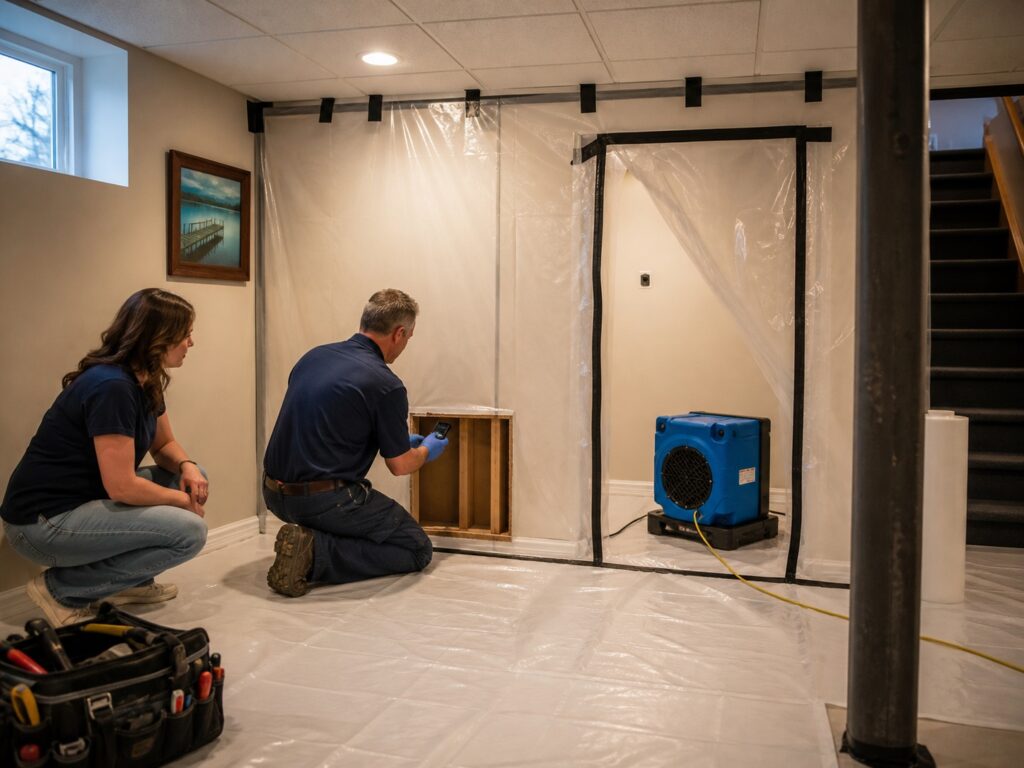
A sound scope identifies the source, containment boundary, materials to remove, surfaces to clean, air-control method, waste route, and the way the result will be verified. It should also identify what can stay. “Spray and paint” is not a substitute for source correction and physical cleaning.
Can a dehumidifier solve a musty basement by itself?
A dehumidifier can lower airborne humidity, but it cannot repair a leak, remove water trapped behind a wall, clean contaminated material, or prove that a wet assembly is dry. It is useful when it is part of a source-control and drying plan. If the tank fills unusually fast or the odor returns when the unit stops, investigate the underlying moisture load.
If a Chesterfield basement smells musty after a leak or storm, call Gateway at (314) 947-3419. Our Chesterfield water and mold team can connect moisture investigation with Chesterfield water damage restoration so the source, drying record, and remediation decision stay in one file.