
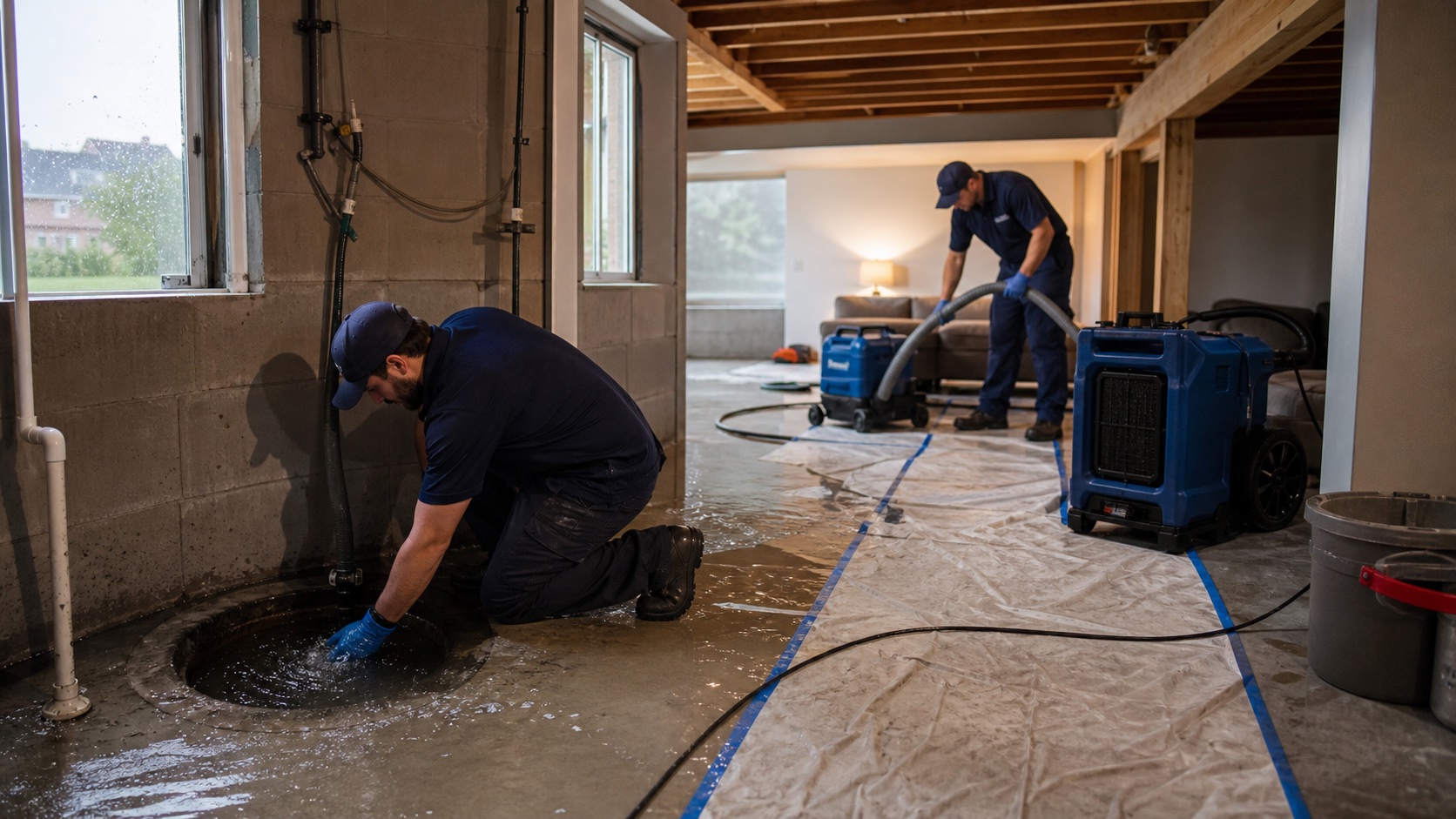
A sump pump failure during a Chesterfield storm can turn a dry lower level into a water loss quickly. Keep clear of electrical hazards, confirm whether the pump lost power or stopped moving water, document the loss, and begin extraction as soon as it is safe. Replacing the pump is only half the job. The basement materials still need to be checked and dried.
Once the area is safe, arrange emergency water extraction in Chesterfield, MO for standing water and wet building materials. Gateway handles extraction, drying and moisture documentation; pump repair remains a separate plumbing task.
What should you check when a sump pump stops working?
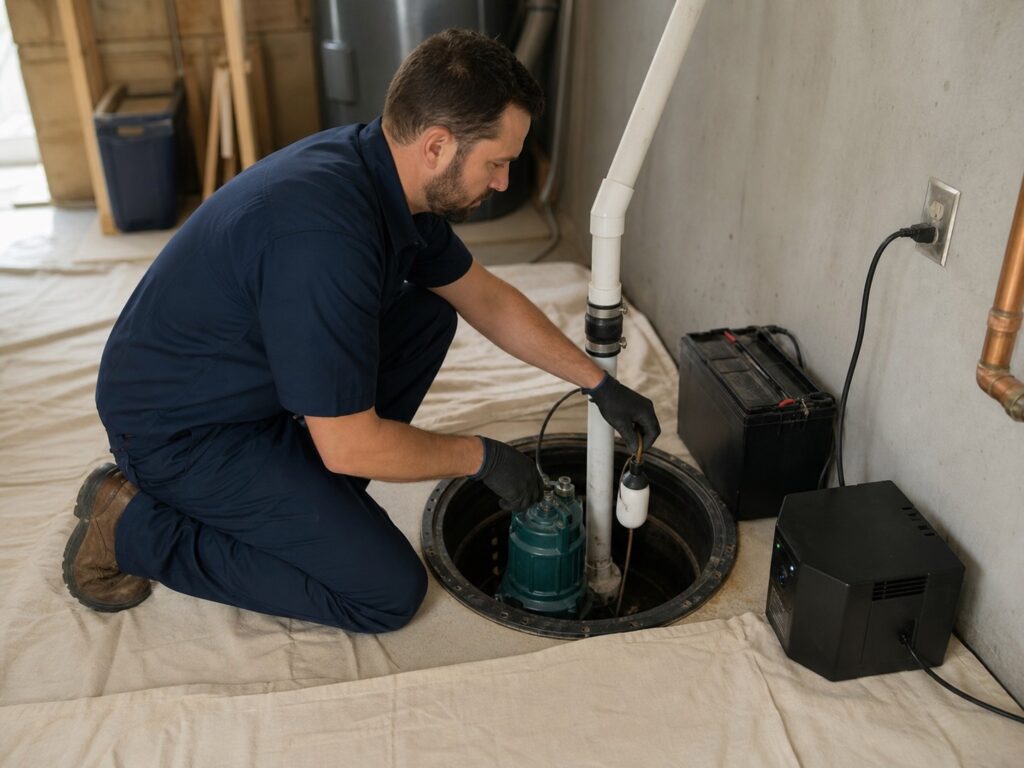
Start with safety. Do not step into water near outlets, appliances, powered equipment, or the electrical panel. From a dry area, look for a tripped breaker, a disconnected plug, a stuck float, a blocked discharge, or a pump that is running without lowering the pit. Do not keep resetting a breaker that trips again.
If the pump has a battery backup, confirm whether it activated and whether the battery alarm is reporting a fault. A plumber or pump technician can repair the system. A restoration crew handles the water already in the building.
Why can a Chesterfield basement stay wet after the pump is replaced?
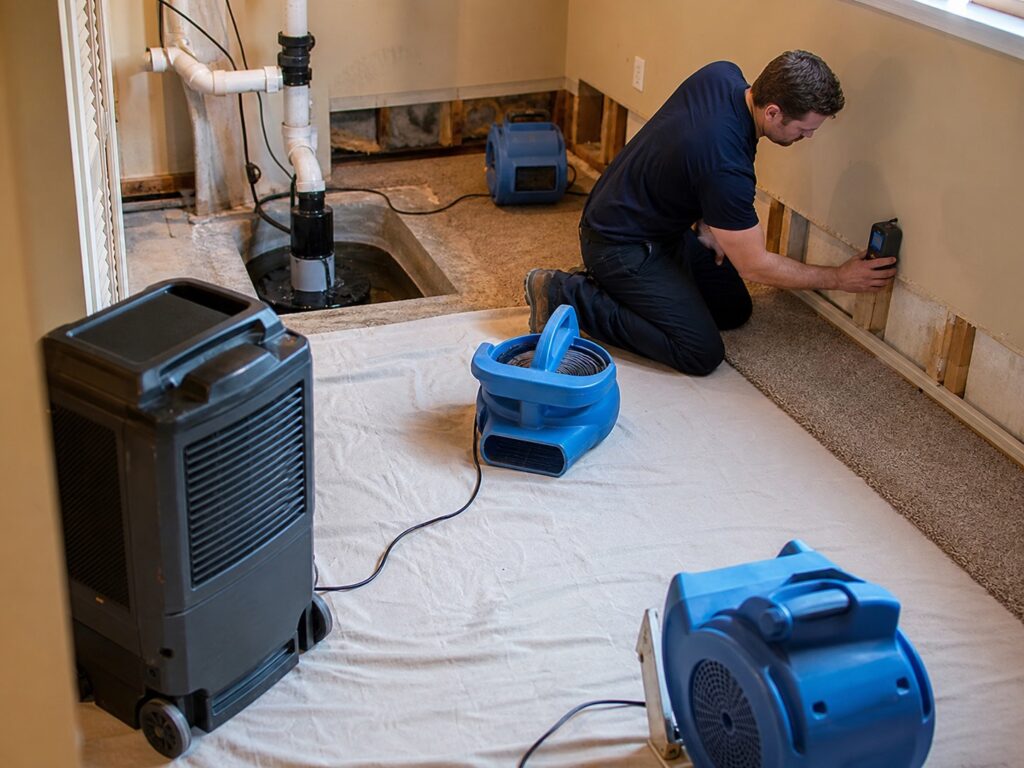
The new pump removes water that reaches the pit. It does not remove moisture already absorbed by carpet pad, drywall, trim, framing, cabinets, and stored contents. Finished lower levels around Chesterfield can hold water behind wall systems even after the floor looks clear.
Gateway’s Chesterfield water extraction team checks beyond the puddle. Moisture mapping establishes which materials are wet, and monitoring shows whether the equipment is actually moving those readings toward dry.
What should you document after a sump pump failure?
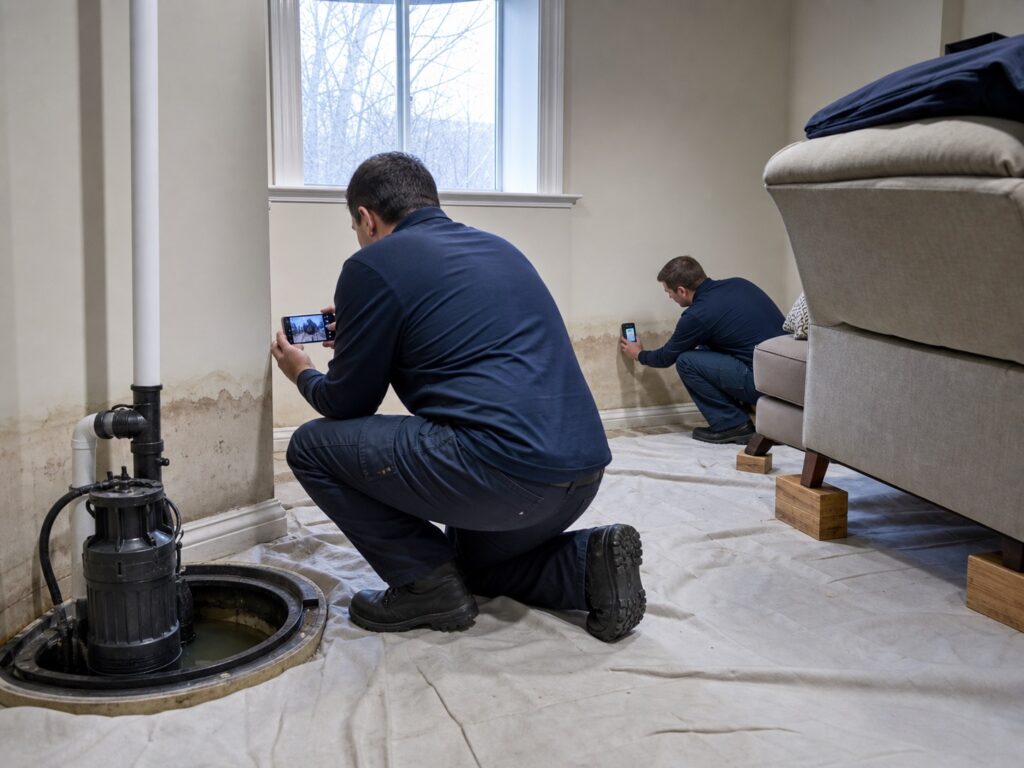
Photograph the water line, the sump pit, the pump and backup system, the affected rooms, and damaged contents. Record when the storm began, when you discovered the water, and when the pump was repaired or replaced. Keep the failed pump until the cause and insurance documentation are clear.
- Take wide room photos before moving belongings.
- Photograph model and serial numbers on the pump and damaged appliances.
- Save emergency service invoices and equipment rental receipts.
- Ask for moisture readings and daily drying records.
Coverage for groundwater and sump-related losses varies by policy and endorsement. Report the facts without guessing at coverage, and let the carrier make the policy determination.
Can wet basement carpet be saved?
It depends on the water source, exposure time, carpet construction, and whether the pad and subfloor can be cleaned and dried. A recent clean-water loss offers more options than water mixed with sewage or outside contaminants. Carpet that feels dry on top may still have a saturated pad underneath.
A proper Chesterfield basement flooding assessment separates salvageable materials from those that create a sanitation or drying problem. That decision should be documented before disposal.
How do you prevent the next sump pump failure?
Test the pump before forecast heavy rain, clear the pit, inspect the discharge route, and confirm the backup power source. Make sure the discharge sends water away from the foundation and does not freeze or reconnect improperly. Keep stored contents off the floor, especially in mechanical and storage rooms.
A backup pump adds resilience, but it does not replace drainage maintenance or a working power plan. If the pit fills unusually fast, the issue may also involve grading, downspouts, foundation entry, or a drainage failure that needs separate correction.
Should you call insurance before cleanup starts?
Report the loss promptly, but do not leave standing water in place while waiting for an adjuster when safe emergency work can limit further damage. Ask the carrier what documentation it wants, write down the claim number, and preserve photos and damaged components. Emergency mitigation and final reconstruction are separate decisions, so keep their estimates and invoices organized separately.
Who handles cleanup after a Chesterfield sump pump failure?
A pump contractor fixes the equipment. Gateway handles extraction, moisture mapping, structural drying, and the documentation that supports the loss. If wet materials cannot be dried safely in place, the written scope identifies the controlled removal that is actually needed.
Water in the basement now? Call Gateway at (314) 947-3419 for water damage restoration in Chesterfield. You will get a live person and a real ETA based on current conditions.