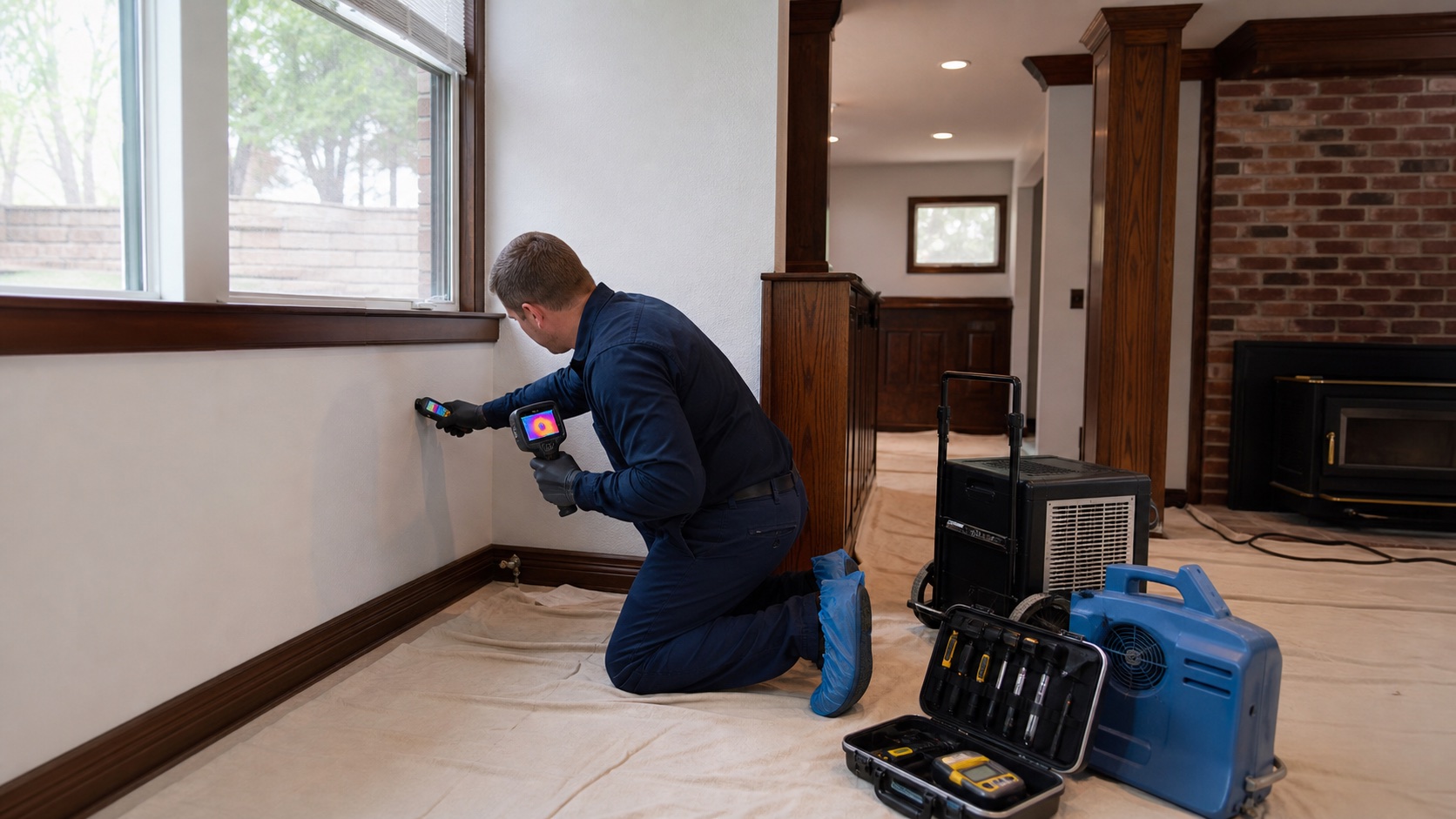
Mold can begin developing after water damage when wet materials stay damp, which is why the first 24 to 48 hours matter. The practical goal is not to spray everything with a mold product. It is to stop the source, remove trapped water, dry the full assembly, and verify that moisture is no longer hiding behind the finished surface.
How fast can mold grow after water damage?
The EPA recommends drying wet materials within 24 to 48 hours when possible to help prevent mold growth. That window is not an automatic diagnosis. A wall that has been wet for two days is not automatically a mold-remediation job, and a wall that looks clean after a week is not automatically dry.
Temperature, airflow, the water source, and the material all matter. Paper-faced drywall, carpet pad, wood dust, and stored cardboard provide different conditions than bare masonry. The useful question is whether the material stayed wet long enough to support growth and whether it can still be dried and cleaned.
Where does moisture hide in University City homes?
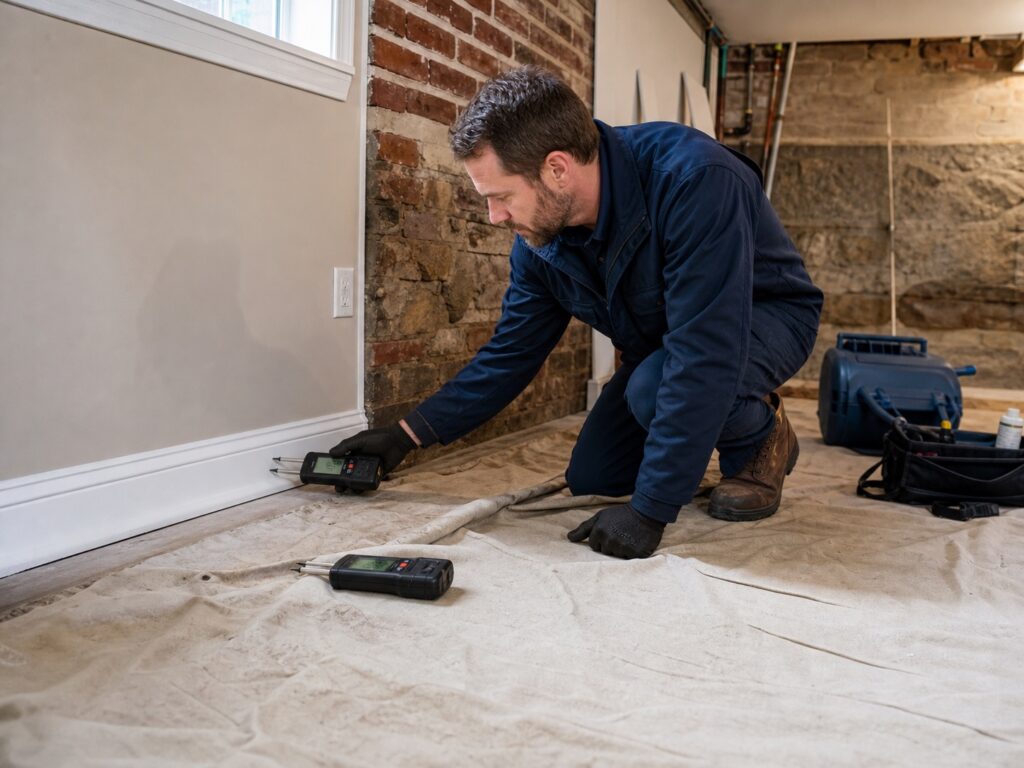
Inspect the actual wall and floor assemblies and relevant renovation history at the University City property. Concealed materials may differ from visible finishes; location alone does not establish their construction or condition.
A complete water damage inspection in University City checks the materials beside and below the visible damage. Moisture readings at the baseboard, drywall edge, framing, and floor transition help show whether the loss is contained or still moving.
What are signs of hidden moisture after water damage?
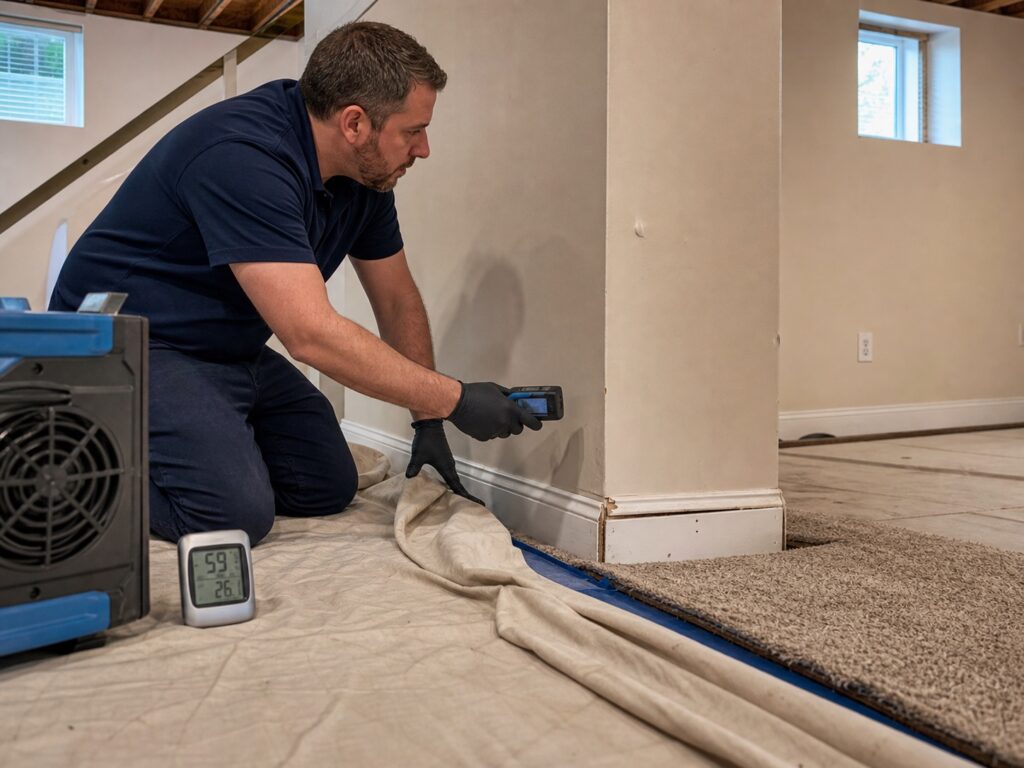
A musty odor is a reason to investigate, not proof of mold. Other useful clues include paint that bubbles after the leak, trim that separates from the wall, a cool damp area that does not match the rest of the room, staining that returns after cleaning, and elevated humidity in a closed basement.
- Compare the affected area with a known-dry area of the same material.
- Check adjoining rooms, closets, and the wall on the other side of the leak.
- Do not cover a damp smell with paint or fragrance before the source is established.
- Do not rely on a consumer air test without understanding where and how the sample was collected.
When is mold testing useful after a leak?
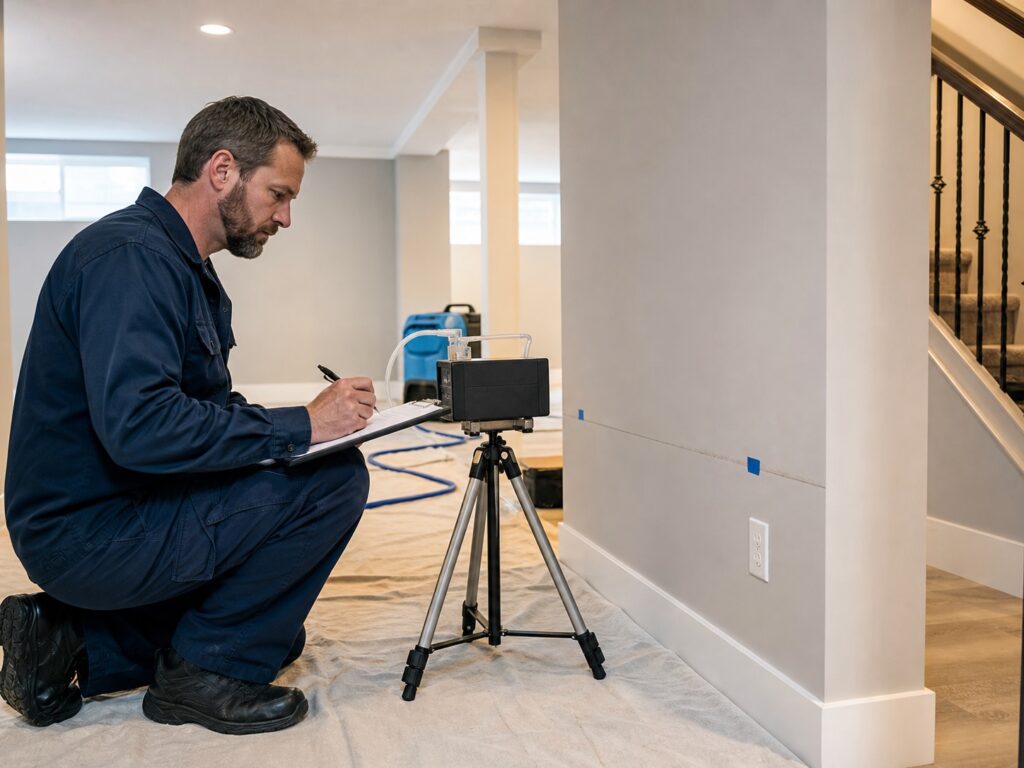
Discuss with an independent inspector whether sampling would usefully inform the actual concern and scope. Visible growth does not automatically require sampling, and results need appropriate interpretation.
Gateway performs moisture assessment and remediation. Where sampling is appropriate, an independent inspector or industrial hygienist collects samples and an independent laboratory analyses them. Discuss the University City mold remediation scope and any independent assessment needed. Related information: University City mold remediation process.
Should you open a wet wall after water damage?
Not before the water source and likely contamination level are understood. Opening a wall can release dust and disturb hidden growth. It can also destroy evidence your insurer may need. When controlled removal is justified, the work area should be isolated and the removed materials documented.
If the leak involved sewage, long-standing groundwater, or water from an unknown source, keep people away from the area and get professional guidance. The cleanup plan has to address sanitation as well as drying.
What should happen before mold remediation begins?
The moisture source must be corrected or controlled. The affected boundaries should be measured. The scope should say what will be contained, what will be removed, what can be cleaned, and how the result will be checked. A vague promise to “treat the mold” is not a plan.
Contact Gateway about lingering dampness or musty odors at the property. Gateway performs moisture assessment and remediation; independent professionals handle any appropriate sampling and laboratory analysis. See our University City water and mold team for service information. Related information: Call Gateway.
For professional water damage restoration and mold remediation services in the St. Louis area, contact Gateway Water & Mold.