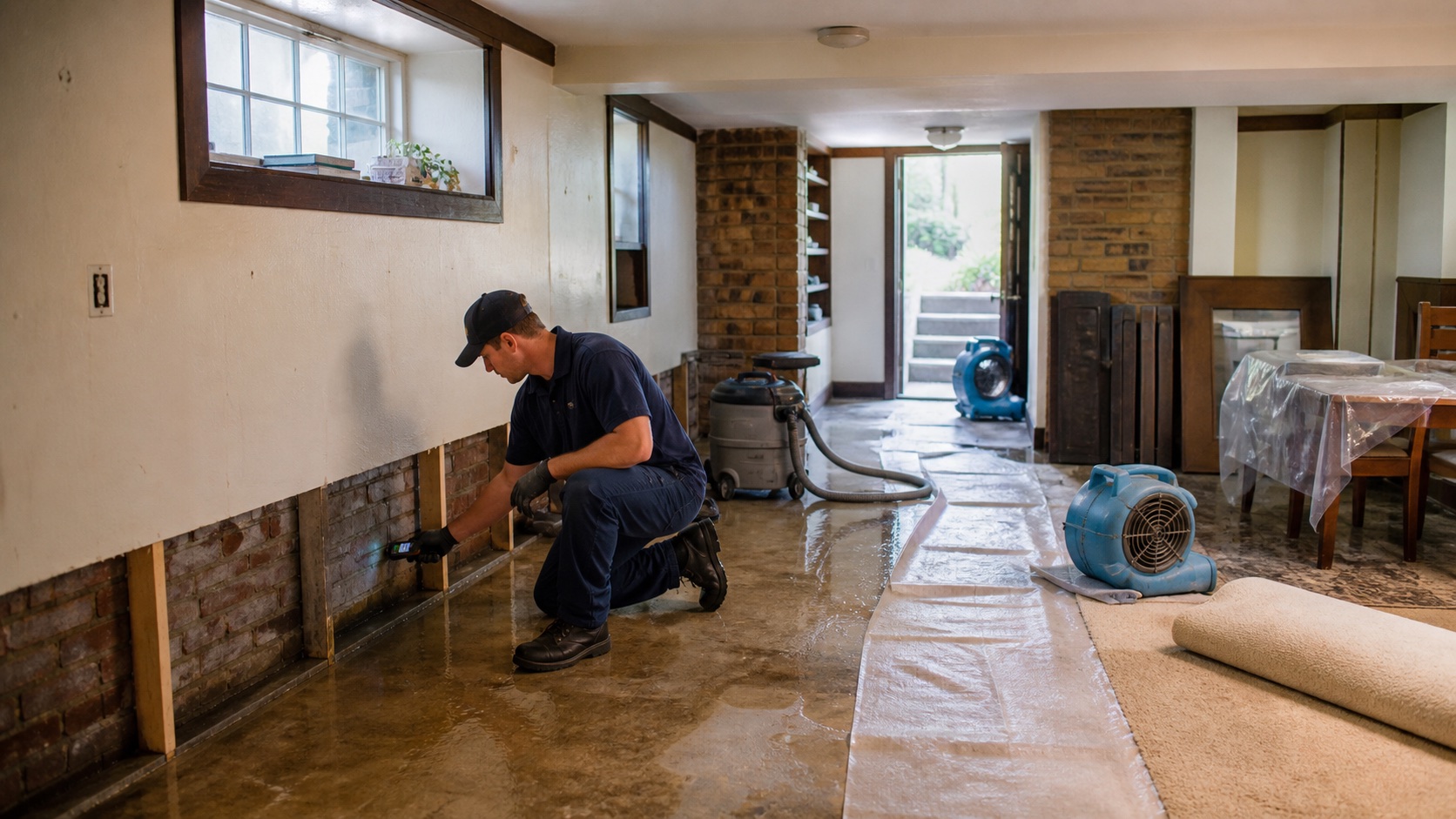
A basement flood in University City needs two things right away: a safe first move and a drying plan based on what is actually wet. Keep people away from electrical hazards, stop the source if you can do it safely, photograph the loss, and call for extraction before water has time to travel through baseboards, wall cavities, and stored contents.
What should you do first after a basement flood in University City?
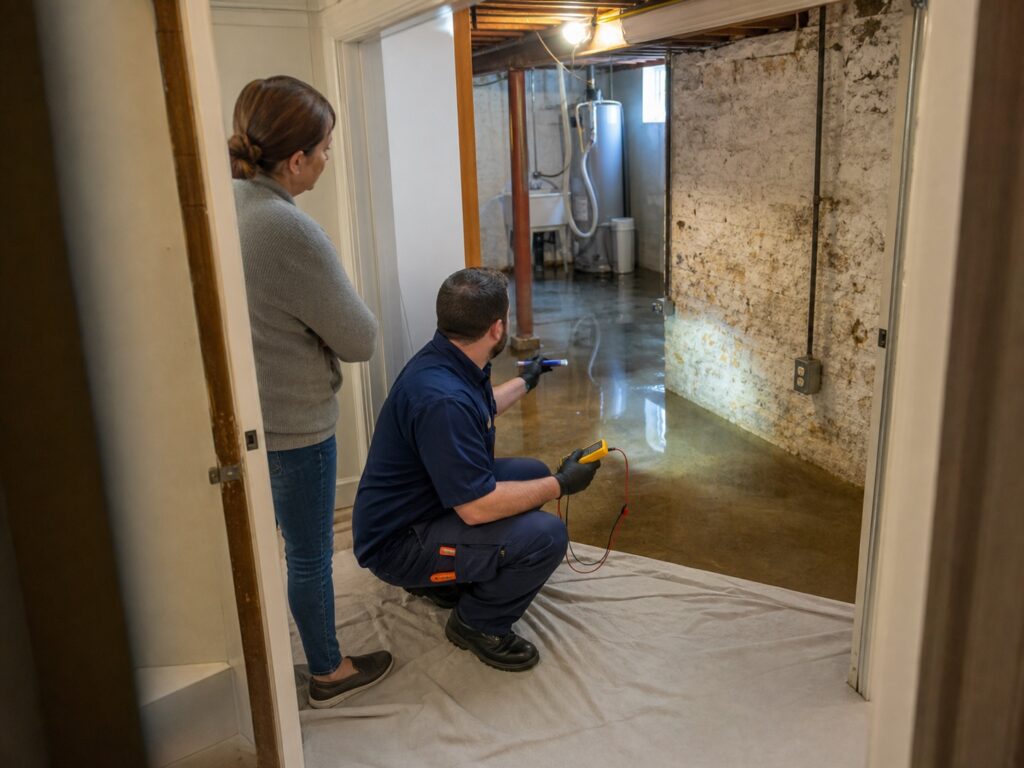
Stay out of standing water when outlets, appliances, extension cords, or the electrical panel may be involved. Do not enter just to move belongings. If the water came through a sewer or floor drain, avoid direct contact and keep children and pets upstairs. The CDC’s flood safety guidance recommends treating floodwater as potentially contaminated and using protective equipment during cleanup.
If it is safe to approach the source, shut off the failed fixture or the home’s main water valve. A roof leak, foundation seepage, sump failure, supply-line break, and sewer backup can leave similar-looking water on the floor, but they do not create the same cleanup scope.
What should you photograph before basement water extraction begins?
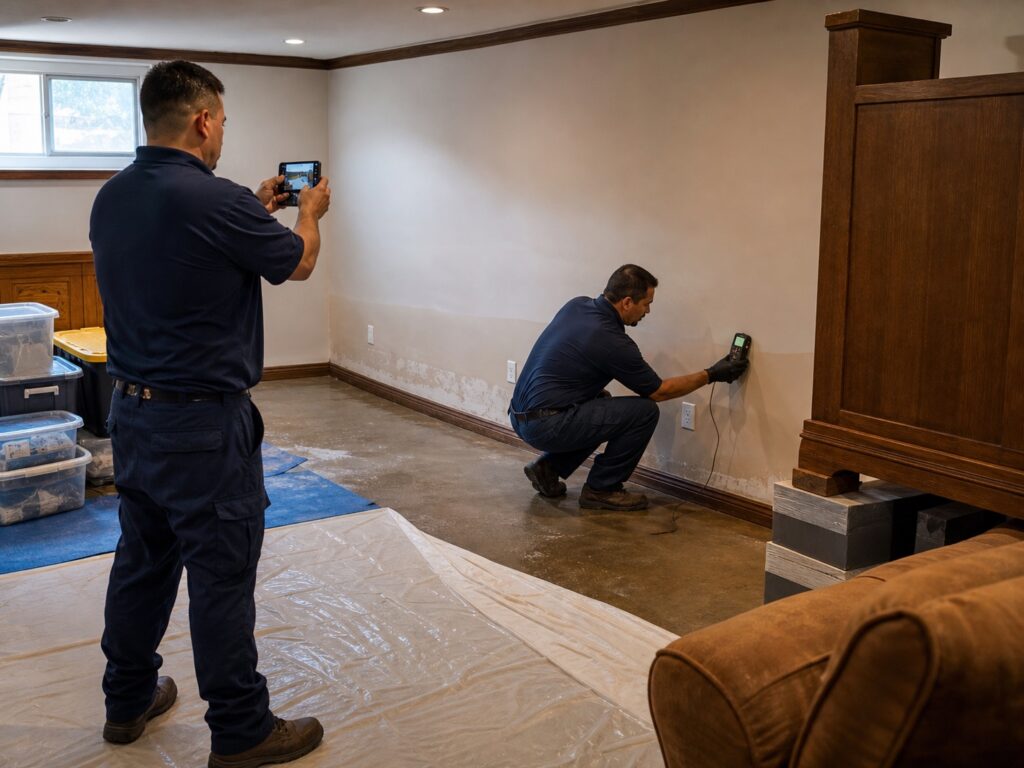
From a safe location, photograph visible affected areas, water lines, materials and belongings. Do not enter a hazardous area or delay necessary emergency action to gather evidence. Save receipts for emergency work.
- Photograph visible walls only where it is safe to do so.
- Record the time you discovered the water and when the source stopped.
- Ask the insurer and restoration team about documentation and disposal. Safety and contamination concerns may require prompt handling; do not retain hazardous materials solely for a claim record.
- Ask the restoration company for moisture readings and drying logs, not just before-and-after pictures.
Gateway’s University City water damage restoration team builds the file while the work is happening, so the drying record and the insurance record describe the same loss.
Why is basement water extraction only the first step?
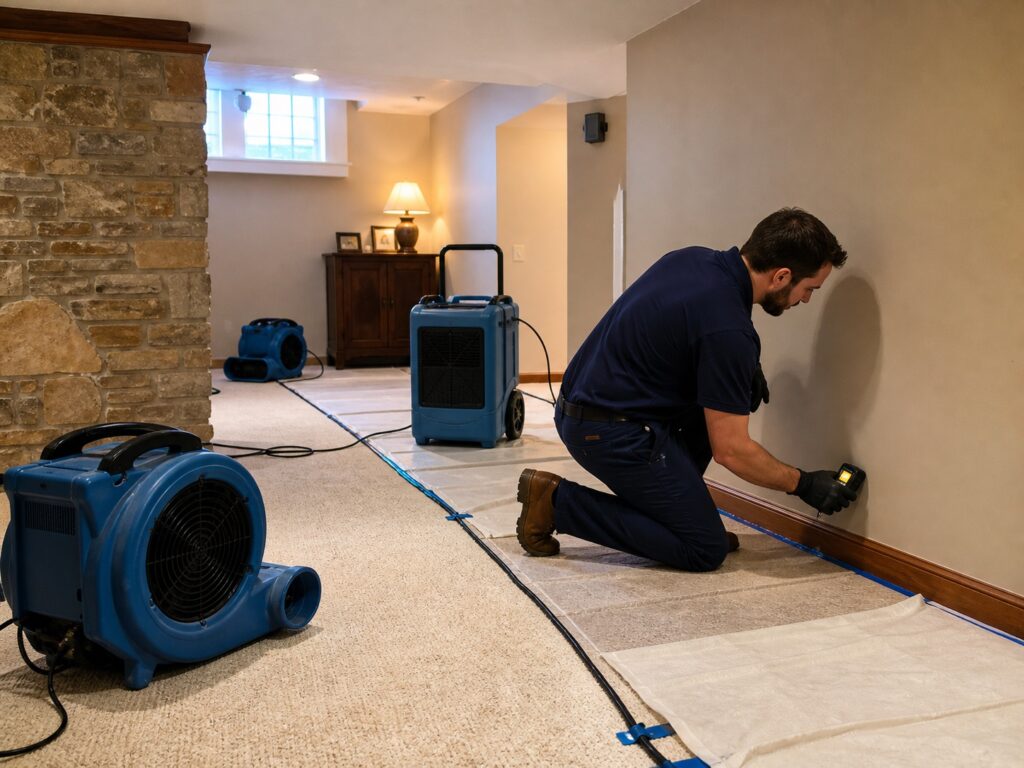
Assess actual moisture in relevant finishes and concealed assemblies even when the surface appears dry. The University City address alone does not establish the construction or condition of the property; visible puddle removal does not document concealed drying.
Professional emergency water extraction in University City pairs removal with moisture mapping. The crew checks beyond the obvious water line, sets equipment for the actual wet materials, and monitors those materials until the readings support removal of the equipment.
Can you save carpet, drywall, and basement contents?
Sometimes. The answer depends on the water source, how long the material stayed wet, and whether it can be cleaned and dried completely. Clean water from a recent supply-line break may leave more salvage options than a sewer backup. Porous contents exposed to contaminated water require a more conservative decision.
Do not make demolition decisions from appearance alone. A written scope should identify what can be dried in place, what needs controlled removal, and what should be discarded for sanitation reasons. That is especially important in finished basements where trim can hide wet drywall and insulation.
How soon can mold become part of the problem?
The EPA advises drying wet materials within 24 to 48 hours when possible to help prevent mold growth. That clock is a reason to act, not a reason to panic. If drying starts late or a musty odor remains, moisture readings and a targeted inspection are more useful than guessing from a stain.
When testing or remediation is justified, Gateway can connect the loss to mold remediation in University City without turning every flooded basement into an oversized mold project.
Who should you call for a flooded University City basement?
Call a plumber when an active plumbing failure still needs repair. Call the utility or municipality for a suspected public sewer problem. Call a restoration company when water needs to be extracted, materials need moisture testing, or the structure needs controlled drying. On many losses, those calls happen in parallel.
If water is in your basement now, call Gateway at (314) 947-3419. Our University City basement flooding response starts with the source, the water category, and the moisture map before the scope is written.
For professional water damage restoration and mold remediation services in the St. Louis area, contact Gateway Water & Mold.