Gateway/Water Damage Restoration/Ballwin
Water Damage Restoration
in Ballwin, MO.
Water damage restoration for Ballwin, MO homeowners. IICRC S500 extraction, drying, and monitoring; every job documented to a standard Allstate, State Farm, and American Family can underwrite. We work Claymont, Meadowbrook Country Club Estates, Woodsmill, and the rest of the metro the same way.
Ballwin data points
Three things we
know about Ballwin.
- Housing era63011 primarily 1950s-1960s
- Soil + drainageClay-rich till over weathered limestone
- Water + sewerMissouri American Water / Metropolitan St. Louis Sewer District (MSD)
Water Damage Restoration in Ballwin.
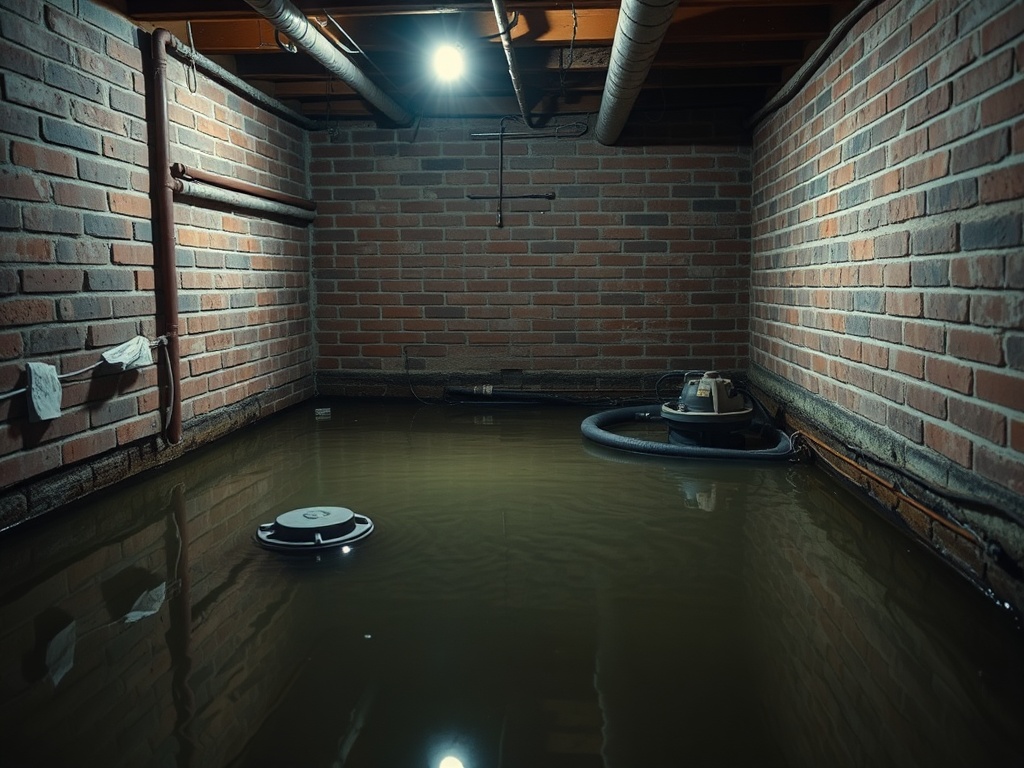
Ballwin water losses tend to be discovered late because the housing stock is large, often two stories with finished walk-out basements on the west side, and a leak on the upper floor can run two days before anyone hears it. The 1950s-1970s subdivision homes in Claymont, Meadowbrook, and Westridge were built on clay till over weathered limestone, and the original cast-iron drain stacks in much of 63011 are now corroding at the hub joints. When one of those joints lets go inside a wall, drywall hides it until the paint blisters. Our protocol involves cutting strategic inspection ports at the lowest plate and reading moisture inside the cavity before we open the whole wall. Drying-in-place works well on the brick-and-frame veneer assemblies common here, but the seasonal high water table in spring complicates basement drying because vapor keeps coming from outside the foundation.
Context.
Ballwin’s housing stock skews 1950s through 1970s, with the original Claymont and Meadowbrook subdivisions in 63011 leading the older Ballwin curve and the Westridge and Holloway Estates phases stretching into the late 1970s. Brick and limestone veneer over frame, full basements as the standard, and walk-out basements common on the sloping west-Ballwin lots near Fishpot Creek. The problem set is consistent: a sixty-year-old copper supply line lets go behind a finished basement wall, a washing machine hose fails on a Saturday morning, or a winter pipe freeze in an exterior wall thaws and runs for hours. We respond across all five Ballwin neighborhoods, pull moisture readings on every wall cavity that touched water, and write the dryout in Xactimate so the carrier file matches the structural reality. IICRC S500 protocols, truck-mount extraction, and direct-bill on Allstate, State Farm, and American Family, the three carriers we work with most around the metro.
Our 1960s Claymont split-level has the original sump pit. Should I replace it before something breaks, or wait?
We don’t sell pumps, so this is operator opinion, not a sales pitch. A sixty-year-old pit usually has one pump rated for clear water, no battery backup, and a discharge line that has started to settle. If yours has run more than ten minutes during the last few storms, replace it on your terms with a plumber rather than at 2 a.m. during a downpour. We see the damage from failed pumps in west Ballwin constantly. The repair bill almost always exceeds the cost of a modern pump plus backup.
Cast iron stack cracked behind our basement wall and soaked everything. State Farm wants to know if it was sudden. Was it?
Insurance language treats a sudden burst differently from long-term seepage. State Farm, Allstate, and American Family typically cover sudden and accidental discharge but exclude gradual leaks. Cast iron usually fails by pinhole or full split. A full split is sudden by carrier definition. We document the rupture point with photos, note the corrosion pattern, and write the scope to that finding. Adjusters often ask for a plumber’s letter as well. We will tell you honestly if the evidence supports the sudden claim or not.
“We don’t tell you it’s mold because it looks like mold. We test, we plan, and we tell you what you don’t need to remediate.”
What’s included
What every Ballwin
water damage restoration job covers.
Every Gateway water damage restoration job in Ballwin runs to the same standard, same equipment, same documentation, same reputation backing every step. The full scope and FAQ live on our main water damage restoration page; the short version is below.
- 24/7 emergency dispatch with same-day on-site response
- IICRC S500-compliant extraction, drying, and monitoring
- Truck-mount and portable units sized for your structure
- Daily moisture readings, written, until structure passes dry standard
- Xactimate-aligned insurance file delivered directly to your carrier
How a Ballwin call runs
Six steps. Same every job.
- 01
Source control & moisture map.
We stop the source if accessible, then walk the structure with moisture meters and a thermal camera. The map tells us scope, not guesses.
- 02
Containment, Category 2 or 3.
If it’s gray or black water, we contain before we extract. Plastic sheeting, negative air, and HEPA filtration go up first.
- 03
Truck-mount extraction.
Standing water comes out with truck-mount units. Carpet, pad, and subfloor get extracted to dry-cut moisture levels.
- 04
Air movers and LGR dehumidifiers.
Equipment placed based on cubic-foot calculation, not eyeball. Low-grain refrigerant dehumidifiers handle wet-bulb conditions our market sees.
- 05
Daily moisture readings until dry.
Same time every day. Written log. Equipment moves as readings come down. No structure leaves wet.
- 06
Affected materials removed, S500.
Anything that can’t dry to standard comes out. Documented, photographed, in the file. IICRC S500-compliant.
Other St. Louis cities we cover
Water Damage Restoration across
the metro.
Ballwin address. Water emergency.
Live phone, twenty-four seven. We’ll dispatch the nearest crew the moment we hang up.