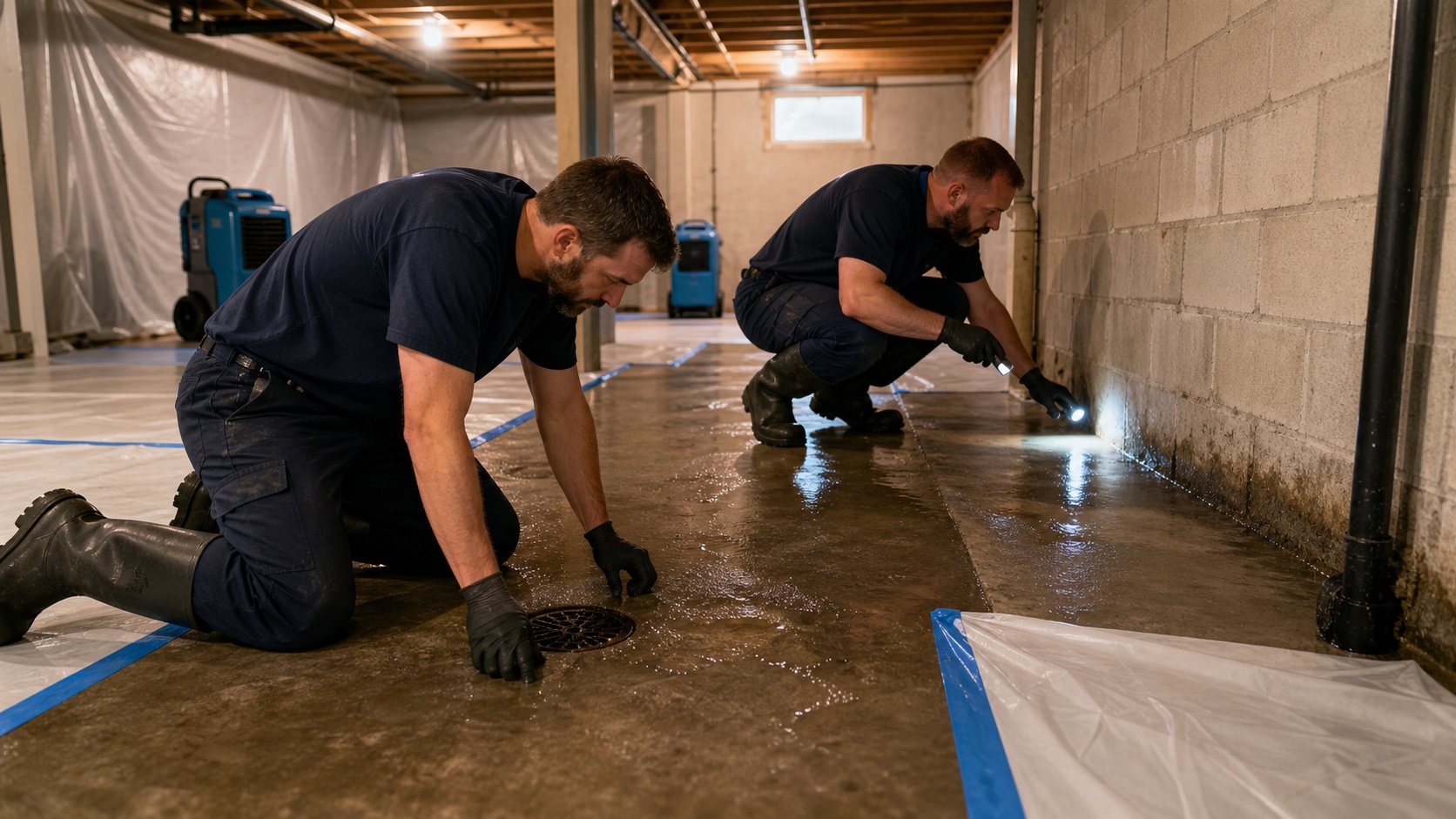
Basement water in Belleville may come from a sewer or floor drain backup, foundation seepage, a sump failure, or a plumbing break. Do not identify the source by color alone. Keep people away from unknown water, document where it entered, and get the source classified before fans or cleanup spread contamination through the basement.
How can you tell whether basement water came from a sewer?
Water rising from a floor drain, toilet, shower, or cleanout strongly suggests a drainage or sewer problem. Multiple slow fixtures, gurgling drains, wastewater odor, or debris around the drain add useful evidence. Groundwater more often appears at the wall-floor joint, through cracks, or around a foundation opening during prolonged rain.
Those are clues, not a guarantee. More than one source can occur during the same storm. A failed sump can coincide with a drain backup, and clean rainwater can mix with contaminated water after it enters the room.
What should you do when a basement water source is unknown?
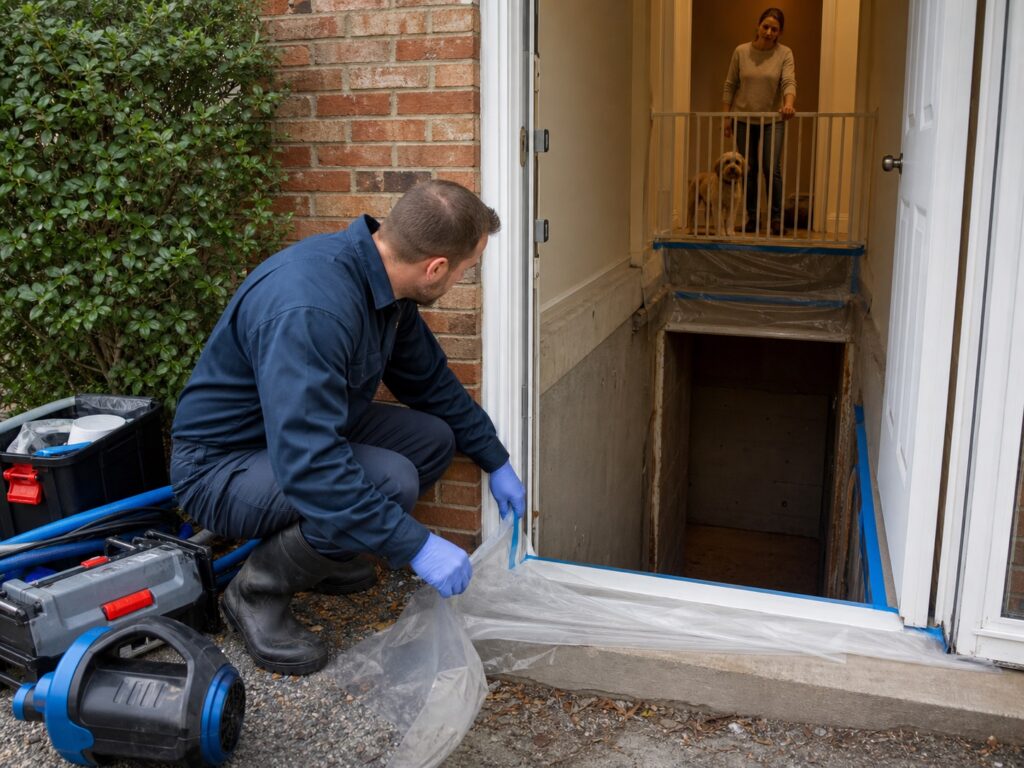
Treat it conservatively. Keep children and pets away, avoid bare-skin contact, and do not run ordinary fans across the water. The CDC advises that floodwater can contain sewage and other hazards. Electrical hazards also remain possible even when the water is shallow.
Call the appropriate plumber or sewer professional to address an active drain problem. Call a restoration company to classify the affected area, remove water, clean contaminated surfaces, and dry the structure.
What should Belleville homeowners document?
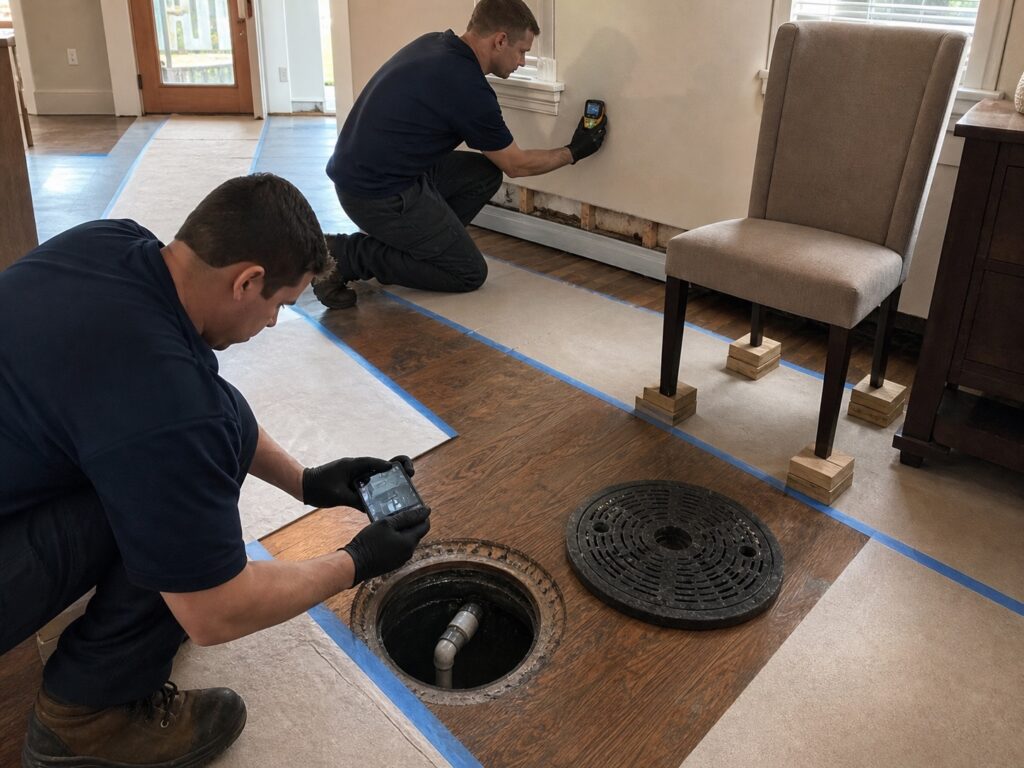
Photograph the entry point before it is cleaned, then capture the water line, affected rooms, damaged contents, and any debris left near drains. Record the storm timing, when the backup began, which fixtures were affected, and when normal drainage returned.
- Take wide photos before moving belongings.
- Photograph floor drains, cleanouts, sump pits, and plumbing fixtures.
- Keep emergency invoices and a list of discarded property.
- Ask for sanitation steps, moisture readings, and removed-material photos.
Gateway’s Belleville basement flooding response keeps the source record and the cleanup record together.
Why does the source change the cleanup plan?
Water source affects what can be cleaned, what must be removed, how workers protect the rest of the home, and which insurance endorsement may apply. A recent clean-water supply leak is not handled like a sewer backup. Porous materials exposed to contaminated water often have fewer salvage options.
The scope should identify the category and the reason for each removal decision. It should not use the word “flood” as a catch-all for every kind of basement water.
What happens after contaminated basement water is extracted?
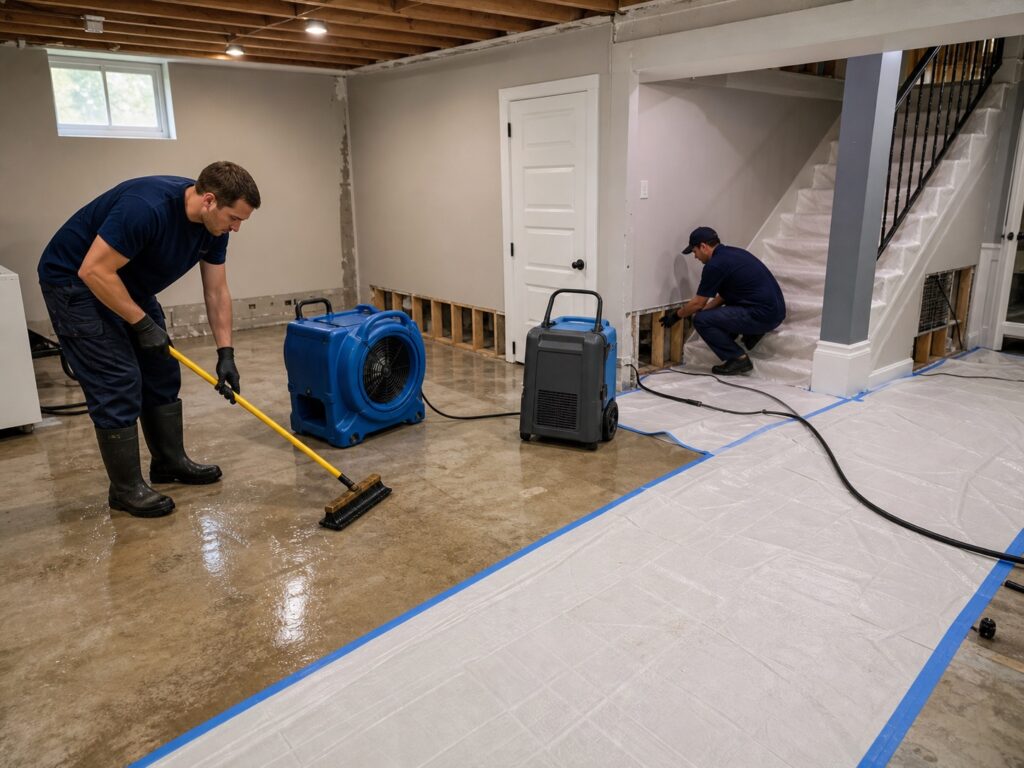
Bulk water removal is followed by controlled removal of unsalvageable porous materials, physical cleaning, appropriate disinfection, and structural drying. Moisture readings continue after the floor is clear because sill plates, joists, wall edges, and masonry can remain wet.
Gateway’s Belleville water damage restoration team documents those steps for the homeowner and carrier. If mold becomes part of a delayed loss, the remediation boundary is written separately from the sanitation work.
Can you keep furniture and stored contents after a sewer backup?
Nonporous items may be cleanable when they can be fully washed and disinfected. Upholstery, carpet pad, cardboard, and other absorbent materials exposed to contaminated water often have fewer safe salvage options. Photograph each item before it is moved or discarded, and keep a room-by-room inventory for the claim.
Keep cleaned items in a dry area away from the work zone. Mixing cleaned contents with wet or unsorted property makes both sanitation and claim documentation harder.
Who should you call for basement water in Belleville?
Call a plumber for a failed private drain or active plumbing source. Contact the municipality when evidence points to a public sewer issue. Call Gateway for extraction, sanitation, moisture mapping, drying, and restoration documentation.
If water is in your Belleville basement now, call (314) 947-3419. Our Belleville water and mold team will ask where it entered and whether drains or fixtures were involved, then give you the safest next step and a real ETA.