Gateway/Mold Remediation/Maryville, IL
Mold Remediation
in Maryville, IL.
An independent inspector or industrial hygienist collects mold samples; an independent laboratory analyses them. Gateway handles moisture assessment and remediation, using the independent findings to inform the scope.
Mold remediation for Maryville, IL homeowners. Independent sampling where appropriate, property-specific containment, honest scope built from data not from a maximum invoice. We work Stonebridge Farms, Copper Creek, Fox Mill Estates, and the rest of the metro the same way.
When mold follows a leak or flood, start with our Maryville IL water damage restoration team to correct moisture, dry affected materials, and reduce the chance of regrowth.
Questions we hear from Maryville, IL
What Maryville, IL homeowners
ask us most.
Our Fox Mill Estates finished basement has had moisture issues. We are smelling something. How do you confirm mold versus humidity?
A persistent odor warrants inspection of moisture and affected materials. Independent sampling and laboratory analysis may contribute to the assessment, but a species result alone does not identify an odor’s cause or rule out hidden growth. The actual findings should guide remediation.
Our 2002 Stonebridge Farms home has first-generation PEX fittings. Plumber said brass fittings can fail. Real risk?
Inspect accessible fittings for visible leakage or corrosion and consult a qualified plumber. Fitting condition and the affected area must be established at the property; no citywide failure pattern is assumed.
Lift station serving our Maryville subdivision failed during a power outage. Sewer backed up. American Family claim?
Ask American Family to review the actual policy, backup endorsement and lift-station loss circumstances. Coverage, limits and any recovery from another party are separate decisions; carrying an endorsement does not guarantee every backup is covered.
Why these questions in Maryville, IL.
Mold remediation in Maryville, IL should follow the conditions found at the property. Where plaster, wood lath or masonry is present, inspect actual moisture and material condition before selecting access, cleaning or removal methods. In a finished basement, assess affected wall and floor assemblies and any recurring water entry; the neighborhood or construction year does not establish hidden growth. Gateway handles moisture assessment and remediation. An independent inspector or industrial hygienist selects and collects any needed samples, and an independent laboratory analyses them. Agree on the scope, containment and completion criteria for the actual job.
How mold remediation actually runs here.
The assessment should record the reported moisture history, observed affected materials and the reasons for any access or removal. Agree on containment, cleaning and completion criteria for the actual findings. An independent inspector decides whether sampling is useful and collects any samples; an independent laboratory analyses them. Neither the city nor construction era establishes that hidden growth is present.
“We don’t tell you it’s mold because it looks like mold. We use independent findings, we plan, and we tell you what you don’t need to remediate.”
What’s included
What every Maryville, IL
mold remediation job covers.
The work and documentation depend on the actual property conditions and agreed scope. See our main mold remediation page for service information and questions to discuss before work begins.
- Independent sampling where the inspector determines it is useful
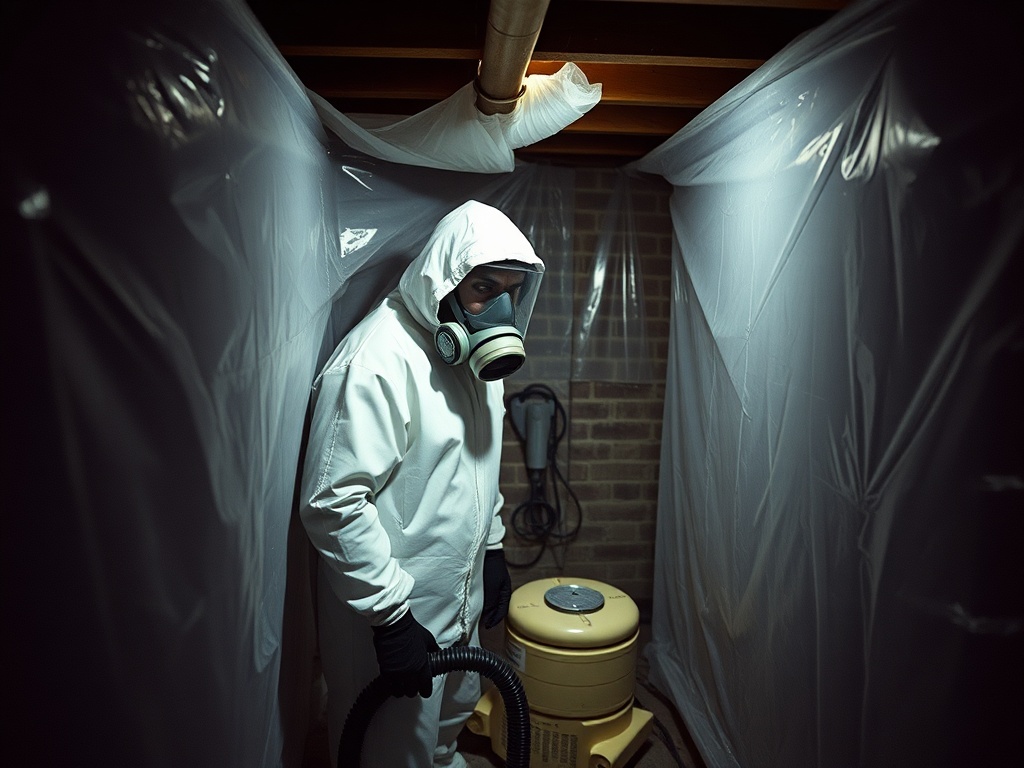
- IICRC S520 containment with poly and negative-air HEPA
- Affected materials removed under PPE and HEPA-vacuumed
- Cleaning methods and independent post-remediation assessment appropriate to the agreed scope
- We tell you what does not need remediation, honest scope, not maximum invoice
How a Maryville, IL call runs
What are the six steps in mold remediation in Maryville, IL?
- 01
Independent inspection and mold sampling
An independent inspector or industrial hygienist collects mold samples; an independent laboratory analyses them. Gateway handles moisture assessment and remediation, using the independent findings to inform the scope.
- 02
Building containment before mold removal
Containment and filtration are selected to help limit the spread of dust and contamination during the work; they do not guarantee that no particles escape.
- 03
HEPA air filtration during mold remediation
Confirm filtration equipment and containment checks appropriate to the project.
- 04
Mold-affected materials removed under PPE
Assess affected porous materials and define appropriate removal, containment and protective equipment for the work.
- 05
HEPA vacuum and antimicrobial after mold removal
Select cleaning methods for the affected materials and conditions; any product must be appropriate for the use and applied according to its label.
- 06
Third-party clearance test after mold remediation
Agree on completion criteria and any independent post-remediation assessment before work begins. Confirm how additional work would be scoped and priced if the criteria are not met.
Other St. Louis cities we cover
Mold Remediation across
the St. Louis metro
Mold inspection or remediation: five questions to consider
Use these questions to describe the moisture problem when you call Gateway. An inspection establishes the scope; this guide does not diagnose health conditions.
- Can you see suspected mold, or is there only an unexplained musty odor?
- Where is the affected material, and approximately how much is affected?
- Is a leak, flood, condensation or another moisture source still present?
- Has the problem returned after previous cleaning or drying?
- Do you need an inspection, documentation or a remediation scope before work begins?
Describe what you can see without disturbing affected materials. Call Gateway at (314) 947-3419, 24/7, or learn about mold remediation.
Maryville, IL address. Water emergency.
Call Gateway’s emergency line to discuss the loss, crew availability and estimated response.
Related service information
See our mold remediation service and process for the complete scope of work.
Sources (reviewed 2026-09-10): www.cdc.gov.